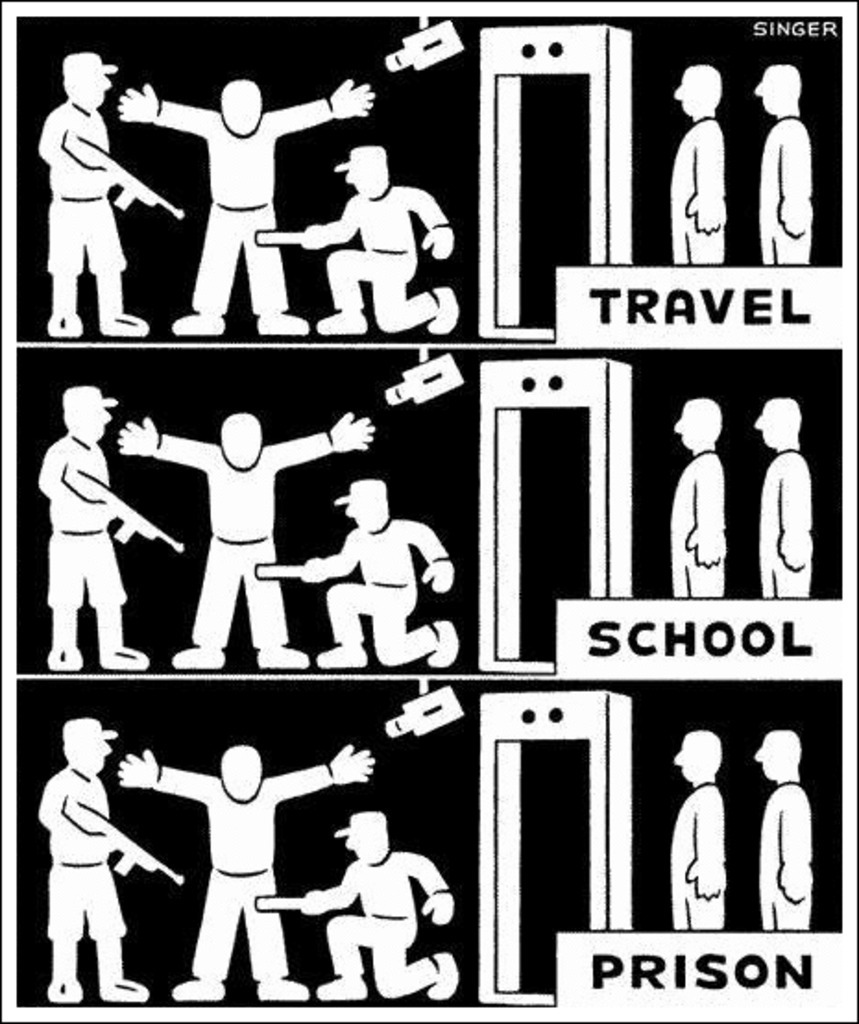
Land of the free…

Biden’s Health and Human Services Secretary Xavier Becerra has admitted that the White House issued race-based guidelines to administering health care.
Becerra admitted to Congress that the Centers for Medicare and Medicaid Services (CMS) is doling out health care not based on sickness, but rather based on racial preferences in an official codified policy of bigotry from the administration.
“The CMS has issued a fee schedule in November that weights anti-racism activities to have more preference over…being diagnosed by cancer,” Rep. Jason Smith (R-MO) said to Becerra.
“The most important thing to every physician should be providing high-quality care to every patient, Mr. Secretary. Politics should be the furthest thing from a physician’s mind. Shamefully, under your agency, politics not medicine will take center stage at the doctor’s office,” he continued, adding that “HHS will encourage clinicians to perform clinic-wide reviews of existing tools and policies such as value statements or clinical practice guidelines to ensure that they include and are aligned with a commitment to anti-racism.”
“I respect the position you take. I think it’s unfortunate that too much misinformation and disinformation is put out there on what’s going to be done. That’s what confuses Americans. I respect that you may have a different opinion in trying to attack the disparities that exist,” Becerra responded.
In yet more evidence of the federal government/Deep State’s vested interest in advancing internet censorship (or, as they call it, tackling “misinformation”), the Department of Defense awarded NewsGuard Technologies a $750,000 contract in September of 2021 for the organization’s “misinformation fingerprints” project.
NewsGuard, which has been the subject of extensive Breitbart News reporting, is an establishment-backed project that aims to “rate” news outlets, policing the internet by telling users which news sources can be trusted and which ones cannot.
According to USASpending.gov, the contract was awarded for NewsGuard’s “misinformation fingerprints” project, which it describes as a “a catalogue of known hoaxes, falsehoods and misinformation narratives that are spreading online.”
It is unclear if hoaxes embraced by the establishment, such as the notion that material found on Hunter Biden’s laptop was “Russian disinformation,” are in NewsGuard’s “misinformation fingerprints” database.
NewsGuard’s own co-founder, Steve Brill, spread that false claim, as did advisory board member and notorious political partisan Michael Hayden.

Millions of bees bound for Alaska died on a Delta Air Lines flight after the plane was left on the tarmac in Atlanta, Georgia, following a diversion.
Alaska Public Media (APM) reported on Wednesday that a Delta plane carrying a shipment of around 5 million bees bound for Anchorage, Alaska, was forced to reroute to Atlanta. Most of the bees died in the Georgia city.
The shipment of 200 crates, ordered by Sarah McElrea of Sarah’s Alaska Honey on behalf of 300 Alaskan beekeepers, carried 800 pounds of bees and was worth an estimated $48,000.
The crates had been due to travel from Sacramento, California, to Anchorage Airport via Seattle, Washington. But the bees did not fit on the Seattle-bound flight and were instead rerouted through the Delta hub in Atlanta.
Delta told McElrea the bees would have to wait in a cooler last Saturday but they were transferred to the tarmac the next day over fears the bees were escaping. McElrea told APM the temperature in Atlanta was 80 degrees Fahrenheit on the day they were left there.
The US Ninth Circuit Court of Appeals appears to have given the government permission to order anyone’s internet account data copied and held without any cause, whenever they want, without providing any justification, according to University of California, Berkeley School of Law professor Orin Kerr’s analysis of a recent Ninth Circuit briefing that affirmed Carsten Igor Rosenow’s conviction and sentencing for sexually exploiting children in the Philippines.
In his appeal to the Ninth Circuit, Rosenow argued that he had a right to privacy in his digital data and that law enforcement requests to preserve his Yahoo! account data, which were submitted without a warrant after a tip from Yahoo!, violated the Fourth Amendment’s protection against unreasonable search and seizure.
But the Ninth Circuit rejected his argument and affirmed his conviction, saying that Yahoo!’s preservation of Rosenow’s records didn’t amount to an unreasonable seizure because the preservation requests didn’t prevent him from accessing his account and Yahoo! didn’t provide the government with access to his data without further legal process:
“A ‘seizure’ of property requires ‘some meaningful interference [by the government,] with an individual’s possessory interests in [his] property.’ Jacobsen, 466 U.S. at 113. Here, the preservation requests themselves, which applied only retrospectively, did not meaningfully interfere with Rosenow’s possessory interests in his digital data because they did not prevent Rosenow from accessing his account. Nor did they provide the government with access to any of Rosenow’s digital information without further legal process.”
The court also claimed that Rosenow had already consented to these preservation requests when he accepted Yahoo!’s terms of service:
“It also is worth noting that Rosenow consented to the ESPs [electronic service providers] honoring preservation requests from law enforcement under the ESPs’ terms of use.”
We obtained a copy of the Ninth Circuit’s briefing for you here.

In the early days of the state-level movement to legalize marijuana, we often got opposition from a surprising camp – libertarians.
You would think libertarians would be thrilled with laws rolling back cannabis prohibition, but for many, it wasn’t enough. Skeptical libertarians found a myriad of reasons to oppose legalization efforts, saying they “didn’t go far enough.”
The movement started in the early 1970s and really started to grow with the legalization of medical marijuana in California way back in 1996. Opponents protested, “what about everybody else?”
Some libertarians also opposed medical marijuana on principle, saying people shouldn’t need a state-issued “card” to access cannabis. They’re not wrong theoretically. Asking the government for permission is never desirable. But the fact is virtually all of these people carry a card so they can drive.
As the legalization movement grew and states started allowing recreational marijuana, libertarians often complained about the tax and regulatory schemes attached to cannabis legalization bills and used this as a reason to oppose reforms. Of course, you never heard any of these people arguing that it would be better for alcohol to be illegal rather than heavily taxed and regulated, as it is in most states.
Another common objection was that legalizing marijuana doesn’t help people who have already been convicted of marijuana crimes. Having a criminal record has lifelong consequences and millions of people have to go through life with this legal millstone tied around their necks simply because at some point they possessed or sold a plant. What about these people? Again, they would actively oppose legalization bills on this basis.
But think about the implied logic. We’re going to allow more people to get caught in this legal web because this bill doesn’t address the needs of people already caught in this legal web. Sounds self-defeating, doesn’t it?
In reality, all of these are legitimate concerns. These libertarian opponents were generally right about the problems inherent in most legalization schemes. They were good on the philosophy. But opposing legalization efforts because they “aren’t good enough” is a bad strategy.
Consider this: would a starving man turn down a slice of bread because it wasn’t a whole loaf?
Let’s be honest here. Today, we’re starving for liberty at every turn.
Sometimes you have to take what you get so you have the ability to move forward. If the man gets a slice of bread, he’ll have the energy to go for that loaf.
The same principle applies to legislative activism. Small steps forward often lead to more steps forward.
Thomas Jefferson understood this well. In fact, in a 1790 letter to the Rev. Charles Clay Jefferson said liberty is to be gained by inches.

The FBI conducted millions of searches of Americans’ electronic data in 2021 without a warrant, according to a new report released by the Office of the Director of National Intelligence.
The FBI claims it conducted the searches as they sought to curb cyberattacks.
“In the first half of the year, there were a number of large batch queries related to attempts to compromise U.S. critical infrastructure by foreign cyber actors,” according to the report, Bloomberg reported. “These queries, which included approximately 1.9 million query terms related to potential victims — including U.S. persons — accounted for the vast majority of the increase in U.S. person queries conducted by FBI over the prior year.”
The ACLU called the FBI’s warrantless spying an invasion of privacy ‘on an enormous scale.’


You must be logged in to post a comment.