Blog

Ashli Babbitt, Betsy Ross Flag, and Liberty Tree Tied to Violent Extremism in Leaked FBI Bulletin

A leaked FBI internal bulletin on domestic terrorism lists U.S. Capitol shooting victim Ashli Babbitt as someone considered a “martyr” by militia violent extremists (MVE) and the Second Amendment as how militias “justify their existence” because of a reference to a “well-regulated Militia” and the right to bear arms.

The “Domestic Terrorism Symbols Guide” was leaked to Project Veritas, which released images of the bulletin on its website and social media on Aug. 2. It includes such common images as the Gadsden flag, the Betsy Ross flag, and the Liberty Tree.

The document includes terms and symbols that are very familiar in conservative, law enforcement, and military circles. In the introduction, the FBI stressed that simply using the terms or symbols is not evidence of wrongdoing.

“The use or sharing of these symbols alone should not independently be considered evidence of MVE presence or affiliation, or serve as an indicator of illegal activity, as many individuals use these symbols for their original historic meaning or other non-violent purposes,” the bulletin reads.

Many on the right, however, are likely to see the bulletin as further evidence of federal government acrimony for conservatives in the wake of Jan. 6 unrest at the Capitol.

“Widespread use of symbols and quotes from American history, especially the Revolutionary War, exists within MVE networks,” the bulletin says. “Historic and contemporary military themes are common for MVE symbols.”

The document is marked “unclassified/law enforcement sensitive” and “for internal use only.”

Keep reading

It Seems Pelosi Wasn’t Just Drinking When He Was Arrested for a DUI, Per Court Records

In the Paul Pelosi DUI saga, new court records provide even more details about the night House Speaker Nancy Pelosi’s husband had his run-in with California Highway Patrol and Napa County authorities following a late-night crash.

We already knew that on May 28, Paul Pelosi was nabbed for an alleged DUI after wrecking his vehicle — and that the authorities had dash and/or body cam footage of their response to the scene that law enforcement has previously refused to release. Authorities had also not released information about the scene of the crash or the condition of Mr. Pelosi or the other driver. But thanks to new court documents obtained by Fox News Digital, we know more about what went down and how Mr. Pelosi behaved when officers arrived. 

Paul Pelosi, who was driving a Porsche, crashed into a Jeep — the driver of which has remained anonymous as “John Doe” — after 10:15 p.m. leaving both vehicles with “major collision damage.” When officers arrived, Pelosi was buckled into the driver’s seat, leaving little doubt that he was operating the Porsche when it collided with the other vehicle. He handed over his driver’s license…along with a card for the “11-99 Foundation.”

According to the 11-99 Foundation website, it provides “emergency assistance to California Highway Patrol employees and scholarships to their children.” Donation levels show that a membership card is provided for a minimum gift between $3,000 to $100,000. While we still haven’t seen footage or heard directly from the responding officers it sure seems like Pelosi was trying to signal his financial support for law enforcement in an attempt to sway the officers’ handling of his situation in a favorable direction. A “get out of jail free” card, of sorts. 

At the same time, Paul Pelosi showed “signs of impairment” during an evaluation by officers who “observed objective signs and symptoms of alcohol intoxication” including eyes that were “red/watery.” The complaint against Pelosi also explains that the House Speaker’s husband “was unsteady on his feet, his speech was slurred, and he had a strong odor of an alcohol beverage emanating from his breath.” It turns out Pelosi’s BAC was .082 percent — over the .08 legal limit. 

Keep reading

The Three I’s of a Police State Education: Indoctrination, Intimidation & Intolerance

“Every day in communities across the United States, children and adolescents spend the majority of their waking hours in schools that have increasingly come to resemble places of detention more than places of learning.”—Investigative journalist Annette Fuentes

This is what it means to go back to school in America today.

Instead of making the schools safer, government officials are making them more authoritarian.

Instead of raising up a generation of civic-minded citizens with critical thinking skills, government officials are churning out compliant drones who know little to nothing about their history or their freedoms.

And instead of being taught the three R’s of education (reading, writing and arithmetic), young people are being drilled in the three I’s of life in the American police state: indoctrination, intimidation and intolerance.

From the moment a child enters one of the nation’s 98,000 public schools to the moment he or she graduates, they will be exposed to a steady diet of:

  • draconian zero-tolerance policies that criminalize childish behavior,
  • overreaching anti-bullying statutes that criminalize speech,
  • school resource officers (police) tasked with disciplining and/or arresting so-called “disorderly” students,
  • standardized testing that emphasizes rote answers over critical thinking,
  • politically correct mindsets that teach young people to censor themselves and those around them,
  • and extensive biometric and surveillance systems that, coupled with the rest, acclimate young people to a world in which they have no freedom of thought, speech or movement.

Roped into the government’s profit-driven campaign to keep the nation “safe” from drugs, disease, and weapons, the schools have transformed themselves into quasi-prisons, complete with surveillance cameras, metal detectors, police patrols, zero tolerance policies, lock downs, drug sniffing dogs, strip searches and active shooter drills.

Young people in America are now first in line to be searched, surveilled, spied on, threatened, tied up, locked down, treated like criminals for non-criminal behavior, tasered and in some cases shot.

Students are not only punished for minor transgressions such as playing cops and robbers on the playground, bringing LEGOs to school, or having a food fight, but the punishments have become far more severe, shifting from detention and visits to the principal’s office into misdemeanor tickets, juvenile court, handcuffs, tasers and even prison terms.

Students have been suspended under school zero tolerance policies for bringing to school “look alike substances” such as oregano, breath mints, birth control pills and powdered sugar.

Look-alike weapons (toy guns—even Lego-sized ones, hand-drawn pictures of guns, pencils twirled in a “threatening” manner, imaginary bows and arrows, fingers positioned like guns) can also land a student in hot water, in some cases getting them expelled from school or charged with a crime.

Keep reading

Henry Kissinger: A Warmonger’s Lying Continues

In his 99th year and with his 19th book, Henry A. Kissinger repeats the same deceitful accounts regarding his dangerous use of military power, including nuclear threats. In the 1970s as the national security adviser and secretary of state for presidents Richard Nixon and Gerald Ford, Kissinger occupied an unusually powerful position in the national security arena.  His  newest book, “Leadership: Six Studies in World Strategy,” is valuable because of his experiences in the political and academic communities, but it must be read carefully in view of the self-aggrandizing nature of his self-promotion.

Kissinger, who believed in the possibility of limited nuclear war in the 1950s, favored the use of a nuclear card in the war between India and Pakistan in 1971, and the October War in the Middle East in 1973.  On an earlier occasion, in 1970, when the Nixon administration was faced with a threat about the Soviet construction of a submarine repair facility in Cuba, Kissinger wanted to send a strong military signal to the Soviets.  Nixon wisely said, “I think we can resolve this with diplomacy.”  Nixon was right.

The following year, during the Indian-Pakistan War, Kissinger feared that the Soviet Union would use the war to “move against” the Chinese and that if “we don’t do anything, we’ll be finished.”  Nixon wanted to know if Kissinger meant that we should “start lobbing nuclear weapons in, is that what you mean?”  Kissinger made it clear that he meant must just that, referring to it as the “final showdown.”  (I was an intelligence analyst at the Department of State in the early 1970s, a period when Kissinger and his director of the Bureau of Intelligence, William Hyland, were convinced that the Soviets were prepared to go to war against China.  There was no intelligence to support their obsession.)

The White House tapes reveal both Nixon and Kissinger at their worst during the crisis in South Asia.  In addition to Nixon’s typical vulgarity and his contempt for Indian President Indira Gandhi, the president told Kissinger that the Indians needed a “mass famine.”  Kissinger sneered at people who “bleed” for the Bengalis of East Pakistan.  Nixon and Kissinger moved to gratuitously deploy an aircraft carrier into the Bay of Bengal, which angered the Pentagon because of the danger of escalation and caused a great deal of nervousness throughout the military chain of command. They also approved a covert supply of sophisticated U.S. fighter aircraft via Jordan and Iran, despite explicit warnings from the Department of State and the Department of Defense that such arms transfers to Pakistan were illegal under U.S. law.

Like his earlier memoirs, Kissinger says almost nothing about the slaughter of Bengalis in East Pakistan, insisting that Pakistan’s atrocities were “clearly under its domestic jurisdiction.”  He also sanitizes Nixon’s racial animus toward Indians, and makes no mention of the unusual “dissent cable” that was signed by 20 foreign service officers who condemned Kissinger’s willingness to ignore the “selective genocide” that was taking place in East Pakistan.   Kissinger mocked the cable’s author, Archer Blood, the U.S. Consul General in Dacca, as a “coward.”

It is noteworthy that in a conversation with Nixon regarding Soviet Jews, Kissinger displayed a similar lack of concern about the plight of Soviet Jews and remarked that “if the Soviets put Jews into gas chambers in the Soviet Union, it is not an American concern.  Maybe a humanitarian concern.”  Nixon agreed: “I know.  We can’t blow up the world because of it.”  Nixon and Kissinger catered to the world’s dictators in Brazil, Greece, Portugal, Indonesia, Iran, Spain, and South Korea, and in the case of Pakistan, they catered to that country’s murderous generals.

The October War found Kissinger essentially in charge of national security policy.  These were the worst days of the Watergate crisis for Richard Nixon, and his use of anti-depressants and alcohol often placed him hors de combatin the fall of 1973.  This was certainly true on the evening of October 24, when Kissinger illegally called a meeting of the National Security Council (NSC) and elevated the nuclear alert system to DefCon III, signifying a serious crisis short of preparing for nuclear war.  The National Security Act of 1947 explicitly states that only the president or the vice president could run an NSC meeting, although the president could provide written authorization for another individual to chair the meeting.  Nixon was not at the meeting just before midnight, and General Al Haig refused Kissinger’s request to awaken the president.  Gerald Ford had not been confirmed as vice president; he was not at the meeting.  There is no record of any written authorization.

Keep reading

Nancy Pelosi Could Get Us All Killed

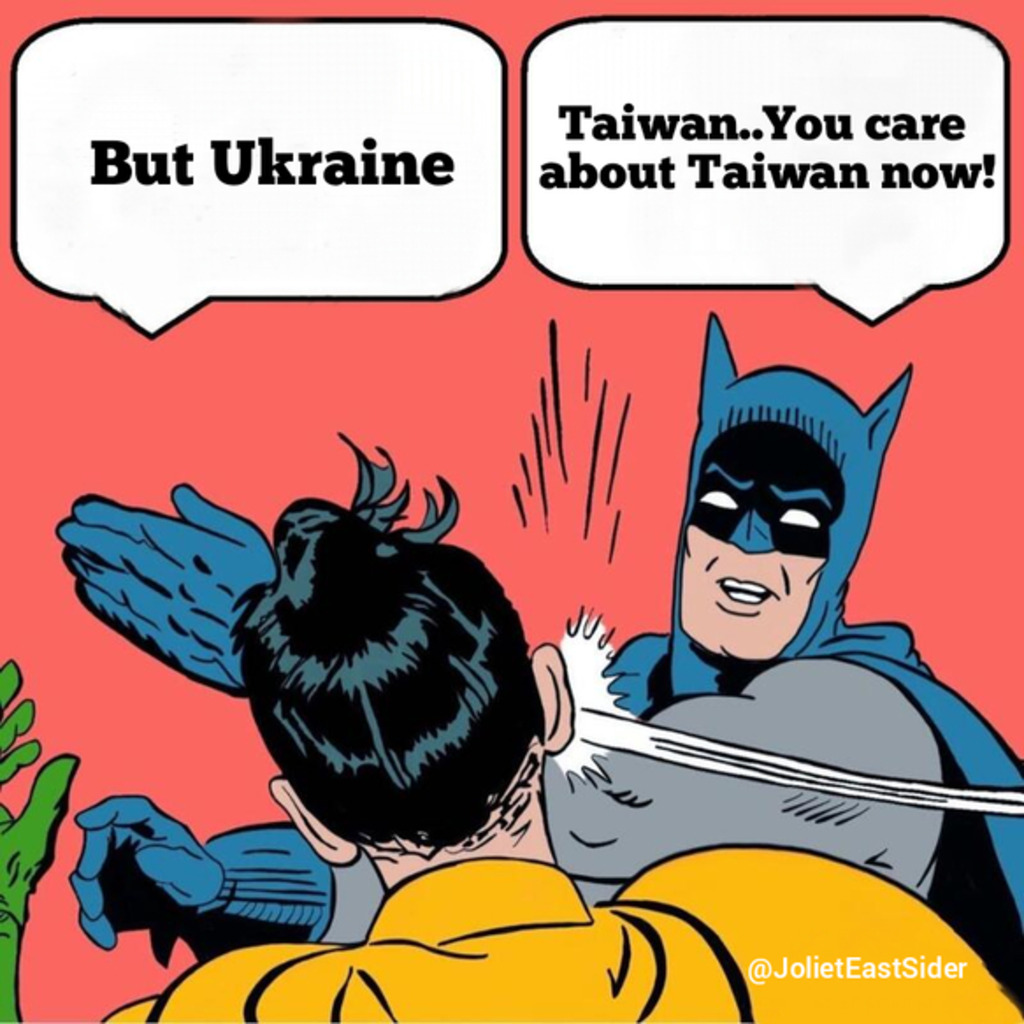
The arrogance of power is especially ominous and despicable when a government leader risks huge numbers of lives in order to make a provocative move on the world’s geopolitical chessboard. Nancy Pelosi’s plan to visit Taiwan is in that category. Thanks to her, the chances of a military confrontation between China and the United States have spiked upward.

Long combustible over Taiwan, the tensions between Beijing and Washington are now close to ablaze, due to Pelosi’s desire to be the first House speaker to visit Taiwan in 25 years. Despite the alarms that her travel plans have set off, President Biden has responded timidly — even while much of the establishment wants to see the trip canceled.

“Well, I think that the military thinks it’s not a good idea right now,” Biden said about the prospective trip on July 20. “But I don’t know what the status of it is.”

Biden could have put his presidential foot down and ruled out Pelosi’s Taiwan trip, but he didn’t. Yet, as days went by, news trickled out that opposition to the trip was extensive in the upper reaches of his administration.

“National security adviser Jake Sullivan and other senior National Security Council officials oppose the trip because of the risk of escalating tension across the Taiwan Strait,” Financial Times reported. And overseas, “the controversy over the trip has sparked concern among Washington’s allies who are worried that it could trigger a crisis between the U.S. and China.”

Underscoring that the U.S. commander in chief is anything but an innocent bystander in terms of Pelosi’s trip, officials disclosed that the Pentagon intends to provide fighter jets as escorts if she goes through with the Taiwan visit. Biden’s unwillingness to clearly head off such a visit reflects the insidious style of his own confrontational approach to China.

More than a year ago — under the apt New York Times headline “Biden’s Taiwan Policy Is Truly, Deeply Reckless” — Peter Beinart pointed out that from the outset of his presidency Biden was “chipping away” at the longstanding U.S. “one China” policy: “Biden became the first American president since 1978 to host Taiwan’s envoy at his inauguration. In April, his administration announced it was easing decades-old limitations on official U.S. contacts with the Taiwanese government. These policies are increasing the odds of a catastrophic war. The more the United States and Taiwan formally close the door on reunification, the more likely Beijing is to seek reunification by force.”

Beinart added: “What’s crucial is that the Taiwanese people preserve their individual freedom and the planet does not endure a third world war. The best way for the United States to pursue those goals is by maintaining America’s military support for Taiwan while also maintaining the ‘one China’ framework that for more than four decades has helped keep the peace in one of the most dangerous places on earth.”

Now, Pelosi’s move toward a visit to Taiwan has amounted to further intentional erosion of the “one China” policy. Biden’s mealy-mouthed response to that move was a subtler type of brinkmanship.

Keep reading

Are the crew members of 1986 Space Shuttle Challenger still alive?

Friends, wrap your head with duct tape (to prevent it from exploding). It’s Down-the-Rabbit-Hole time!

If you’re age 40 years or older, you’d probably remember January 28, 1986.

That was day of the Challenger disaster, when the NASA Space Shuttle orbiter Challenger broke apart 73 seconds into its flight over the Atlantic Ocean, off the coast of Cape Canaveral, Florida at 11:38 EST. All seven crew members were killed, including five NASA astronauts and two payload specialists.

Millions of Americans (17% of the total population) watched the launch live on TV because of Payload Specialist Christa McAuliffe, the first teacher in space. Media coverage of the explosion was extensive: one study reported that 85% of Americans surveyed had heard the news within an hour of the accident.

We were told that Challenger disintegrated because of a malfunctioning O-ring seal in its right solid rocket booster. The O-ring failure caused a breach in the SRB joint it sealed, allowing pressurized burning gas from within the solid rocket motor to reach the outside and impinge upon the adjacent SRB aft field joint attachment hardware and external fuel tank, leading to the structural failure of the external tank. Aerodynamic forces broke up the orbiter.

The crew compartment and many other vehicle fragments were eventually recovered from the ocean floor after a lengthy search and recovery operation. The exact timing of the death of the crew is unknown; several crew members are known to have survived the initial breakup of the spacecraft. But the shuttle had no escape system, and the impact of the crew compartment with the ocean surface was too violent to be survivable.

The disaster resulted in a 32-month hiatus in NASA’s shuttle program and the formation of the Rogers Commission, a special commission appointed by then President Ronald Reagan to investigate the accident. The commission found NASA’s organizational culture and decision-making processes had been key contributing factors to the accident.

These are the names of Challenger’s 7 crew members:

  1. Francis Richard Scobee, Commander
  2. Michael J. Smith, Pilot
  3. Ronald McNair, Mission Specialist
  4. Ellison Onizuka, Mission Specialist
  5. Judith Resnik, Mission Specialist
  6. Gregory Jarvis, Payload Specialist
  7. Christa McAuliffe, Payload Specialist

But wait!

What if someone were to tell you that most, if not all, of Challenger’s 7 crew members are still alive and thriving in their new professions, contrary to what we’ve been told?

Keep reading