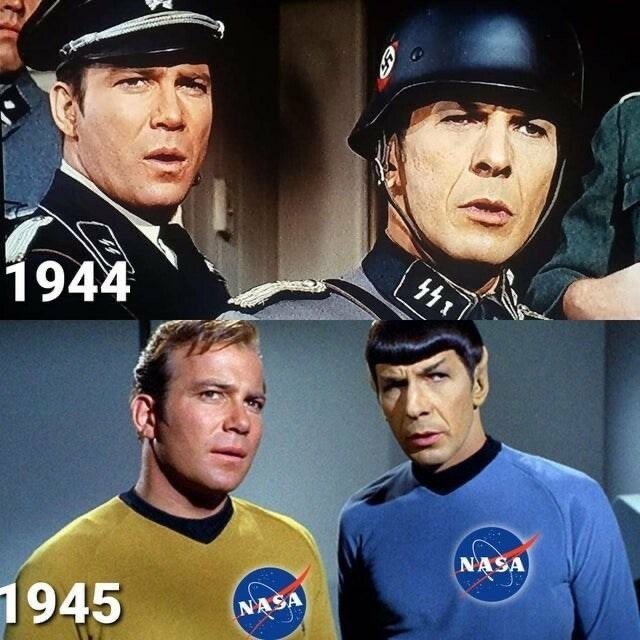
Operation paperclip…

Hundreds of people storing valuables in safe deposit boxes in Los Angeles may never see their cash, precious metals and heirlooms again, unless a federal judge intervenes in the next week.
Several are suing the government for seizing the contents of about 800 boxes as part of a March raid of the storage provider, U.S. Private Vaults (USPV), which was indicted for conspiracy to sell drugs and launder money.
The Institute for Justice (IJ) is seeking class-action status for a May lawsuit by several owners alleging “shocking, unconscionable, and unconstitutional” behavior by the government. IJ attorney Robert Frommer accused the feds of an “$85 million cash grab” from people who were not accused of wrongdoing.
The civil forfeiture notices “do not identify any legal basis,” namely the “specific offense,” to justify each forfeiture, and thus violate due process rights, the public interest law firm said in an amended complaint filed last week. “Box holders thus do not know whether the government is accusing them of drug crimes, money laundering, structuring” or any crime at all.
“While this case is similar to many of our other forfeiture actions, it is also bigger because the government is trying to forfeit hundreds of safe deposit boxes all at one go,” IJ senior attorney Rob Johnson told Just the News.
It’s also unusual for the government to keep fighting “tooth and nail” after innocent people contest the forfeitures, he wrote in an email. The feds appear intent to “make all these box holders prove their own innocence to get their property back” with no evidence of a crime.
The Florida Supreme Court has rejected a prospective citizen’s initiative to place a proposed constitutional amendment before voters in 2022 to legalize adult recreational marijuana and allow Floridians to “grow their own.”
In a 5-2 ruling Thursday, the court determined the prospective amendment’s ballot summary is “affirmatively misleading,” the second time since April the state’s highest court has issued that verdict to knock a marijuana legalization measure off the 2022 ballot.
Tampa-based Sensible Florida submitted its proposed amendment, Regulate Marijuana in a Manner Similar to Alcohol to Establish Age, Licensing, and Other Restrictions, to the Division of Elections on March 17, 2016.
The summary reads: “Regulates marijuana (hereinafter “cannabis”) for limited use and growing by persons 21 years of age or older. State shall adopt regulations to issue, renew, suspend, and revoke licenses for cannabis cultivation, product manufacturing, testing and retail facilities. Local governments may regulate facilities’ time, place and manner and, if state fails to timely act, may license facilities. Does not affect compassionate use of low-THC cannabis, nor immunize federal law violations.”
The proposed amendment would permit people to grow “six mature flowering cannabis plants per household member 21 years of age or older” and possess “the harvest therefrom, provided the growing takes place indoors or in a locked greenhouse and the cannabis grown is not made available for sale.”
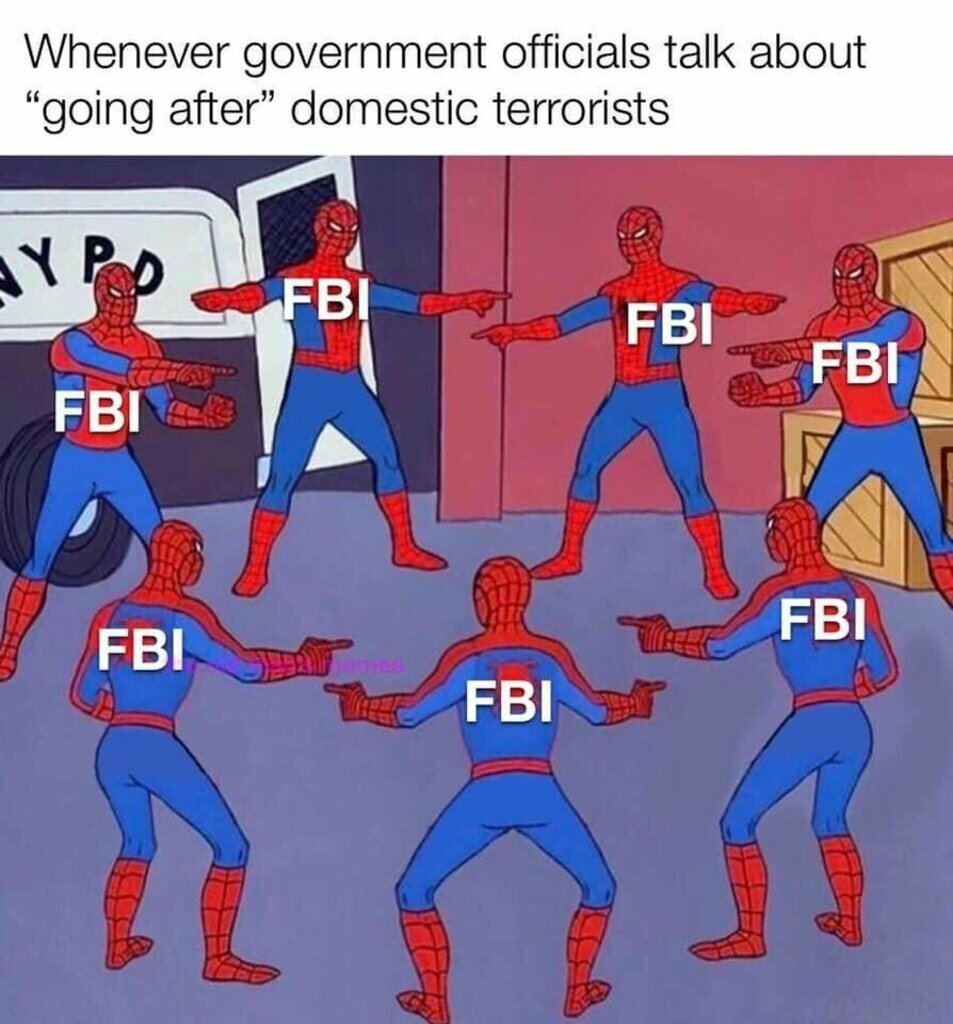


Yesterday, the House Armed Services Committee hearing featuring Chief of Naval Operations Admiral Michael Gilday involved some fireworks. The subject was Critical Race Theory, and Gilday’s insertion of a blatantly anti-intellectual and racist book, “How to Be an Anti-Racist” by sometime activist and full-time grifter Ibram X. Kendi, onto his official “reading list” for the US Navy.
The basic thesis in Kendi’s book is that you can’t be “not racist;” you are either racist or “anti-racist.” To be “anti-racist,” you have to follow Kendi’s sacraments; otherwise, you are a racist. Why the head of any of the military services would endorse any hare-brained theory that required the service to divide itself into privileged and shunned groups, based on nothing more than skin color, is beyond me. Indiana Republican Jim Banks had some hard and pointed questions for Gilday. My colleague Jeff Charles has the rundown on the fireworks.
State efforts to juice Covid-19 vaccination rates through million-dollar lotteries haven’t reversed the steep decline in adults seeking out shots when many pockets of the country remain vulnerable to the coronavirus.
While Ohio did see a two-week bump in adult vaccination rates last month after becoming the first state to offer sizable cash prizes, the pace of vaccinations there has already fallen off. And states that followed its headline-grabbing example made some small gains without showing evidence of any comparable surge, a POLITICO analysis of federal and state data shows.
“It’s just not working,” said Irwin Redlener, who directs the Pandemic Resource and Response Initiative at Columbia University. “People aren’t buying it. The incentives don’t seem to be working — whether it’s a doughnut, a car or a million dollars.”
 Hellbound and Down
You must be logged in to post a comment.