I have my reasons…


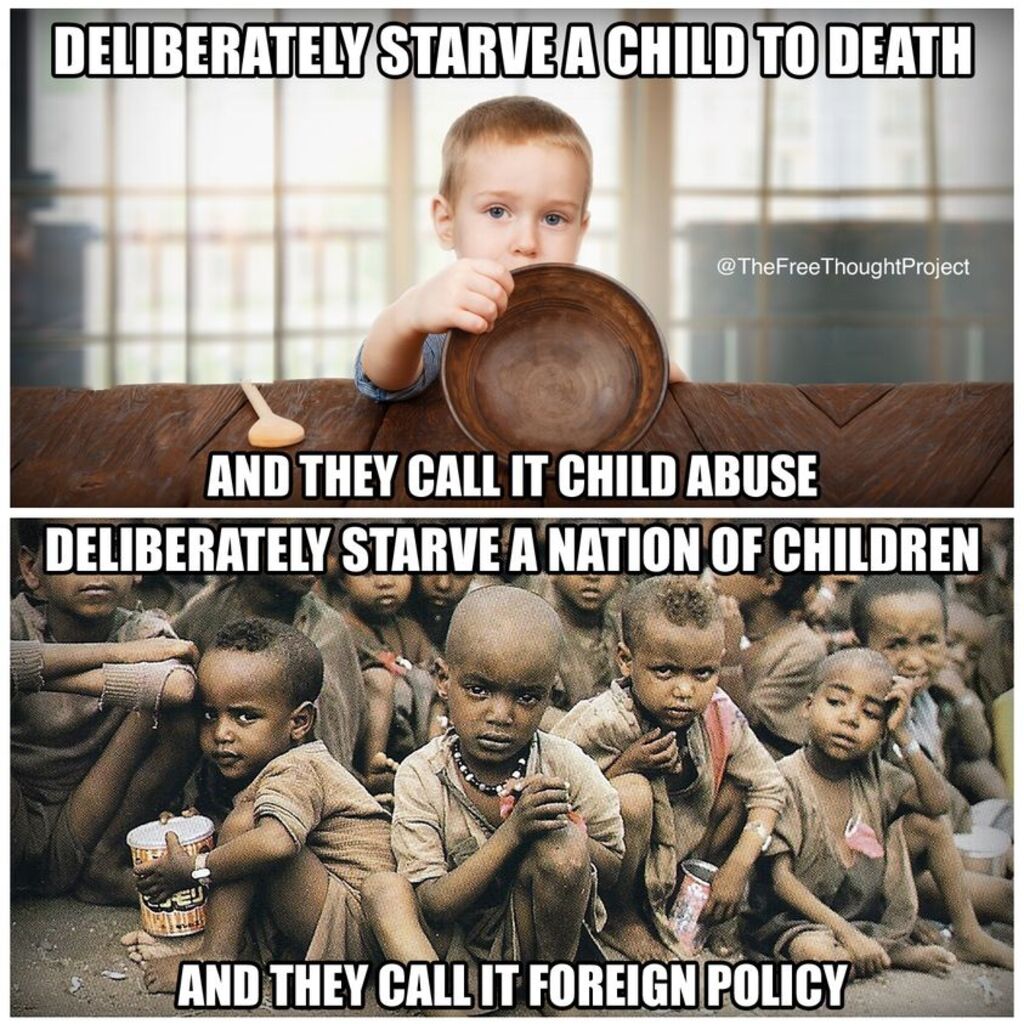
The question of truth is at the heart of the story Holland tackles—the deadly famine, engineered by Stalin’s regime, that swept through Ukraine, the Volga Basin, the Kuban and Don regions of the North Caucasus, and Kazakhstan in the winter of 1932-1933. In Ukraine alone, where it is known by its Ukrainian name of Holodomor and often referred to as the terror-famine, it took an estimated 4 million lives. In this exceptionally fertile land, Stalin imposed impossible production demands, expropriating all available grain and livestock and using the ensuing starvation to break the back of the peasantry, whose resistance to collectivization threatened to undermine his industrialization efforts.
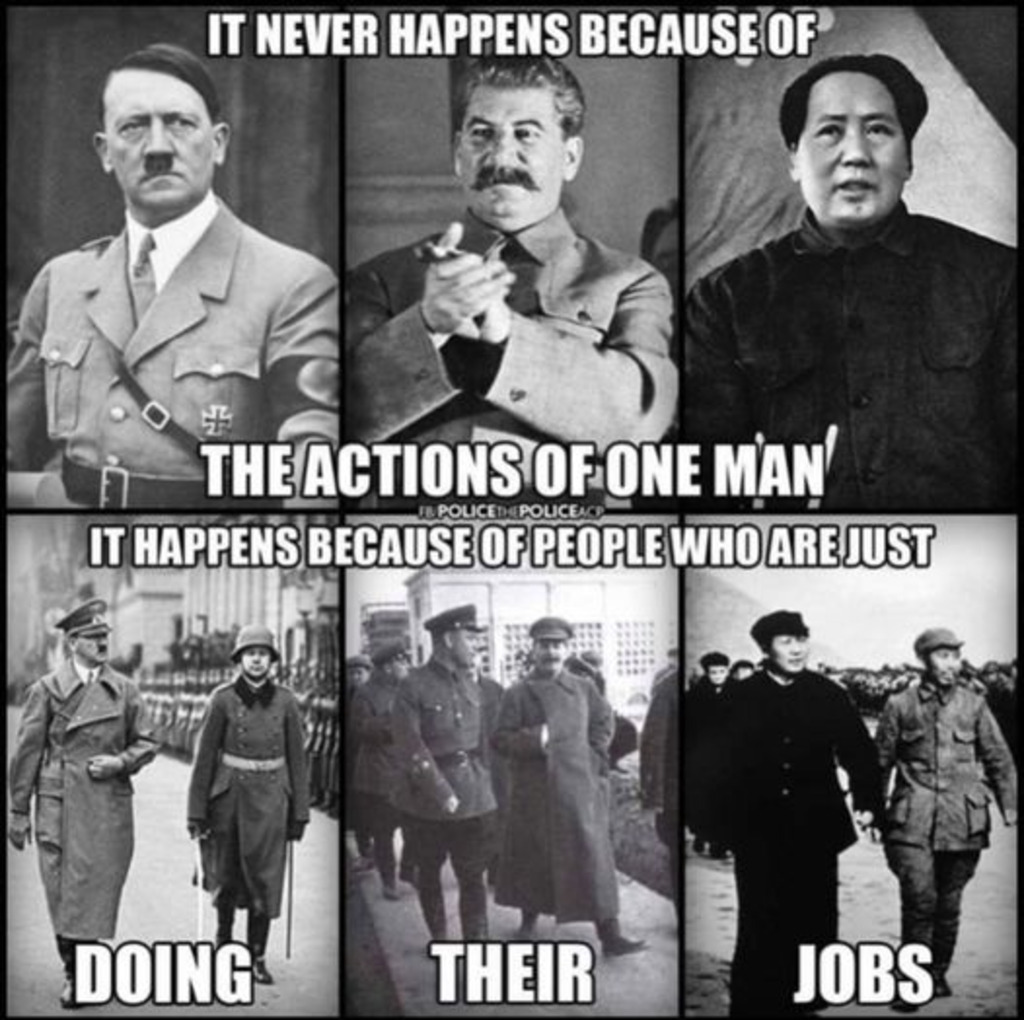
But Stalin’s crime was only one face of the story. The other face was the extraordinary failure on the part of the world to report and acknowledge the facts. Many were complicit in this failure, but the starring role undoubtedly belonged to the Moscow-based Western journalists, who misreported, underreported, and failed to report about what was plainly happening under their noses. Walter Duranty, the New York Times’ man in Moscow, outright lied about the events, deliberately misleading his readers. In 1932, he was awarded the Pulitzer Prize for reporting. Holland’s exploration of the complicity of the press in one of Joseph Stalin’s greatest crimes lends the film an unexpected relevance to our current moment, when the role and purpose of the media and of journalism itself seem to be under attack—from both would-be dictators and people for whom virtue is the arbiter of truth.


The Portland Police Bureau began using tear gas on Black Lives Matters protesters almost as soon as they first assembled in late May. Mayor Ted Wheeler acknowledged that the city has used “CS” tear gas. The commonly used formulation contains 2-chlorobenzalmalononitrile, a compound that was designed to induce immediate pain but can also have long-term effects, including chronic bronchitis. In early September, Wheeler ordered the police to stop using it. Tear gas is banned in war but can be used to disperse crowds of civilians.
“Cuban Outbreak of Swine Fever Linked to CIA” headlined a January 9, 1977, article by Drew Featherston and John Cummings in Newsday, a Long Island, New York, daily paper. It began,
With at least the tacit backing of U.S. Central Intelligence Agency officials, operatives linked to anti-Castro terrorists introduced African swine fever virus into Cuba in 1971. Six weeks later an outbreak of the disease forced the slaughter of 500,000 pigs to prevent a nationwide animal epidemic.
A U.S. intelligence source told Newsday he was given the virus in a sealed, unmarked container at a U.S. Army base and CIA training ground in the Panama Canal Zone, with instructions to turn it over to the anti-Castro group.
The 1971 outbreak, the first and only time the disease has hit the Western Hemisphere, was labeled the “most alarming event” of 1971 by the United Nations Food and Agricultural Organization. African swine fever is a highly contagious and usually lethal viral disease that infects only pigs and, unlike swine flu, cannot be transmitted to humans. There were no human deaths in the outbreak, but all production of pork, a Cuban staple, came to a halt, apparently for several months. . . .
The U.S. intelligence source said that early in 1971 he was given the virus in a sealed, unmarked container at Ft. Gulick, an Army base in the Panama Canal Zone. The CIA also operated a paramilitary training center for career personnel and mercenaries at Ft. Gulick. . . .
Another man involved in the operation, a Cuban exile who asked not to be identified, said he was on the trawler where the virus was put aboard at a rendezvous point off Bocas del Toro, Panama. He said the trawler carried the virus to Navassa Island, a tiny, deserted, U.S.-owned island between Jamaica and Haiti. From there, after the trawler made a brief stopover, the container was taken to Cuba and given to other operatives on the southern coast near the U.S. Navy base at Guantanamo Bay in late March, according to the source on the trawler.
It was an explosive story, reprinted in newspapers across the country. The CIA officially denied it six days later, in response to a request from the U.S. Senate Select Committee on Intelligence, but the Newsday reporters had cited so many corroborating sources, with such specific details, that the denial was not widely believed.
The most compelling reason for trusting the credibility of the Newsday report was that the only place in the Western Hemisphere where the virus was known to have been kept before the outbreak in Cuba was at the secret Plum Island Animal Disease Center (PIADC) laboratory off the eastern tip of Long Island, where local Newsday reporters had been cultivating sources since the one and only time reporters had been allowed inside in October 1971.
Plum Island had hosted the U.S. Army Chemical Corps base at Fort Terry from 1952 to 1956. According to Deadly Cultures: Biological Weapons since 1945 by Mark Wheelis and Lajos Rózsa, the mission at Fort Terry was “to establish and pursue a program of research and development of certain anti-animal (BW) agents.” (a.k.a. biological weapons) The U.S. Department of Agriculture (USDA) took over from the Army in 1956.
President Richard Nixon ordered biological weapons research to cease in 1969, but in 1975 the U.S. Senate Select Committee on Intelligence revealed that the CIA had continued to maintain a stockpile of biological agents and toxins in violation of the order.
In the closing days of World War 2, the Joint Chiefs of Staff approved the offensive use of germ warfare aimed at destroying enemy crops, placing final approval at the discretion its top commanders in the field, according to Office of Strategic Services (OSS) documents formerly classified “Secret” and “Top Secret” held in the National Archives.
Actual approval by U.S. authorities for the offensive use of any type of biological warfare has never been published before. As we shall see, it was the practice of the U.S. government to only pass on such orders orally. Most likely this was because the orders involved actions widely deemed to be illegal.
You must be logged in to post a comment.