States have authority to fine or jail people who refuse coronavirus vaccine, attorney says

As drugmakers race to develop a vaccine against the coronavirus, several legal questions are emerging: could the government require people to get it? Could people who refuse to roll up their sleeves get banned from stores or lose their jobs?

The short answer is yes, according to Dov Fox, a law professor and the director of the Center for Health Law Policy and Bioethics at the University of San Diego.

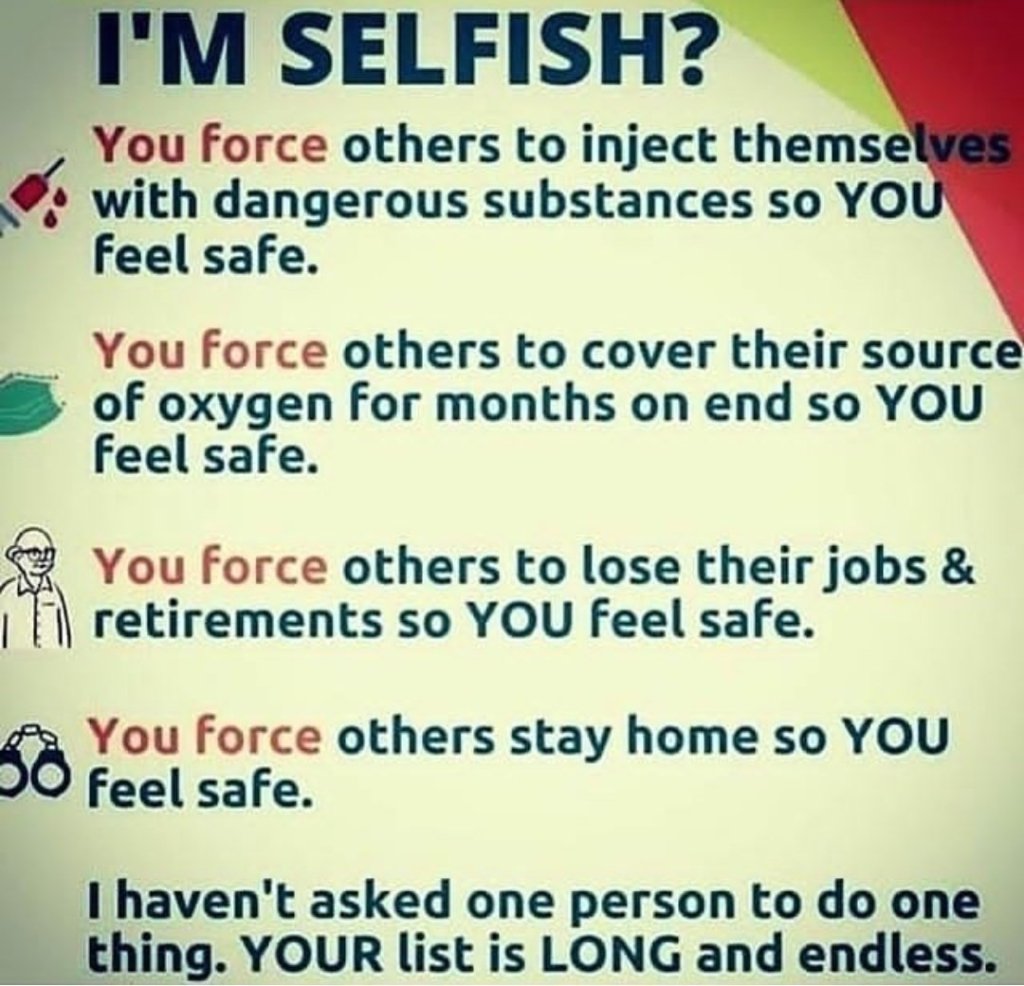
“States can compel vaccinations in more or less intrusive ways,” he said in an interview. “They can limit access to schools or services or jobs if people don’t get vaccinated. They could force them to pay a fine or even lock them up in jail.”

Fox noted authorities in the United States have never attempted to jail people for refusing to vaccinate, but other countries like France have adopted the aggressive tactic.

The legal precedent dates back to 1905. In a landmark U.S. Supreme Court case, Jacobson v. Massachusetts, the court ruled Massachusetts had the authority to fine people who refused vaccinations for smallpox.

That case formed the legal basis for vaccine requirements at schools, and has been upheld in subsequent decisions.
“Courts have found that when medical necessity requires it, the public health outweighs the individual rights and liberties at stake,” Fox said.

In 2019, New York City passed an ordinance that fined people who refused a measles vaccination.

Keep reading

States have authority to fine or jail people who refuse coronavirus vaccine, attorney says

 As drugmakers race to develop a vaccine against the coronavirus, several legal questions are emerging: could the government require people to get it? Could people who refuse to roll up their sleeves get banned from stores or lose their jobs?

The short answer is yes, according to Dov Fox, a law professor and the director of the Center for Health Law Policy and Bioethics at the University of San Diego.

“States can compel vaccinations in more or less intrusive ways,” he said in an interview. “They can limit access to schools or services or jobs if people don’t get vaccinated. They could force them to pay a fine or even lock them up in jail.”

Keep reading

Abortion opponents protest COVID-19 vaccines’ use of fetal cells

Senior Catholic leaders in the United States and Canada, along with other antiabortion groups, are raising ethical objections to promising COVID-19 vaccine candidates that are manufactured using cells derived from human fetuses electively aborted decades ago. They have not sought to block government funding for the vaccines, which include two candidate vaccines that the Trump administration plans to support with an investment of up to $1.7 billion, as well as a third candidate made by a Chinese company in collaboration with Canada’s National Research Council (NRC). But they are urging funders and policymakers to ensure that companies develop other vaccines that do not rely on such human fetal cell lines and, in the United States, asking the government to “incentivize” firms to only make vaccines that don’t rely on fetal cells.

Keep reading

Dr. Anthony Fauci says chance of coronavirus vaccine being highly effective is ‘not great’

White House coronavirus advisor Dr. Anthony Fauci said Friday that the chances of scientists creating a highly effective vaccine — one that provides 98% or more guaranteed protection — for the virus are slim.

Scientists are hoping for a coronavirus vaccine that is at least 75% effective, but 50% or 60% effective would be acceptable, too, Fauci, director of the National Institute of Allergy and Infectious Diseases, said during a Q&A with the Brown University School of Public Health. “The chances of it being 98% effective is not great, which means you must never abandon the public health approach.”

“You’ve got to think of the vaccine as a tool to be able to get the pandemic to no longer be a pandemic, but to be something that’s well controlled,” he said. 

The Food and Drug Administration has said it would authorize a coronavirus vaccine so long as it is safe and at least 50% effective. Dr. Stephen Hahn, the FDA’s commissioner, said last month that the vaccine or vaccines that end up getting authorized will prove to be more than 50% effective, but it’s possible the U.S. could end up with a vaccine that, on average, reduces a person’s risk of a Covid-19 infection by just 50%.

Keep reading

Defeat COVID-19 by requiring vaccination for all. It’s not un-American, it’s patriotic.

Severe penalties for non-compliance

Nor is there an alternative to vaccine-induced herd immunity in a pandemic. Relying on enough people becoming infected and then immune is dangerous, as exemplified by the Swedish experience where the COVID-19 mortality rate exceeds that of its more cautious neighbors.Broad induction of immunity in the population by immunization will be necessary to end this pandemic. In simple terms, a refusal to be vaccinated threatens the lives of others.

So here’s what America must do when a vaccine is ready:

► Make vaccinations free and easily accessible.

► Exempt only those with medical contraindications to immunization. It is likely that more than one vaccine platform will prove effective (as was the case for polio vaccines) and, as a result, medical conditions that prohibit all COVID-19 vaccines will be rare.

► Do not honor religious objections. The major religions do not officially oppose vaccinations.

► Do not allow objections for personal preference, which violate the social contract.

How can government and society assure compliance with protective vaccines? Vaccine refusers could lose tax credits or be denied non-essential government benefits. Health insurers could levy higher premiums for those who by refusing immunization place themselves and others at risk, as is the case for smokers. 

Unnerving toll:Sweden hoped herd immunity would curb COVID-19. Don’t do what we did. It’s not working.

Private businesses could refuse to employ or serve unvaccinated individuals, schools could refuse to allow unimmunized children to attend classes, public and commercial transit companies — airlines, trains and buses — could exclude refusers. Public and private auditoriums could require evidence of immunization for entry. The only legal limitation on government or private action is that it not be discriminatory, and it’s hard to see how discrimination would occur if vaccinations were free and accessible to all.

Keep reading

Only 42% Say They Will Submit To COVID-19 Vaccine, New Poll Finds

A new Yahoo News/YouGov poll has found that just 42 percent of Americans say they plan to get a coronavirus vaccine when it becomes available.

The figure represents an all time low, having fallen from 55 percent in early May, 50 percent in late May, and 46 percent in July.

Keep reading

DOD Awards $104 Million for Procurement of Syringes in Support of U.S. COVID-19 Vaccination Campaign

On August 4, the Department of Defense’s (DOD) Joint Acquisition Task Force (JATF), in support of the Department of Health and Human Services’ (HHS) Strategic National Stockpile (SNS), awarded $104 million in contracts to procure syringes and safety needles, enabling the nationwide administration of a U.S. Food and Drug Administration (FDA)-approved COVID-19 vaccine, once one is available. The syringes and safety needles are critical to the nation’s COVID-19 vaccination strategy, providing a total of 500 million safety syringes over a 12-month period, with more than 134 million of the total number delivered by the end of 2020.

The syringes and safety needles will be placed into the SNS so they will be readily available to quickly and efficiently vaccinate the U.S. population once a safe and efficacious COVID-19 vaccine is developed. This procurement is the latest in a series of recent contracts highlighting a collaborative “whole-of-government” approach in response to the COVID-19 threat.

The Joint Program Executive Office for Chemical, Biological, Radiological and Nuclear Defense (JPEO-CBRND) partnered with HHS and the Army Contracting Command – Aberdeen Proving Ground (ACC-APG), to select and award contracts to six companies: Duopross Meditech Corporation ($48 million), Cardinal Health Inc. ($15 million), Gold Coast Medical Supply, LP ($14 million), HTL STREFA Inc. ($12 million), Quality Impact, Inc. ($9 million), and Medline Industries, Inc. ($6 million). The companies represent a mix of large and small medical product manufacturers and distributors.

Keep reading

New COVID-19 restrictions will be needed for anti-vaxxers

To anti-vaxxers, I have one message: our tolerance for your wilful ignorance is over. We cannot afford, morally or economically, to give any ground to those who choose not to be vaccinated against COVID-19.

Let me be clear. I’m not advocating that we vaccinate people against their will. That would be wrong. We must ensure that the safety of our community is the number one priority. That means that participation in everyday life cannot put others at risk. If you do not want to be vaccinated against COVID-19, you ought to bear the consequences of that decision.

As a community, we should consider to what extent we allow organisations to prevent those who object to being vaccinated against COVID-19 to enter their premises, participate in their activities and, in some circumstances, seek their employment.

Governments have gone some way to doing this by implementing policies such as withholding family tax benefits and preventing children from being accepted into childcare unless vaccinations are proven. Further restrictions would be a natural extension of these policies.

Restaurants could be allowed the right to refuse entry to those who are not vaccinated against COVID-19. Businesses, especially those involved in the care or service of vulnerable communities, might be allowed the right to refuse employment to those without a COVID-19 vaccination. Organisers of mass gatherings could deny the sale of tickets on this basis.

Keep reading