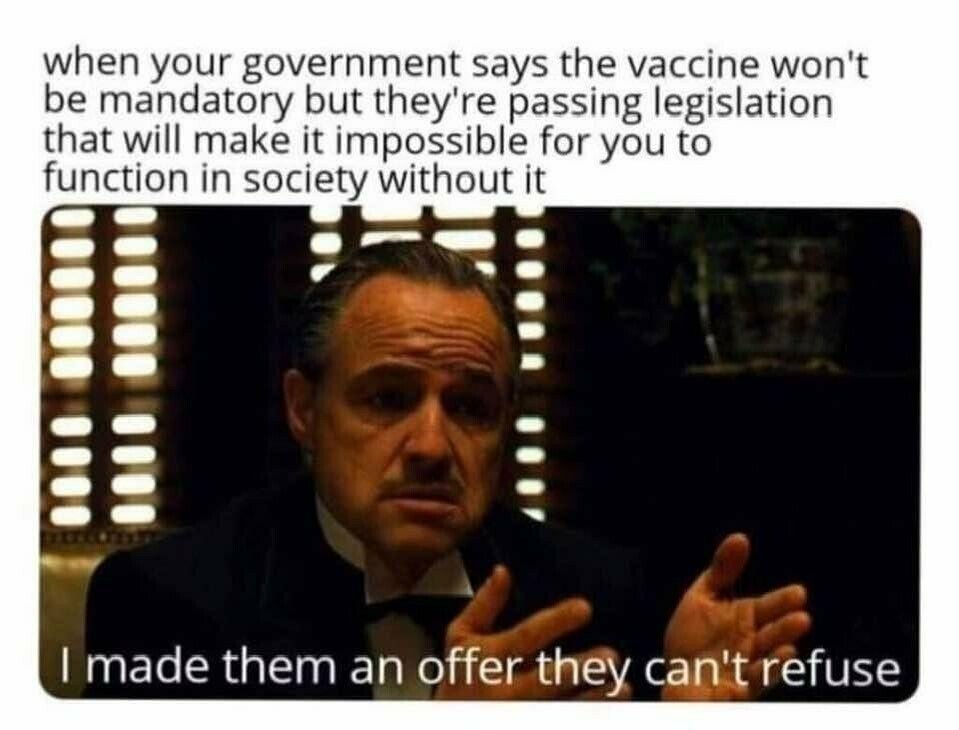
Gettin’ it yet?

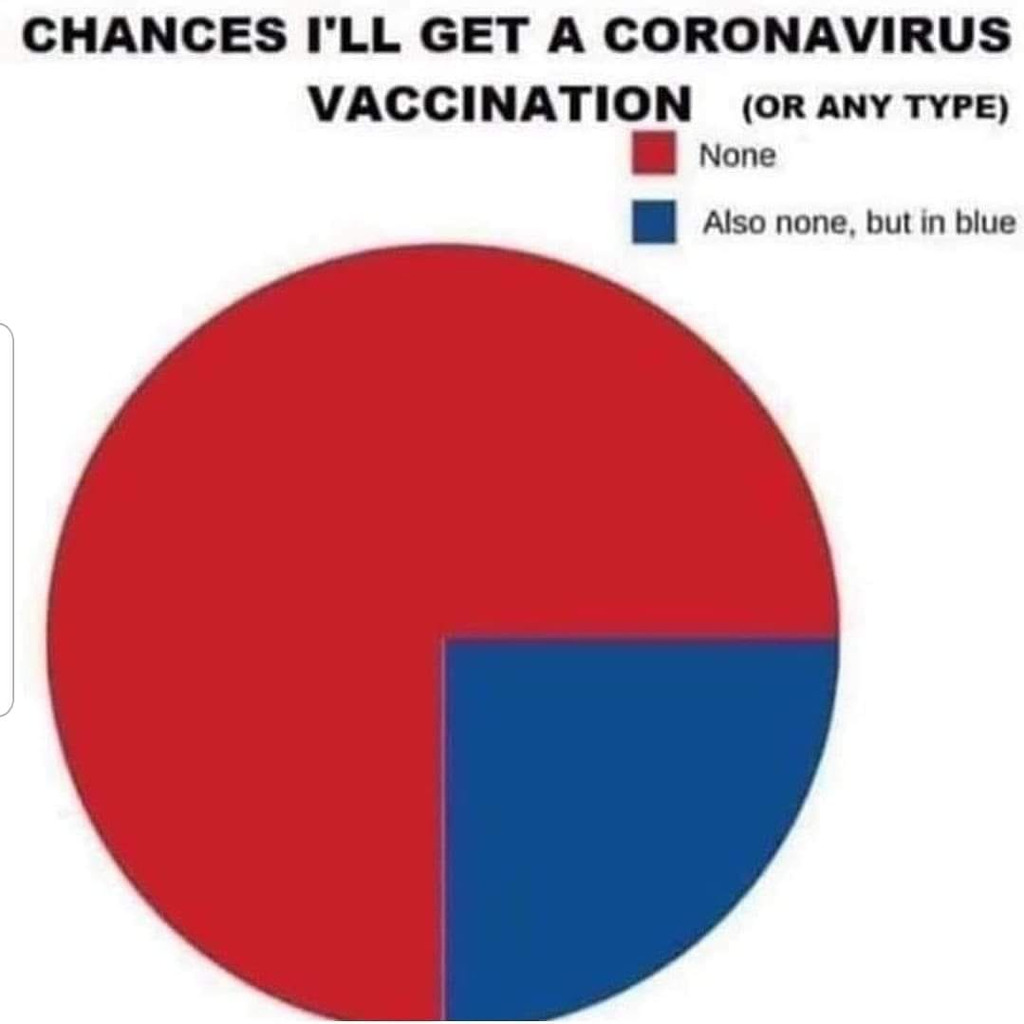
“I just don’t understand this sort of macho thing about, “I’m not gonna get the vaccine. I have a right as an American, my freedom to not do it,”‘ Biden said during the interview with Stephanopoulos. ‘Well, why don’t you be a patriot? Protect other people.”
He doesn’t understand the concept of freedom, really? Yes, Joe Biden, people have the freedom not to get the vaccine if they don’t want it. If you don’t understand that, you’re missing a rather critical part of being an American. There are people on both sides of the aisle who are not inclined to get the vaccine, that’s up to them and Biden really is the last one who should be questioning anyone’s patriotism.
Maybe, speaking of patriotism, he should demonstrate a little of it, by showing concern over releasing illegal aliens who have the virus into the country, as he has reportedly been doing? As Fox’s Peter Doocy explained during a press briefing exchange with Jen Psaki last week, 9% of those released in the Brownsville area, 204 people, were released into the country with the virus. Maybe that could be just a bit problematic? And it’s completely inconsistent with the narrative he’s pushing on the virus.
Seems that’s more concerning than that some folks might decide that for a variety of reasons they might not take the vaccine.
Every Friday, VAERS makes public all vaccine injury reports received by the system as of Friday of the previous week. This week’s data show that between Dec. 14, 2020, and March 5, a total of 31,079 total adverse events were reported to VAERS, including 1,524 deaths — an increase of 259 over the previous 7 days — and 5,507 serious injuries, up 1,083 over the same time period.
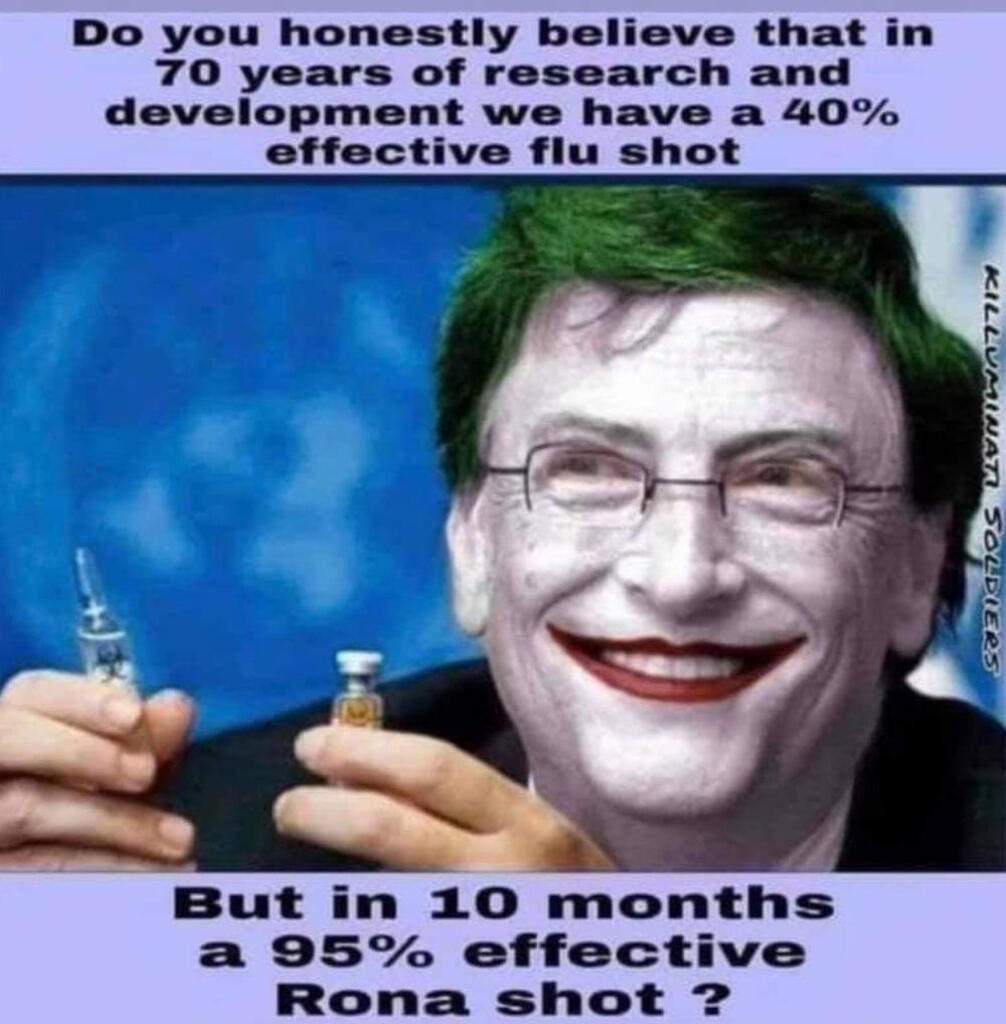
A Columbia Journalism Review expose reveals that, to control global journalism, Bill Gates has steered over $250 million to:
the BBC, NPR, NBC, Al Jazeera, ProPublica, National Journal, The Guardian, the New York Times, Univision, Medium, the Financial Times, The Atlantic, the Texas Tribune, Gannett, Washington Monthly, Le Monde, Center for Investigative Reporting, Pulitzer Center, National Press Foundation, International Center for Journalists, and a host of other groups.
To conceal his influence, Gates also funneled unknown sums via subgrants for contracts to other press outlets.
His press bribes have paid off. During the pandemic, bought and brain-dead news outlets have treated Bill Gates as a public health expert — despite his lack of medical training or regulatory experience.
Gates also funds an army of “independent” fact checkers including the Poynter Institute and Gannett — which use their fact-checking platforms to “silence detractors” and to “debunk” as “false conspiracy theories” and “misinformation,” charges that Gates has championed and invested in biometric chips, vaccine identification systems, satellite surveillance, and COVID vaccines.
“It’s science based. It’s sensible. You can hug your grandkids again. If you’ve been waiting to get a haircut, see the dentist, you can do that,” former CDC Director Tom Frieden told CNN.
The idea that people have refused to hug their children and grandchildren over the fear of contracting the COVID-19 virus is heartbreaking. But even more worrisome is the fact that the CDC thinks it can grant or revoke that “freedom” to folks based on whether or not they take the shot.
“We know that people want to get vaccinated so they can get back to doing the things they enjoy with the people they love,” said CDC Director Rochelle P. Walensky, in a statement last week. “There are some activities that fully vaccinated people can begin to resume now in the privacy of their own homes.”
Aside from the obvious problems of people thinking the government can tell them when and where they can see and hug their children and grandchildren, there is the underlying principle of freedom. Requiring a vaccine for “freedom” is exactly the opposite of “freedom.”
Whether or not you agree with an individual’s choice to vaccinate themselves is irrelevant. While there will likely be many folks cheering on the state in these situations of forced medication and the silencing of critics, how you feel personally about vaccines should never lead to a loss of freedom — for anyone. No person should be forced by government regulation or societal pressure to receive any medication or treatment, including vaccines, against his or her will. This is the very foundation of freedom.
Prosecutors in Italy have launched a manslaughter investigation after a music teacher there died hours after getting the controversial AstraZeneca COVID-19 vaccine.
Sandro Tognatti, 57, got jabbed in his hometown of Biella on Saturday afternoon and went to bed that night with a high fever, his wife, Simona Riussi, told Italian media.
She called an ambulance the next morning but the clarinetist could not be saved, she said.
Prosecutors in the northern Italian region of Piedmont opened the probe into his death later that day, according to the Italian wire service Agenzia Nazionale Stampa Associata (ANSA).
They also seized nearly 400,000 shots of the AstraZeneca vaccine from the same batch.
A Norwegian journalist bizarrely claimed she would “love to die from the AstraZeneca vaccine” if it meant other people in Europe were not discouraged from taking it.
The statement was made in the headline of Linn Wiik’s article, which literally translates as “I would love to die from the AstraZeneca vaccine.”
The AstraZeneca COVID-19 vaccine has been temporarily pulled by numerous countries across Europe, including Spain, France, Portugal, Cyprus, Austria, Denmark, Slovenia and Norway, due to reports of blood clotting and several deaths of people who took the jab.
In response to the news, Wiik defiantly suggested that she would be prepared to die from taking the vaccine if it meant others were not discouraged from taking it.
“Some must be sacrificed in the war against the corona,” she wrote. “That’s the way it is in all wars. This time it may well be me.”


You must be logged in to post a comment.