
What a brilliant idea or not…

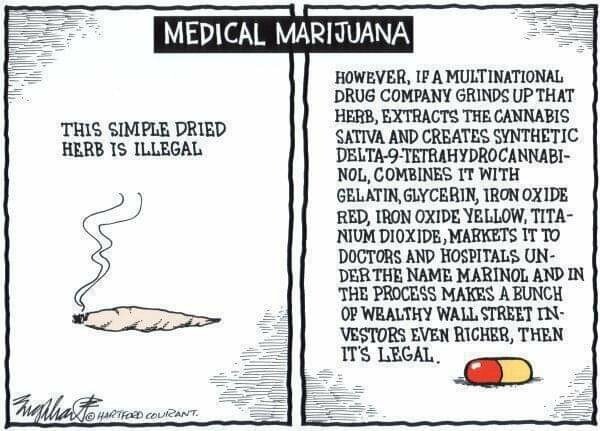
The California Legislature on Monday approved a $100-million plan to bolster California’s legal marijuana industry, which continues to struggle to compete with the large illicit pot market nearly five years after voters approved sales for recreational use.
Los Angeles will be the biggest beneficiary of the money, which was proposed by Gov. Gavin Newsom to be provided as grants to cities and counties to help cannabis businesses transition from provisional to regular licenses.
“California voters approved Proposition 64 five years ago and entrusted the Legislature with creating a legal, well-regulated cannabis market,” said Assemblyman Phil Ting (D-San Francisco), the chairman of the Assembly Budget Committee. “We have yet to reach that goal.”
Many cannabis growers, retailers and manufacturers have struggled to make the transition from a provisional, temporary license to a permanent one renewed on an annual basis — a process that requires a costly, complicated and time-consuming review of the negative environmental effects involved in a business and a plan for reducing those harms.
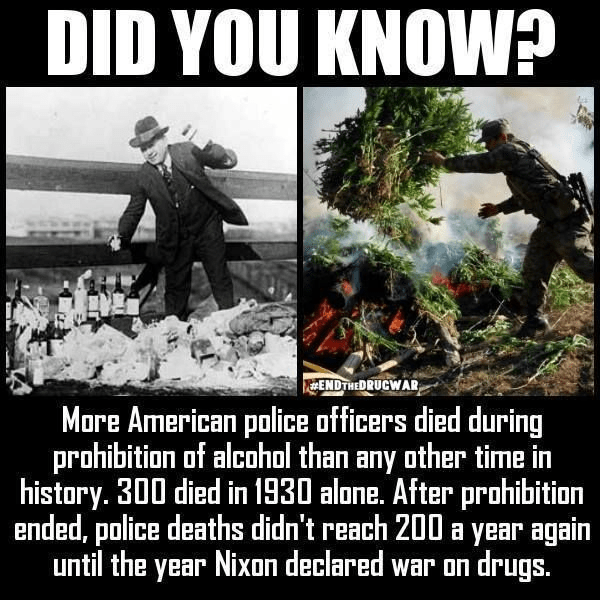
Apair of House Democrats introduced legislation on Tuesday that would decriminalize possession of all drugs at the federal level for personal use and begin the process of prioritizing a public health approach to drug use over punishment and policing. These are the necessary first steps, advocates say, for ending the war on drugs 50 years after it was first declared by President Richard Nixon.
Representatives Cori Bush (D-Missouri) and Bonnie Watson Coleman (D-New Jersey) introduced the Drug Policy Reform Act, which would eliminate federal criminal penalties for possession of any drug for personal use, including marijuana, cocaine, opioids, various psychedelics and other drugs banned under the Controlled Substances Act. The bill aims to begin repairing some of the damage to communities and the lives of individuals caused by the drug war, which has contributed heavily to mass incarceration and other forms of state violence that have fallen hardest on low-income communities and people of color.
“The economic stability of our carceral state depends on this misguided and racist policy, and we are here to say, no more, it’s time that we end this destruction,” Bush told reporters on Tuesday, adding that, as a nurse in St. Louis, she saw how criminalization and stigma harms people who use drugs. “Imagine what we could do if we built systems of care that treated and supported people…that is the world we should build.”


ON APRIL 10, 1953, ALLEN DULLES, THE NEWLY APPOINTED DIRECTOR OF THE CIA, delivered a speech to a gathering of Princeton alumni. Though the event was mundane, global tensions were running high. The Korean War was coming to an end, and earlier that week, The New York Times had published a startling story asserting that American POWs returning from the country may have been “converted” by “Communist brain-washers.”
Some GI’s were confessing to war crimes, like carrying out germ warfare against the Communists–a charge the U.S. categorically denied. Others were reportedly so brainwashed that they had refused to return to the United States at all. As if that weren’t enough, the U.S. was weeks away from secretly sponsoring the overthrow of a democratically elected leader in Iran.
Dulles had just become the first civilian director of an agency growing more powerful by the day, and the speech provided an early glimpse into his priorities for the CIA. “In the past few years we have become accustomed to hearing much about the battle for men’s minds–the war of ideologies,” he told the attendees. “I wonder, however, whether we clearly perceive the magnitude of the problem, whether we realize how sinister the battle for men’s minds has become in Soviet hands,” he continued. “We might call it, in its new form, ‘brain warfare.’”
Dulles proceeded to describe the “Soviet brain perversion techniques” as effective, but “abhorrent” and “nefarious.” He gestured to the American POWs returning from Korea, shells of the men they once were, parroting the Communist propaganda they had heard cycled for weeks on end. He expressed fears and uncertainty–were they using chemical agents? Hypnosis? Something else entirely? “We in the West,” the CIA Director conceded, “are somewhat handicapped in brain warfare.” This sort of non-consensual experiment, even on one’s enemies, was antithetical to American values, Dulles insisted, as well as antithetical to what should be human values.


 Hellbound and Down
You must be logged in to post a comment.