
Sleight of hand…

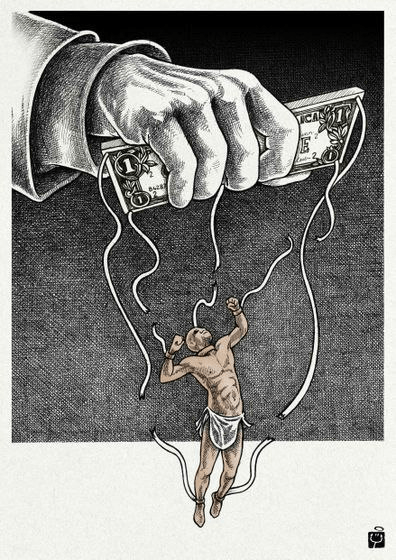


The US has a long and gruesome history of slavery that has affected almost every part of its culture. Children in school learn the harsh circumstances that slaves were forced to live with and the incredible cruelty white slave owners showed them. American history teachers know how important it is to teach the horrors of slavery—not only so the mistakes of the past aren’t repeated but because the long-term oppression and cruelty toward black people extends even to modern times in important cultural issues such as police brutality and a cycle of poverty that is directly linked to racism caused by slavery.
What isn’t often taught is that there were many black people who not only participated in the slave trade but who often profited greatly from it. They owned slaves as property in order to enhance their own economical well-being by having free labor for their plantations. Many were biracial children of former white masters and were either freed or were left some property in a will. The American South is infamous for using slaves on their large plantations, and many of the black slave owners on this list are from South Carolina and Louisiana. Some were considered slave magnates (for owning more than 50 slaves), but others earned their place simply for their unique stories.
On Wednesday, lawmakers voted 415-14 to pass legislation that would make Juneteenth a federally recognized holiday, meant to celebrate the end of chattel slavery in the country. The vote has stirred controversy because of the name of the holiday — Juneteenth National Independence Day.
Critics say “independence day” was deliberately chosen to stoke divide by diminishing the actual day Americans declared independence from the crown. Those who opposed the bill said it would have been a unanimous vote had lawmakers simply named it ‘Juneteenth National Emancipation Day.’
Indeed, calling it independence day is not fully accurate as emancipation is literally defined as “the freeing of someone from slavery” — which is what happened on that day.
While both sides continue to argue, however, they are missing the point entirely — slavery never really ended, it was merely redefined.
Nearly a dozen mayors in towns and cities across the United States are moving forward with local plans to offer reparations in one form or another to black Americans in an attempt to rectify the alleged lingering effects of U.S. slavery.
The group, Mayors Organized for Reparations and Equity, consists of high-profile U.S. mayors such as Eric Garcetti of Los Angeles and Steven Adler of Austin, Texas, along with executives from smaller cities such as Asheville, N.C.’s Esther Manheimer and Keisha Currin of Tullahassee, Okla.
The mayors “are committed to moving that needle with action and advocacy that points toward justice and healing the wounds of history,” the group says on its website.
A left-wing writer for the Guardian says apple pie tastes of genocide of indigenous people with an aftertaste of slavery.
Food writer and activist Raj Patel wrote an article for the Guardian called: “Food injustice has deep roots: let’s start with America’s apple pie.” Patel argues that apple pie is rooted in colonialism and slavery.
Patel wrote, “The apple pie is as American as stolen land, wealth, and labor. We live its consequences today.”
Patel then brings up that the apple pie and most of its ingredients are not from America, which is true. There have been only small, wild crabapples native to North America until apples (Malus domestica) were brought from England to the Jamestown settlement in 1607. Preceding that, the initial wild species of apples (Malus sieversii) was initially from Central Asia, in areas like modern-day Kazakhstan and China, and brought to Europe through the Silk Road trade routes. “Several societies were consuming apples in present-day Greece and Italy since 2000 BCE,” reported by the World Atlas.
Patel claimed that apples came to the western hemisphere with Spanish colonists in the 1500s in what was called the Columbian Exchange, but is now called a vast and ongoing genocide of indigenous people.
Patel says that he believes the planting of apple trees in Virginia “was used to demonstrate to the state that land had been improved.” He added, “John Chapman, better known as Johnny Appleseed, took these markers of colonized property to the frontiers of U.S. expansion where his trees stood as symbols that indigenous communities had been extirpated.’
Encyclopedia Britannica states that the “age of modern colonialism began about 1500, following the European discoveries of a sea route around Africa’s southern coast (1488) and of America (1492).”
However, the first recorded recipe for apple pie was written in 1381 in England, reported by Smithsonian Magazine, noting that the pie was made with apples, figs, raisins, pears, and saffron, and it is possible it did not include sugar.
The writer then links the sugar in the apple pie to slavery.


 Hellbound and Down
You must be logged in to post a comment.