Turn in Illegal Knives for a Free Year of Netflix, German Police Suggest

People who voluntarily hand in banned and dangerous knives should be rewarded with a year-long Netflix subscription, the head of one of the largest German police unions has said.

The most popular pocket knife costs €17 while an annual Netflix subscription amounts to €170, making the exchange worthwhile for anyone willing to dispose of their knives. “For this measure to be effective, the federal government must create serious incentives for sellers,” Jochen Kopelke, head of the Gewerkschaft der Polizei (GdP), added.

Knife crime has been soaring in Germany: according to police statistics, close to 13,844 knife-related attacks were committed last year, a significant increase compared to the 10,131 cases recorded a year earlier. The Charité hospital in Berlin said this week that the number of patients treated for stab wounds this year has already reached 50 to 55—a number they usually tend to in a whole year. “This is a threatening development for society,” Ulrich Stöckle, managing director of the hospital’s Centre for Musculoskeletal Surgery, said.

Most of the perpetrators of violence in Berlin “are young, male and have a non-German background. This also applies to knife violence,” Barbara Slowik, the police commissioner of Berlin recently said in an interview.

Knife crime has been especially rife among the migrant communities in Germany, with Syrian and Afghan perpetrators making the headlines in recent months. One of the most shocking attacks was committed by an Afghan failed asylum seeker in May in Mannheim: the 25-year-old man, who had been living in the country illegally for nine years, murdered a policeman.

Most recently, a Syrian migrant seriously injured a four-year-old girl in a supermarket in the southern German city of Wangen im Allgäu, and a 17-year-old Syrian was arrested for stabbing a family of five in Stuttgart. The latter case is particularly disturbing, as the attacker had reportedly committed 34 criminal acts in 31 months—but the police kept letting him go.

Support for resuming deportations to both Syria and Afghanistan has increased, but the government is unwilling to deport dangerous criminals because Germany has declared both countries unsafe.

Readers of the German daily Bild, the country’s highest-circulation newspaper, vented their anger at the government for doing nothing. “Deport everyone who is dangerous. Enough is enough,” wrote one of them. “These types of criminals are ridiculing our country,” wrote another. A third reader compared the situation to recent violent protests in Britain, saying: “Politicians are horrified, but no one is taking action. We can already see in England where this type of behaviour leads to.”

Keep reading

Minnesota Supreme Court Rules That Threatened Person Must Retreat Before Brandishing a Weapon

The Minnesota Supreme Court ruled in a split decision that a person who is being attacked or threatened must retreat if “reasonably possible” instead of brandishing a weapon.

The court upheld two second-degree convictions of assault with a deadly weapon against a man who was armed with a machete who alleged that he was threated by another man with a knife at a light rail station in Minneapolis in 2021.

A 4–2 decision, issued Wednesday by the state’s high court, said that Minnesota law stipulates that there is a “duty to retreat” when reasonably possible before using deadly force. That applies when the person faces bodily harm, the judges ruled.

In its decision Wednesday, the state court wrote that the “duty to retreat when reasonably possible—a judicially created element of self-defense—applies to persons who claim they were acting in self-defense when they committed the felony offense of second-degree assault-fear with a device designed as a weapon and capable of producing death or great bodily harm.”

The plaintiff in the case, Earley Romero Blevins, brandished a machete after a man with a knife allegedly threated him at a rail station in Minnesota. The man approached Blevins as he was arguing with a woman, according to Blevins, who said that the man armed with the knife told him to come to a shelter at the station so he “could slice” his throat.

Blevins had argued that he feared for his life and was acting in self-defense when he produced the machete, according to the ruling. The justices, however, said that after they reviewed video footage of the incident, they found that he had ample opportunity to leave the situation.

Keep reading

This Elderly Man Was Arrested After Shooting a Burglar in Self-Defense—Because His Gun Was Unlicensed

Dennis Powanda and Vincent Yakaitis are bound together by a common experience: They were both criminally charged in connection with an attempted burglary. Powanda was the burglar, and Yakaitis was the property owner.

Ah, justice.

Indeed, that’s not a misprint, parody, or a bad joke (although I wish it were the latter). Powanda was arrested and charged with criminal trespass and burglary, along with other related offenses, for executing the botched raid a little before 2:00 a.m. in February 2023 at Yakaitis’ property in Port Carbon, Pennsylvania. The government charged Yakaitis, who is in his mid-70s, with using a firearm without a license after he shot Powanda, despite that it appears prosecutors agree Yakaitis justifiably used that same firearm in self-defense.

Whatever your vantage point—whether you care about criminal justice reform and a fair legal system, or gun rights, or all of the above—it is difficult to make sense of arresting and potentially imprisoning someone over what essentially amounts to a paperwork violation. That injustice is even more glaring when considering that Powanda, 40, allegedly charged at Yakaitis, who happens to be about three and a half decades older than Powanda.

Pennsylvania’s permitting regime does carve out a couple of exceptions, one of which would seem to highly favor Yakaitis. Someone does not need a license to carry, according to the law, “in his place of abode or fixed place of business.” Yakaitis owned the home Powanda attempted to burglarize. The catch: He didn’t live there—it reportedly had no tenants at the time of the crime—opening a window for law enforcement to charge him essentially on a technicality.

If convicted, Yakaitis faces up to five years in prison and a $25,000 fine. Quite the price to pay for protecting your life on your own property. The misdemeanor charge also implies that Yakaitis has no history of using his weapon inappropriately, or any criminal record at all, as Pennsylvania law classifies his particular crime—carrying a firearm without a license—as a felony if the defendant has prior criminal convictions and would be disqualified from obtaining such a license. In other words, we can deduce that Yakaitis was a law-abiding citizen and eligible for a permit, which means he is staring down five years in a cell for not turning in a form and paying a fee to local law enforcement. OK.

Yakaitis is not the first such case. In June, law enforcement in New York charged Charles Foehner with so many gun possession crimes that if convicted on all of them he would face life in prison. Police came to be aware of his unlicensed firearms when Foehner defended himself against an attempted mugger—the surveillance footage is here—after which they searched Foehner’s home and found that only some of his weapons were licensed with the state.

Keep reading

New York can’t stop churchgoers from bringing guns to worship: appeals court

An appeals court panel has ruled against a New York law that prohibits the carrying of firearms into houses of worship, upholding a lower court decision that blocked the law from taking effect.

On Friday, a three-judge panel of the United States Court of Appeals for the Second Circuit released a 261-page opinion regarding four cases centered on multiple challenges to New York’s Concealed Carry Improvement Act.

Regarding the Act’s provision banning concealed carry in places of worship, the panel ruled that “Plaintiffs have sufficiently alleged that the CCIA burdens their sincerely held religious practice.”

“CCIA is not neutral because it allows the owners of many forms of private property, including many types of retail businesses open to the public, to decide for themselves whether to allow firearms on the premises while denying the same autonomy to places of worship,” stated the ruling.

“By adopting a law that applies differently as to places of worship (alongside the other enumerated sensitive places) than to most other privately owned businesses and properties, the CCIA is, on its face, neither neutral nor generally applicable.”

Keep reading

Man killed by Aurora officer was being robbed: police

A man killed by Aurora Police this week was being robbed when he pulled a gun on another man, triggering the police encounter that led to this death, the department said on Friday.

Police have said officers, who observed the bus-stop dispute on surveillance cameras, went to the scene early Wednesday morning after seeing the man pull a gun on someone. But in a Friday update, the department said someone was trying to steal the man’s backpack.

It was around 2:30 a.m. Wednesday at a bus stop in the Del Mar Parkway neighborhood. Officers were watching a camera overlooking the area near East Colfax Avenue and Havana Street when they spotted the dispute, police said.

“Officers immediately responded when they observed one of those men produce a firearm and point it at the other man. Officers arrived at the intersection and aired they were in contact with the armed man. Moments later, the officers aired shots had been fired. Only one officer discharged his firearm,” the Friday release reads.

Keep reading

HOW MISSOURI’S ‘FELONY MURDER’ LAW TRAPS PEOPLE FOR DEFENDING THEMSELVES

Technically speaking, Antonio Meanus wasn’t supposed to own the gun he had stashed in his pants on Oct. 7, 2021. But he didn’t believe he had much of a choice.

Earlier that day in Springfield, Missouri, Meanus, a tall, 30-year-old man with a goatee and shoulder-length dreadlocks, had gotten a call from a man named Raquan White, the son of his former boss. White said he was in a financial bind. He was going to come up short on his next rent payment and wanted to sell an iPhone to a 17-year-old named I’Shon Dunham. But White had dealt with Dunham in the past and said that he “didn’t feel trustworthy.” So Meanus says White asked him to come along to make sure Dunham didn’t rob him.

Meanus, who had grown up in some of the roughest areas of St. Louis, told White that the whole thing was a bad idea and offered to just give him some money. But White insisted on going. Not one to abandon a friend, Meanus got in the car.

It had been an unusually warm fall day for the city’s 170,000 residents. About halfway through the ride to the meetup point, Meanus again tried to convince White to go home instead.

“I said, ‘This don’t sound right,’” Meanus told The Appeal in a phone interview from the state’s Crossroads Correctional Center. “Let’s just turn around and go back.” White assured him it would be fine and kept driving.

They eventually reached a two-story apartment building on 422 East Norton Road. Newly planted trees dotted the lawn around the parking lot. Dunham and a stranger emerged from the red brick apartment building. The stranger’s hand was tucked under his shirt. Dunham, a slender teenager with big eyes, a wide smile, and a peach-fuzz beard, hopped into the front seat and asked for the iPhone. But White first demanded to know what the uninvited guest was doing there.

“He cool,” Dunham said.

Dunham then lunged forward, tried to grab the iPhone, and began grappling with White in the front seat. After a brief struggle, Dunham wordlessly pulled out a gun and pointed it at White’s head.

Meanus panicked. He believed that both he and White would be killed. So he pulled out his gun and shot Dunham, killing him.

Distressed, Meanus called the police to report what had happened. He knew he couldn’t have done anything else in the circumstances. He didn’t know, however, that a single state law had already taken away his right to save himself.

Keep reading

New York bans most civilians from wearing bulletproof vests

New York Gov. Kathy Hochul has banned most state residents from buying bulletproof vests for civilian use with very few exceptions.

The law, which went into effect on July 6, banned all state residents “not engaged or employed in an eligible profession” from purchasing, owning, selling, exchanging, giving away or personally disposing of body armor.

The “eligible professions” initially only included police officers, peace officers and people currently serving in the United States Armed Forces or in the New York State Army or Air National Guard.

The law was pushed through the New York State Legislature following the mass shooting at a grocery store in Buffalo in May that killed 10 people. When the law was initially passed, it only banned “bullet-resistant soft body armor,” which could have potentially served as a loophole for civilians who wanted to buy bulletproof vests made with steel, ceramic or polyethylene plates.

Notably, this loophole does not cover the steel-plated vest the Buffalo gunman wore during the shooting, which was strong enough to stop a bullet fired from the firearm of one of the grocery store’s security guards.

Democratic State Assemblyman Jonathan Jacobson, the lead sponsor of the bill, admitted that they did not know the difference between the different kinds of body armor when they were writing the bill.

“I think the important thing was that we took important steps that lessened the possibility that criminals will be using bulletproof vests in commission of crimes,” he claimed, adding that he is willing to rework the legislation to cover body armor using steel, ceramic or polyethylene plates.

Keep reading

Leftists Lash Out: 22-Year-Old Who Stopped Mall Mass Shooting Was No ‘Good Samaritan’

Leftists are pushing back against the praise being poured on 22-year-old Elisjsha Dicken by claiming he was no “Good Samaritan.”

On July 19, 2022 Breitbart News noted that Dicken was receiving praise from police, mayors, and the very mall–Greenwood Park Mall–where Sunday’s attempted mass shooting occurred. He had his handgun on him, thanks to constitutional carry, and was able to engage and ultimately kill the attacker before the attacker could further execute his heinous attack.

A common statement in praise poured out was that Dicken was a “Good Samaritan.” But some on the left cannot handle the fact that Dicken was armed and ready and took care of business.

For example, David Leavitt tweeted, “You’d never need a “Good Samaritan” with a gun at Greenwood Park Mall or at any other place if there weren’t any guns to begin with.”

He also opined, “It wasn’t a “Good Samaritan” at Greenwood Park Mall. It was an armed vigilante.”

And CBS 4 Indianapolis traffic anchor Justin Kollar suggested:

The term, ‘Good Samaritan’ came from a Bible passage of a man from Samaria who stopped on the side of the road to help a man who was injured and ignored. I cannot believe we live in a world where the term can equally apply to someone *killing* someone… my God.

Michael Bloomberg-affiliated Shannon Watts, leader of Moms Demand Action, tweeted:

The NRA won’t tell you that defensive gun use is rare, and data shows criminal carry laws increase gun crime and gun homicides in the states where they’re passed. But most of all, these deadly laws increase gun sales, which is the real reason they’re pushing them.

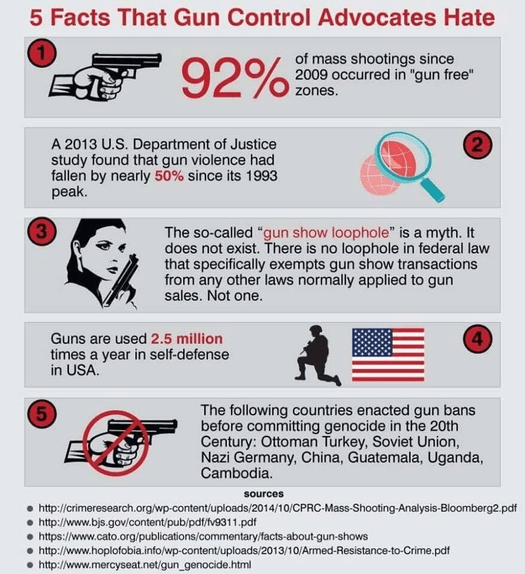
On February 19, 2015, Florida State University criminologist Gary Kleck re-affirmed his findings there are a minimum of 760,000 defensive gun uses each year in the U.S. 

Kleck’s numbers first came to the public’s attention in the early 1990s and are yet to be refuted with empirical evidence.

On July 14, 2022, Breitbart News pointed to a study from the Crime Prevention Research Center showing 60+ times a concealed carry permit holder stopped a mass shooting between December 17, 1991, and May 25, 2022.

Keep reading