
Experts say it may take a couple of years before students can resume classes without the risk of an outbreak,especially among grade-school children. They say a combination of herd immunity, a coronavirus vaccine and hygienic practices are needed to bring the virus down to low enough levels and allow schools to safely return to normal.
Tag: science
Science!(tm)

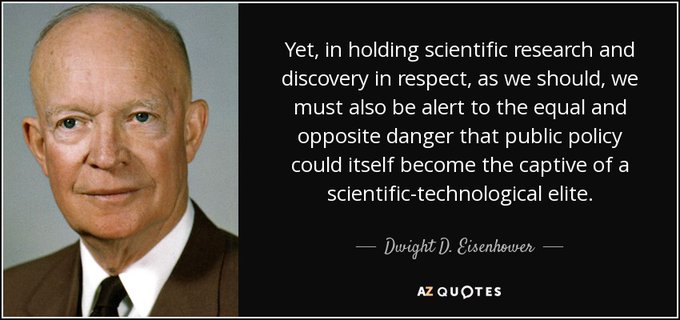
Dwight D. Eisenhower on Scientism…
Scientism!

Yale scientists restore cellular function in 32 dead pig brains
The image of an undead brain coming back to live again is the stuff of science fiction. Not just any science fiction, specifically B-grade sci fi. What instantly springs to mind is the black-and-white horrors of films like Fiend Without a Face. Bad acting. Plastic monstrosities. Visible strings. And a spinal cord that, for some reason, is also a tentacle?
But like any good science fiction, it’s only a matter of time before some manner of it seeps into our reality. This week’s Naturepublished the findings of researchers who managed to restore function to pigs’ brains that were clinically dead. At least, what we once thought of as dead.
THE JUNK SCIENCE COPS USE TO DECIDE YOU’RE LYING
The search for a foolproof method of lie detection has a “long history,” said Richard Leo, a professor of law and psychology at the University of San Francisco School of Law and an expert on interrogation practices. “The search for some way to be able to read body language, demeanor, vocal pitch, gestures and then infer with a high degree of accuracy whether someone is telling the truth.” It just doesn’t exist, he said. He likens many of the claims about human lie detection to claims of psychic ability. “This reminds me of psychics and the lottery. If there was a psychic and they could see what the lottery numbers are, that would just be gold, right? Why wouldn’t they win $400 million when the Powerball is up there?”
For The First Time, CRISPR Gene-Editing Has Been Used on Squid
For the first time, the innovative CRISPR gene editing method has been used on squid, marking a milestone in the scientific study of these creatures – and opening up many new areas of potential research.
CRISPR enables very precise, speedy, and low-cost DNA edits. Put simple, the ingenious molecular workings of the method are often described as something that allows us to ‘cut’ and ‘paste’ genes; in humans it promises to give us a way of tackling disease and killing superbugs at the genetic level.
In this case CRISPR-Cas9 genome editing was used on Doryteuthis pealeii (the longfin inshore squid) to disable a pigmentation gene, turning off the pigmentation usually found in the squid eye and inside specialised skin cells called chromatophores.
“This is a critical first step toward the ability to knock out – and knock in – genes in cephalopods to address a host of biological questions,” says marine biologist Joshua Rosenthal, from the Marine Biological Laboratory (MBL) at the University of Chicago.
Girl you know it’s true…

The budget hog…your tax dollars at work…

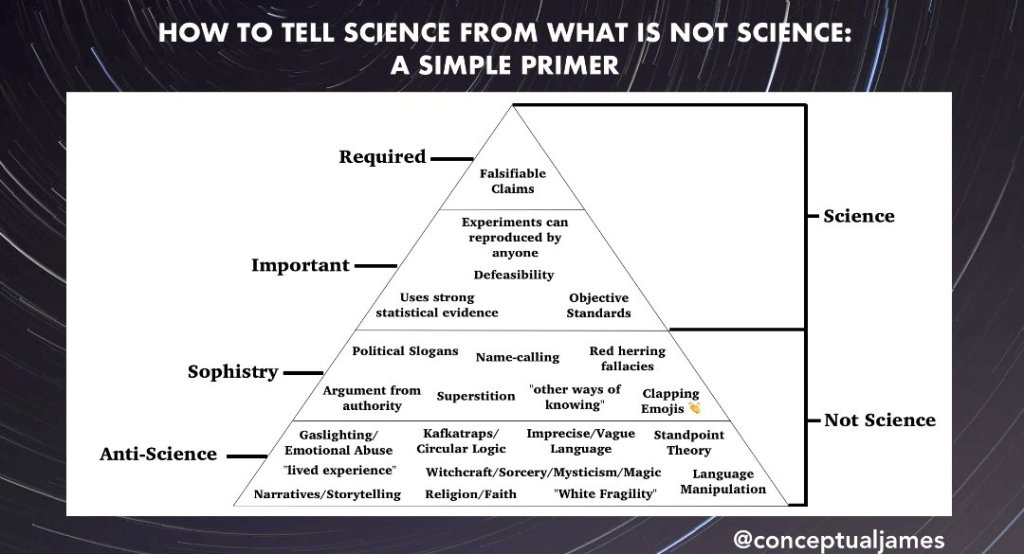
Science(tm)!
 Hellbound and Down
You must be logged in to post a comment.