That time the US military tried to make foxes glow in the dark to freak out Japanese soldiers

The US military has been known for hare-brained hoaxes to try to scare enemies by exploiting what they think are the opposing group’s cultural beliefs and superstitions. For example, in the early 1950s, the US Air Force created a vampire hoax by killing a Filipino guerrilla and poking holes in his neck. Over at Mysterious Universe, Nick Redfern tells several other similar psy-ops stories, including an absurd tale from the 1950s of the US Office of Strategic Services (OSS)—the predecessor to the CIA—who coated foxes with glow-in-the-dark (and radioactive) paint to freak out Japanese soldiers. From Mysterious Universe:

[Psychological operations strategist Ed] Salinger proposed that they focus on using the Japanese fox spirit and Shinto harbinger of doom the kitsune, which were said to have all manner of magical powers and which Salinger insisted many Japanese believed actually existed. They went about fashioning whistles that made the sound of a foxlike “call of the damned,” a spray which smelled like fox, and the piece de la resistance, actual live foxes that would be made up to look like the magical kitsune spirits. They went about catching live foxes and then moving on to the next step of the plan, which involved somehow making them glow in the dark. There were several ideas spitballed around before they settled on using glow-in-the-dark paint using the very radioactive and very dangerous substance radium. The next step was to see if the glowing foxes would actually accomplish what they were meant to do, which meant testing them out, and the next stage of this bonkers operation was launched.

Keep reading

EXPOSED: DISTURBING DETAILS OF NEW PENTAGON “PERCEPTION MANAGEMENT OFFICE”

Ken Klippenstein, an investigative journalist at The Intercept, has exposed how the Pentagon very quietly launched a new internal division, dubbed the “Influence and Perception Management Office” (IPMO), in March.

Its existence is not strictly secret, although there has been no official announcement of its launch, let alone an explanation from Department of Defense (DoD) officials as to its raison d’être or modus operandi. Its budget likewise remains a mystery but purportedly runs into the “multimillions.”

Pentagon financial documents from 2022 offer a laconic and largely impenetrable description of IPMO. The Office, it is said, “will serve as the senior advisor” to Under Secretary of Defense for Intelligence & Security, Ronald S. Moultrie, on “strategic and operational influence and perception management (reveal and conceal) matters”:

It will develop broad thematic influence guidance focused on key adversaries; promulgate competitive influence strategies focused on specific defense issues, which direct subordinate planning efforts for the conduct of influence-related activities; and fill existing gaps in policy, oversight, governance, and integration related to influence and perception management matters. [IPMO]…provides necessary support to National Defense Strategy…to address the current strategic environment of great power competition.”

Nonetheless, references to “reveal and conceal” and “influence and perception management” are tantalizing in the extreme. So too, is IPMO’s position within the U.S. national security structure and the Office’s acting director being intimately tied to the Pentagon’s spookiest operations.

Despite its low-key rollout, IPMO looks set to be a hugely influential new DoD agency in the future, waging ceaseless information warfare at home and abroad. What makes the new venture all the more sinister is that such capabilities are nothing new; the Pentagon has managed multiple similar, if not identical, operations in the past and continues to do so, despite significant controversy and public backlash.

Indeed, the DoD’s official dictionary has a dedicated definition of “perception management”, linking the practice to “psychological operations,” which are defined as actions intended to influence the “emotions, motives, objective reasoning, and ultimately the behavior” of target governments, organizations, groups, and individuals:

Actions to convey and/or deny selected information and indicators to foreign audiences to influence their emotions, motives, and objective reasoning as well as to intelligence systems and leaders at all levels to influence official estimates, ultimately resulting in foreign behaviors and official actions favorable to the originator’s objectives. In various ways, perception management combines truth projection, operations security, cover and deception, and psychological operations.”

This, of course, begs the question of why a new incarnation of what came before and never went away is now being inaugurated by the U.S. defense establishment. As we shall see, no reassuring answers are forthcoming.

Keep reading

FROM SIMP TO SOLDIER: HOW THE MILITARY IS USING E-GIRLS TO RECRUIT GEN Z INTO SERVICE

Amid a crisis in recruitment, the U.S. military has found a new way of convincing a war-weary Generation Z to enlist: thirst traps.

Chief among these attractive young women in uniform posting sexually suggestive content alongside subtle (and sometimes not-so-subtle) calls to join up is Hailey Lujan. In between the thirst traps and memes, the 21-year-old makes content extolling the fun of Army life to her 731,000 TikTok followers. “Don’t go to college, become a farmer or a soldier instead,” she instructs viewers in a recent video. “Just some advice for the younger people: if you’re not doing school, it’s ok. I dropped out of college. And I’m doing great,” she adds.

If Lujan feels like a psyop (a psychological operation) it is because, technically, she is. Lujan is a psychological operations specialist; one of a small number of Army personnel whose job is to carry out influence and disinfo operations, either on or offline. Thus, she is using her femininity to recruit legions of lustful teens into an institution with an infamous record of sexism and sexual assault against female soldiers.

According to Lujan, being a soldier is the “coolest job in the world.” She certainly does make Army life look fun, as she abseils down walls, fires a howitzer, and flies around in an Apache helicopter. “101st airborne division knows what the girls (and boys) really want”, she notes as she plays around with a high-tech, remote controlled robot.

Until late last year, Lujan’s social media accounts were far more tame. But as she pivoted towards content of her in skimpy outfits or suggestive, military-related videos and pictures, her following exploded to nearly three-quarters of a million on TikTok alone. Judging by the comments, her army of followers sees military life in a new light.

Keep reading

Govt. Nudge Units Find the “BEST” Ways to Manipulate the Public

Freedom of speech means a lot to us at the OP.  However, that’s been fading fast, as Daisy has documented, and as though speech restrictions aren’t bad enough, most of us have been lab rats for central planners’ behavioral experiments longer than we probably care to realize.  And now there are Nudge Units.

Huge amounts of money have been poured into “nudge research,” determining the best ways to get populations to change their behaviors without passing laws or using force.

What are Nudge Units?

Let’s look at how these “Nudge Units” got started, what they’ve been used for most recently, and what they’re likely to focus on next.

The concept of “nudging” people into making better choices became popular with the book Nudge—Improving Decisions About Health, Wealth, and Happiness, authored by Richard Thaler and Cass Sunstein, and published in 2008. Their book defines a nudge as:

. . .any aspect of the choice architecture that alters people’s behavior in a predictable way without forbidding any options or significantly changing their economic incentives.  To count as a mere nudge, the intervention must be easy and cheap to avoid.  Nudges are not mandates.  Putting fruit at eye level counts as a nudge.  Banning junk food does not.  (p.6)

(You may be interested to note that author Sunstein is married to Samantha Power, the administrator of Biden’s US Agency for International Development and previously Obama’s ambassador to the UN. Forbes listed Ms. Power as the 63rd most powerful woman in the world in 2014. Do you think she’s Nudging? ~ Daisy )

Individuals in government and industry quickly realized that the authors’ insights into the decision-making process could be used to manipulate that process in the minds of the general public, many of whom don’t have the time or mental energy for NYT bestsellers.

The British government established its first Behavioural Insights Team in 2010.  It began as a seven-person team within a Cabinet Office nicknamed the “Nudge Unit” then became an independent social purpose company in 2014 before being purchased by Nesta, a larger social purpose company, in 2021.

These social purpose companies employ experts in promoting desirable behaviors.  So in Britain, for example, they want to cut obesity rates in half and reduce household carbon emissions by 28% by 2030.

Keep reading

INSIDE THE PENTAGON’S NEW “PERCEPTION MANAGEMENT” OFFICE TO COUNTER DISINFORMATION

NOT LONG AFTER the 9/11 attacks, the Bush administration launched what it called the Office of Strategic Influence, which would seek to “counter the enemy’s perception management” in the so-called war on terror. But it quickly became clear that the office, operating under Defense Secretary Donald Rumsfeld, would be managing those perceptions with its own disinformation.

As the New York Times reported at the time, its work was to “provide news items, possibly including false ones, to foreign journalists in an effort to influence overseas opinion.” In the nascent Internet age, observers worried the propaganda could boomerang back on Americans.

“The question is whether the Pentagon and military should undertake an official program that uses disinformation to shape perceptions abroad,” the Times reported in 2004. “But in a modern world wired by satellite television and the Internet, any misleading information and falsehoods could easily be repeated by American news outlets.”

Now, two decades later, “perception management” is once again becoming a central focus for the national security state. On March 1, 2022, the Pentagon established a new office with similar goals to the one once deemed too controversial to remain open. Very little has been made public about the effort, which The Intercept learned about through a review of budget documents and an internal memo we obtained. This iteration is called the Influence and Perception Management Office, or IPMO, according to the memo, which was produced by the office for an academic institution, and its responsibilities include overseeing and coordinating the various counter-disinformation efforts being conducted by the military, which can include the U.S.’s own propaganda abroad.

Keep reading

Psyops Are Not New, Just More Dangerous

Since the international insanity began three years ago in the Spring of 2020, several compelling theories have emerged regarding those who have used this time to suppress freedoms and control the population.

For example, Debbie Lerman has effectively argued that lockdowns in the US were not about health, but about counter-terrorism. The state response is to control the population, and not let go of those controls once they are in place.

Aaron Kheriaty has effectively argued that we have entered a new realm of the Security State, all our actions monitored, tracked, and controlled.

Most disturbing of all, Jeffrey Tucker has effectively argued that scientific consensus has overwritten individual choice, giving us a vaccine which we all would be required to take, and which naturally leads to eugenics.

In reading these kinds of well-positioned articles, and the reactions to them on social media, it’s easy to get the impression that we have entered a truly Brave New World, one which did not formerly exist, and is an entirely new phenomenon.

The simple fact is that they are not new ideas. Man desires power over man. But even the parts of the recent attacks on humanity that may seem new are not entirely new. As outlined in the articles above, one such idea is that the government and companies have been performing psyops against us, to control our emotions and dictate our actions. 

But how do you convince the population that this mode of existence is desirable? You have to change the way they think. Is that new?

In his brilliant documentary, The Century of the Self, Adam Curtis describes how companies and governments used the psychological ideas of Sigmund Freud to manipulate people’s emotions for their own purposes and ends throughout the 1900s. 

Edward Bernays, the nephew of Freud, was chiefly responsible for bringing these ideas of mass manipulation to large corporations and the US government. In one example explored in Curtis’ documentary, the taboo against women smoking in public was preventing the large tobacco companies from selling to half of their potential market. 

Bernays hired a group of debutantes to appear in the Easter Sunday parade of 1929 in New York, under the guise that they represented the women’s suffrage movement. During the parade all the women smoked cigarettes, referencing the phrase “Torches of Freedom.” Cigarette sales to women began to take off.

What’s key here is that Bernays did not just get the women in the parade, he also alerted the press that it was happening. The press happily took photos and repeated “Torches of Freedom” in articles written for papers around the country. So the press unwittingly (or complicitly) aided Bernays in his campaign to encourage more women to smoke. Sound familiar?

Even as doctors became increasingly aware that cigarettes not only did not promote freedom, but could easily kill you, the song and dance continued. Cigarette campaigns used the medical establishment to give consumers the idea that cigarettes are safe. Again, sound familiar?

Bernays’ work with the US government included what now would be called a color revolution in Guatemala. Guatemala had a dictator who worked well with the United Fruit Company (now Chiquita), procuring bananas for sale in the US. The problem was that the workers were essentially slaves, and they revolted, electing a new leader, Dr. Juan Jose Arévalo, who installed a constitution modeling the US. 

He was followed by Jacobo Arbenz, who took the lands away from the banana company. They didn’t like that and went crying to Uncle Sam. Bernays came to the rescue, and staged anti-American pro-Communist rallies, including of course, a healthy dose of violence. No matter that Arbenz did not call himself a Communist or had any ties to Moscow. It didn’t take long for the American people to be frightened of a new Communist threat to the south, and get behind the idea that this new leader was a threat and must go. 

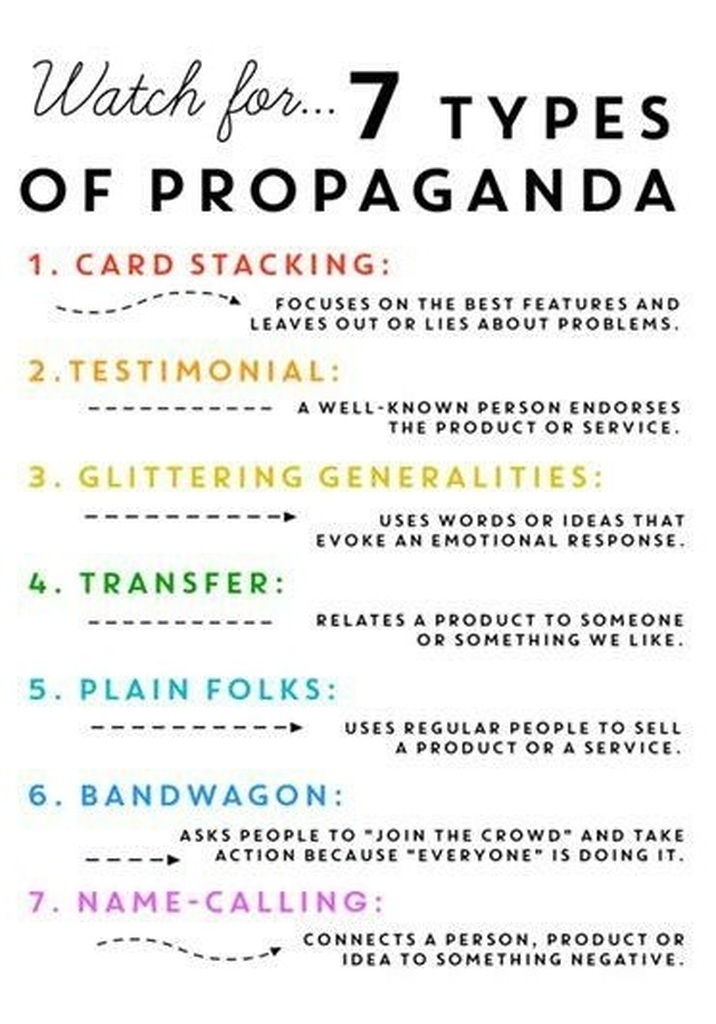
Bernays even came up with a new phrase for how he had manipulated the minds of Americans; he called it the Engineering of Consent. And this wasn’t the first time Bernays added a phrase to the lexicon. When he started with big business in the 1920s he thought the word propaganda was so negative, so he came up with a new one: public relations.

Keep reading

US Uses UFO Psyop to Hide Crimes and Advance Military Agenda

The strategies used by the US to distract public opinion seem increasingly stupid. Now, Washington is resorting to science fiction mechanisms, promoting the narrative of “UFO attacks”. The reasons seem quite simple: to prevent the media from paying attention to the recent chemical disasters in the country and at the same time generate concern among citizens about alleged “unknown threats”, which may enable the advancement of military agendas.

A few days after shooting down a Chinese weather balloon claiming “risks to national security”, Washington decided to deepen its conspiracy theories. Now, the US government claims to be monitoring the activities of alleged UFOs in its territory. According to American and Canadian authorities, some of these UFOs would have been shot down in the border region between both countries – however, very suspiciously, the debris of the unknown objects have not been found yet.

The American government has refrained from accusing any country of launching the alleged UFOs, although some propagandists have suggested Chinese involvement, linking the episode to the case of the weather balloon. More than that, the Americans even resorted to bizarre and unrealistic speculations about a possible “alien visit”. For example, when asked about the “possibility” that the incidents were an actual contact with extraterrestrial beings, General Glen Van Herck, commander of U.S. Northern Command and the North American Aerospace Defense Command (NORAD), stated that he does “not rule out anything”.

“I’ll let the intel community and the counterintelligence community figure that out (…) I haven’t ruled out anything (…) At this point, we continue to assess every threat or potential threat unknown that approaches North America with an attempt to identify it”, he said during a press conference.

Keep reading

Why Does Humanity Still Tolerate the Tragedy of Wars in the 21st Century? 

Since the end of the Second World War (1939-1945), there have been many civil wars and several important regional military conflicts between two or more countries, but none has evolved into a general world war involving all the most heavily armed countries. The most serious regional wars were the Korean War (1950-1953), the Vietnam War (1955-1975), the Iraq War (2003-2011), the Syria War (2011- ), and the Ukraine War (2022- ).

Indeed, with no sign yet of peace in Ukraine, nine years after the overthrow of the elected Ukrainian government, in February 2014, and nearly one year after the Russian military invasion, last February 24—and with a real danger that such a prolonged proxy conflict between great powers could escalate into a nuclear world war—it may be appropriate to search for reasons why, in this 21st Century, the world is still threatened with murderous and destructive wars.

There are basic tendencies in human nature, structural institutional failures and geopolitical factors for why this is the case.

Let us identify the most important causes, which can explain why wars of aggression and proxy wars are still taking place today.

Keep reading