
Opportunism…

With legal recreational and medical cannabis now available in so many different US states, it is easy to get the impression that the war on cannabis users is over.
However, cannabis users still represent a significant portion of the people who are filling jails and courthouses throughout the country.
According to the FBI’s recent Uniform Crime Report, more people were arrested for cannabis possession last year than for all violent crimes put together.
The data showed that 545,602 people were arrested in the US for cannabis-related crimes last year. Meanwhile, just 495,871 people were arrested for violent crimes.
Nebraska’s Supreme Court just ruled that a previously approved measure to legalize medical marijuana is “unconstitutional” and therefore cannot appear on the state’s election ballot in November. This is, of course, anti-democratic and infuriating, but let’s take a look at how this happened.
First off, Nebraska Gov. Pete Ricketts is an idiot. Just last week he declared, “There is no such thing as medical marijuana.” Ricketts proclaimed this falsehood as the leader of a state where 77 percent of residents support legalizing cannabis for medicinal purposes.
Now on to the nitty gritty. Last July, the activist group Nebraskans for Medical Marijuana (NMM) collected more than enough signatures to qualify a medical weed bill to be included on the November election ballot.
Then, on August 28 the Secretary of State made it official: Nebraskans could decide for themselves whether or not to legalize medical marijuana by voting on Nebraska Medical Cannabis Constitutional Amendment (NMCCA).
Three days later, however, Sheriff Terry Wagner filed a lawsuit to block the measure, claiming it overstepped constitutional boundaries by covering too many topics for a single initiative. A state court initially tossed out the challenge. Yesterday, however, Sheriff “No-Pot” won.
The Nebraska Supreme Court declared that it agreed with Sheriff Wagner — a man who puts people in jail for possessing and using cannabis. With only two justices dissenting, the Supremes formally removed the proposal from the ballot.
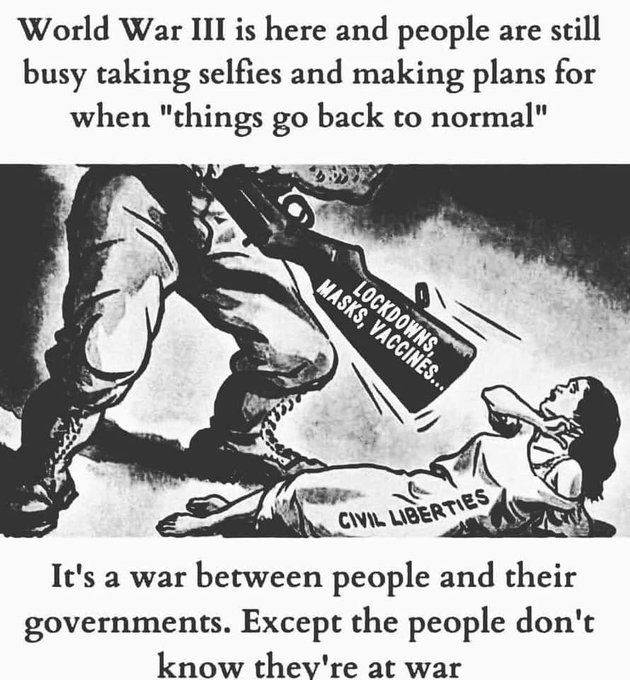
The coronavirus crisis has served as a powerful tool in highlighting many of the faults that previously existed in society. It exposed which politicians have an inherent need to control and which ones are guided by humility. It reminded us of the political power that lies in fear, and how crucial it is to be skeptical of prevailing narratives. It emphasized the different economic realities for those who live paycheck to paycheck and those who benefit from economic financialization.
It should also make perfectly clear the danger of handing over healthcare to the state.
Already we have seen agents of the state, at various levels, seek to leverage a viral medical crisis to expand their power. Governors and local officials have sought to use vague “emergency” powers to lock down businesses and to create criminal penalties, and have then attacked any attempts by judiciaries to rein in their actions. Judges have sought to leverage the power they hold in deciding child custody to force citizens to make medical decisions they disagree with. Anointed government experts, such as Dr. Anthony Fauci, in spite of his own inconsistencies, have been held up as the final word on science, at the expense of the voices of other credible scientists.
Whether by design or by the instinctual reaction, we have seen a concerted effort of government authorities—amplified by a corporate press with a particularly vivid political agenda, and supported by the credentials of an academic landscape that suffers from ideological capture—to weaponize a centralized scientific narrative for the purpose of achieving certain policy ends. It is appropriate that some have dubbed this union “the Cathedral,” as we have seen the divine right of kings renewed in the divine right of approved scientists.
None of this should be a surprise.
Ludwig von Mises, F.A. Hayek, Murray N. Rothbard, and others have long warned of the dangers of “scientism.” As Jonathan Newman has noted on this site, we’ve seen it play out increasingly in American pop culture with the fetishizing of figures like Neil deGrasse Tyson and Bill Nye.
Now, luckily, the current healthcare system has limits on the degree to which we, as individuals, must submit to the power of the “scientific consensus.” How long, however, will that doctor-patient relationship remain sacred?

Coronavirus passport trials are taking place at Heathrow this week to test technology to let people travel the globe without risk of being quarantined.
Passengers on United Airlines and Cathay Pacific are trying out an app called the CommonPass.
The phone software is a digital health pass which can hold a certified COVID-19 test status or show someone has been vaccinated in future in a way designed to satisfy various governments’ different regulations.
It has been launched by non-profit trust Commons Project Foundation, part of the World Economic Forum, in the hope of it will end the days of flyers producing bits of paper, often in different languages.
The tech is very much at the trial stage using volunteers on flights between London, New York, Hong Kong and Singapore under government observation.
But it is seen as a longer-term measure to allow air travel to return to something like pre-coronavirus levels.
However, it is reliant on Governments around the world accepting test results from ‘certified’ laboratories in other countries and allowing those with negative results to enter freely on their say-so.
Dr Bradley Perkins, chief medical officer of The Commons Project, said: ‘Without the ability to trust COVID-19 tests – and eventually vaccine records – across international borders, many countries will feel compelled to retain full travel bans and mandatory quarantines for as long as the pandemic persists.
‘With trusted individual health data, countries can implement more nuanced health screening requirements for entry.’
It comes as hopes for a UK airport testing breakthrough this week look set to be dashed after ministers decided to launch another review of the issue.

We’re told that life is never getting back to normal, so we need to suck it up and accept a world of mask-wearing, economic disruption, and social distancing. It’s a denatured echo of the warnings we’ve heard before that government responses to COVID-19 are pushing the world toward authoritarianism—but dressed up as if that’s a good thing.
That’s unfortunate, given that less-intrusive responses to the pandemic are proving at least as effective as heavy-handed ones. And that’s before we even discuss the inherent value of the freedom that looks destined to be pushed aside by public health concerns and by disingenuous government officials.
“As 2020 slides into and probably infects 2021, try to take heart in one discomfiting fact: Things are most likely never going ‘back to normal,'” wrote CNN International Security Editor Nick Paton Walsh last week. In his piece he discusses the likely permanency of mask mandates, telecommuting, reduced physical contact, and similar changes to life.
Some of the alterations Walsh mentions may be matters of personal choice, but a good many of them are imposed by “politicians who pretend that ‘normal’ is just around the corner,” as Babson College’s Thomas Davenport says in the article.
We’re supposed to accept our newly constrained lives as “the new normal”—in a phrasing that’s already very tired, indeed.
Actually, repeated references to a “new normal” aren’t just tired; they’re ominous.
 Hellbound and Down
You must be logged in to post a comment.