
Shh…

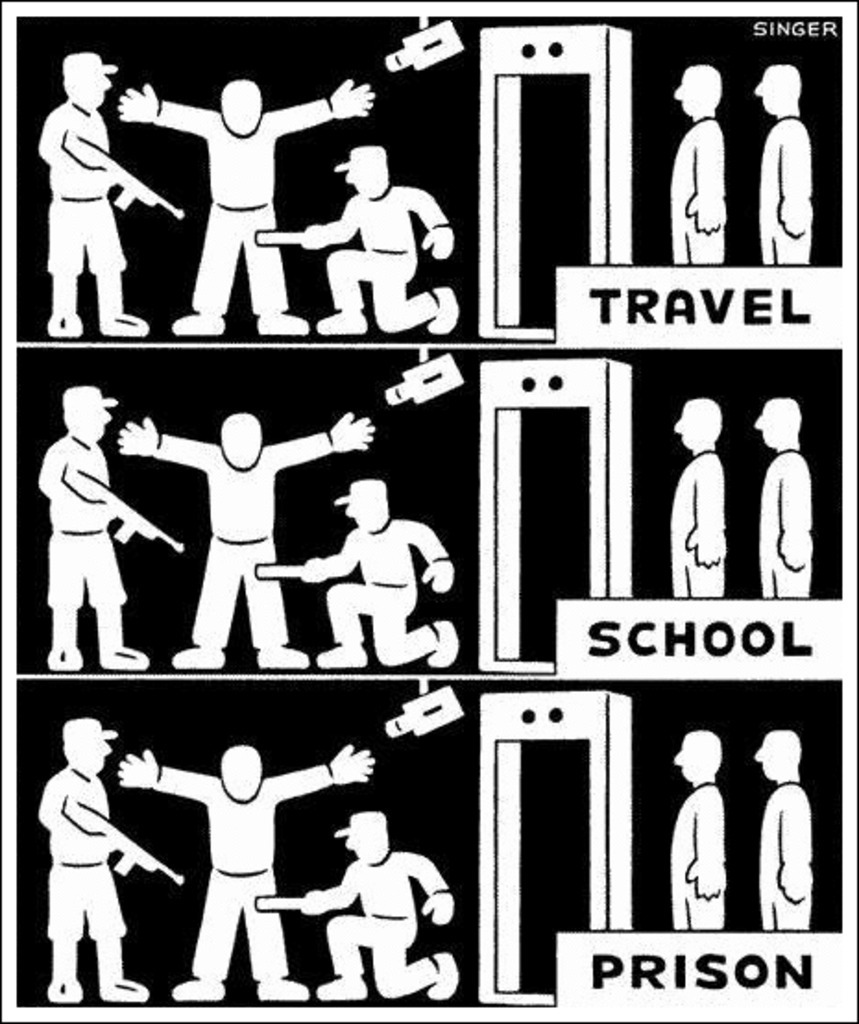
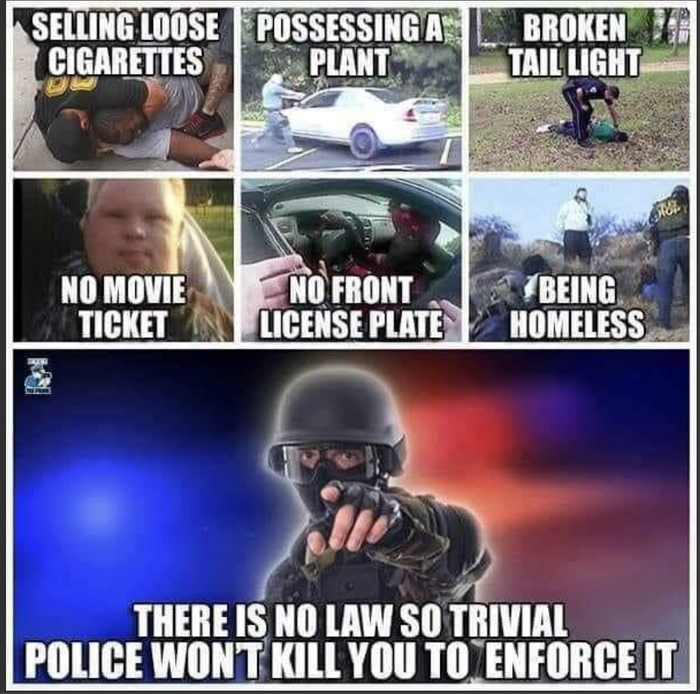

In 2020, The Free Thought Project reported on the work of two groups, Food Not Bombs and the Sidewalk Project, who raised $16,000 and built 26 tiny homes in Las Vegas for the city’s homeless community. It was an amazing feat put together by a handful of caring people trying to better their community but it came to a chaotic and destructive end when police and city officials raided the camp and destroyed all the homes.
The City of Las Vegas claimed that the destruction of the homes was justified as the city maintains “this right of way for NDOT, the property owner.” Joey Lankowski, who does homeless outreach with Food Not Bombs, sought to remedy this problem of building tiny homes on public property by raising money to purchase their own swath of land on private property.
Since last year, members of Food Not Bombs, the Sidewalk Project, and the New Leaf Community have been working tirelessly, volunteering countless hours of their personal time, to build a community of tiny homes on this newly owned piece of property.
For months volunteers built the tiny homes and allowed the community’s houseless population to live on the property. The community was thriving until earlier this year when the bureaucratic police state set their sights on the project’s private property.
The code enforcement division of the Las Vegas city government claimed that the property was in violation of zoning ordinance NLVMC 17.20.10 which states that the “accessory uses are not permitted” on the private property. According to the notice, a single family residence must be on the property before the tiny homes could be built and heavy fines would follow if they did not get “up to code.”
Since then, the city has waged an immoral war against the tiny home community and levied even more seemingly frivolous ordinance violations.
Inside a cavernous stone fortress in downtown Pittsburgh, attorney Robin Frank defends parents at one of their lowest points – when they are at risk of losing their children.
The job is never easy, but in the past she knew what she was up against when squaring off against child protective services in family court. Now, she worries she’s fighting something she can’t see: an opaque algorithm whose statistical calculations help social workers decide which families will have to endure the rigors of the child welfare system, and which will not.
“A lot of people don’t know that it’s even being used,” Frank said. “Families should have the right to have all of the information in their file.”
From Los Angeles to Colorado and throughout Oregon, as child welfare agencies use or consider tools similar to the one in Allegheny County, Pennsylvania, an Associated Press review has identified a number of concerns about the technology, including questions about its reliability and its potential to harden racial disparities in the child welfare system. Related issues have already torpedoed some jurisdictions’ plans to use predictive models, such as the tool notably dropped by the state of Illinois.
According to new research from a Carnegie Mellon University team obtained exclusively by AP, Allegheny’s algorithm in its first years of operation showed a pattern of flagging a disproportionate number of Black children for a “mandatory” neglect investigation, when compared with white children. The independent researchers, who received data from the county, also found that social workers disagreed with the risk scores the algorithm produced about one-third of the time.

Traffic halts at the sight of a Ukrainian soldier holding a wooden cross. Drivers and passengers step out of their cars to pay their respects. Following behind the soldier is a contingent of armed servicemen carrying a coffin.
A pedestrian kneels on the sidewalk as the column of troops turns to enter a graveyard where four more soldiers stand guard at an open grave. More than 200 civilians follow behind. Among them, dressed all in black, is the mother of 19-year-old Mykola Kuryk, whose body lies in the coffin, killed in battle at the end of March near Kyiv.
“He was ready to go places where no one else dared to go,” said the leader of Kuryk’s unit, the volunteer battalion of the Sonechko UPA Special Forces. “Even people with more experience. He did not know fear.”
Kuryk died on a special mission near the frontlines. Noting this, the Orthodox priest giving the final blessing observed, “There is no bigger love than to give your soul to your friends.”
His commander hands two medals to Kuryk’s father, honors for his son’s service. The coffin is lowered into the dark grave as the four soldiers standing guard fire a final salute. The smoke from the rifles vanishes into the blue sky as the coffin disappears below the earth.
Kuryk’s grave is next to several other newly filled ones. Much older graves, belonging to locals killed during World War II — the Great Patriotic War for Soviet veterans — are nearby. But there is room for many more.
Kuryk’s life and his service were both short; but since his death, he has become a flash cult hero in Ternopil. His picture hangs on billboards around the city, offering a promise that martyrs like him — who volunteered to defend his country after the Russian invasion in February — will never be forgotten. He may not be, but he will be part of a growing crowd.
This experience — the cycle of volunteering, fighting, dying, and honoring — is a demonstration of Ukraine’s new heavily militarized culture and martial social norms, a development that experts say will be hard to reverse even after the fighting stops and one that threatens to subsume all aspects of Ukrainian life.
In case you’ve been completely in the dark for the last decade, you’ve likely noticed that the United States is currently in the midst of an opioid crisis. This crisis knows no demographic, no race, no gender, no age limit, and no occupation—it hits them all. Due to the government-imposed lockdowns, 2021 marked the deadliest year in history for fatal drug overdoses with fentanyl claiming the lives of countless individuals.
Because the state enforces a drug war which outlaws far safer alternatives, fentanyl has grabbed a large portion of the illegal drug market and these synthetic opioids that are extremely dangerous are flooding the streets. Make no mistake, fentanyl is dangerous and kills people by the thousands but the government’s response to it is causing far more harm than good.
Instead of realizing the dangers brought on by enforcing a war on drugs which has led to the thriving illicit fentanyl market, much of law enforcement resorts to violence, fear tactics and propaganda to unsuccessfully scare people into compliance. A video was released this week by the Thomasville police department and it is nothing short of “scary propaganda.”
According to the Thomasville Police Chief Mitch Stuckey, one of his officers nearly died after working a drug bust and was “exposed to fentanyl.”
“Our officer did everything right” but was still somehow exposed to the opioid and could have died, Stuckey told WKRG.
According to the chief, after the officer was “exposed,” he drove all the way back to the department — after wrapping up the bust — and only collapsed once he got in front of the department’s surveillance camera. The officer was then given Narcan and rushed to the hospital.
“The officers [who aided the victim] were shook up” by the experience, Stuckey said.
The department released the subsequent video and dozens of media outlets have since picked it up and have been spreading it around. The department has not released the toxicology reports, nor what the hospital has said.
“Fentanyl is the most dangerous drug,” Stuckey said, saying the officer must have touched it or had it on his clothes. “An amount as small as a grain of salt can be fatal.”
While it is certainly true that fentanyl is extremely dangerous, simply being near it or even touching it, cannot hurt you. It has to be ingested.
In reality, where the Free Thought Project chooses to live, it is not possible to overdose from coming in contact with the drug without actually ingesting it. It is not absorbed through the skin nor does it have deadly “fumes.” Though fentanyl is certainly dangerous, unless the Thomasville police officer ate it, snorted it, or injected it, his collapse was either faked or completely unrelated.
But don’t take our word for it, listen to Dr. Ryan Marino, MD Medical Toxicologist, Addiction Medicine Specialist and Emergency Physician Assistant Professor at Case Western Reserve University School of Medicine, who has called out reports like this before.


You must be logged in to post a comment.