
The nerve!

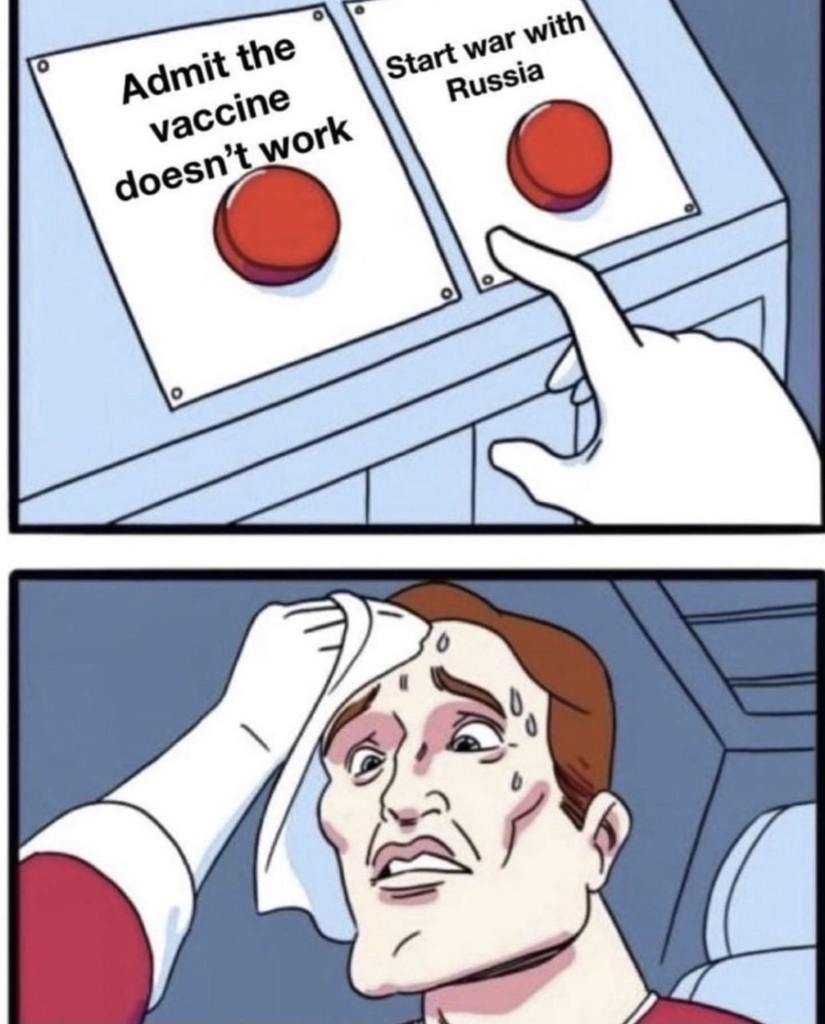
Washington cares less about Ukrainian independence and sovereignty than Russia. Its primary interest in the territory is its location right next to Russia; its other interests lie in the resources and markets a Ukraine under US influence offers. Of course, the latter also helps explain Russia’s determination not to let NATO assimilate Kyiv and the country it is the capitol of. If Washington was truly interested in the independence of the Ukrainian people, it would call for a resolution granting autonomy to the eastern Donbass region of Ukraine, where a war for that region’s secession from Ukraine has been waging since at least 2014 when the US/NATO sponsored color rebellion overthrew the elected government in Kyiv. It is that US-leaning government that Washington wants to preserve; a government first installed by US and NATO intelligence that may represent Ukrainian hopes, but certainly does not represent Ukrainian independence. Only the Ukrainian people can determine that and their voice is both muffled and mixed. Democratic socialists, unabashed capitalists looking towards the EU, families with old money stolen from the people after the dissolution of the Soviet Union, fascists whose legacy includes killing thousands of Jews and collaborating militarily with the Nazis, and millions of workers and farmers—these are the people of Ukraine. In my mind it is the last demographic which should have the greatest say in their nation’s future. However, if the rest of the world is any indication, their voice is the last to be heard.


No one will say it out loud, but the greatest argument against U.S. support for military action of any kind in Ukraine is the inerrant incompetence of our missions and the consistent record of destabilizing areas of strategic interest through our involvement, including in these two specific countries. At the moment the Berlin Wall fell the United States had almost limitless political capital with these soon-to-be ex-Soviet territories. We blew it all within a few years. Now that we’re really in trouble in Ukraine, why would we keep to the same playbook that got us here?
Our plan with every foreign country that falls into our orbit is the same. We ride in as saviors, throwing loans in all directions to settle debts (often to us), then let it be known the country’s affairs will henceforth be run through our embassy. Since we’re ignorant of history and have long viewed diplomats too in sync with local customs as liabilities, we tend to fill our embassies with people who have limited sense of the individual character of host countries, their languages, or the attitudes of people outside the capital.
Instead of devising individual policies, we go through identical processes of receiving groups of local politicians seeking our backing. We throw our weight behind the courtiers we like best. The winning supplicants are usually Western educated, speak great English, know how to flatter drunk diplomats, and are fluent in neoliberal wonk-speak.
We back Our Men in Havana to the hilt, no matter how corrupt they may become in their rule, a process we call “democracy promotion.” The cycle is always ends the same way, whether we’re talking about Hamid Karzai or Ayad Allawi or Boris Yeltsin. The white hat ally turns out to be either overmatched or a snake, usually the latter, and siphons off Western aid to himself and his cronies in huge quantities while smashing opposition by any means necessary. That brutality and corruption, combined with efforts to implement our structural adjustment policies (read: austerity, and the de-nationalization of natural resources) inevitably results in loss of popular support and/or the rise of opposition movements on the right, the left, or both.
Rising discontent in turn inspires further requests from the puppet for security aid, which we happily provide, since that ultimately is the whole point: selling weapons to foreigners to fill those Washington rice bowls. You will soon hear it in the form of increased calls for defense spending amid the Ukraine mess, but we’ve been at it forever.
One of the most bizarre but important dynamics of Trump-era U.S. politics is that the most fanatical war-hungry neocons, who shaped Bush/Cheney militarism, have become the most popular pundits and thought leaders in American liberalism. They have not changed in the slightest — they are employing the same tactics they have always invoked, and for the same causes — but they have correctly perceived that their agenda is better served by migrating back to the Democratic Party which originally spawned their bloodthirsty ideology.
The excuse offered by Democrats for their embrace of neocons — we did it only as a temporary coalition of convenience to oppose Trump — is false for many reasons. This unholy alliance pre-dated Trump. In 2014 — long before anyone envisioned Trump descending down an escalator on his path to the White House — the journalist Jacob Heilbrunn wrote a New York Times op-ed entitled “The Next Act of the Neocons.” He predicted, correctly as it turned out, that “the neocons may be preparing a more brazen feat: aligning themselves with Hillary Rodham Clinton and her nascent presidential campaign, in a bid to return to the driver’s seat of American foreign policy.”
China has introduced what it claims to be the world’s largest electrically-powered quadruped robot to assist the military on logistics and reconnaissance missions.
With a “yak-like appearance,” the four-legged robot can reportedly carry up to 352 pounds (160 kilograms) of payload and run at six miles (10 kilometers) per hour.
The platform’s structure is designed to withstand challenging off-grid military missions and conquer a wide variety of terrain, including cliffs, trenches, grasslands, fields, deserts, snow, and muddy roads.
Despite being reported as the heaviest and largest quadruped robot, the hi-tech unit can run, jump, turn, and walk diagonally.
According to state broadcaster China Central Television (CCTV), the platform has 12 modules and state-of-the-art sensors, allowing it to collect tactical battlefield information and perform logistics.
Potential military uses include all-weather operations in high-risk combat zones, remote border areas, and complex environments that have proven too challenging for soldiers.

 Hellbound and Down
You must be logged in to post a comment.