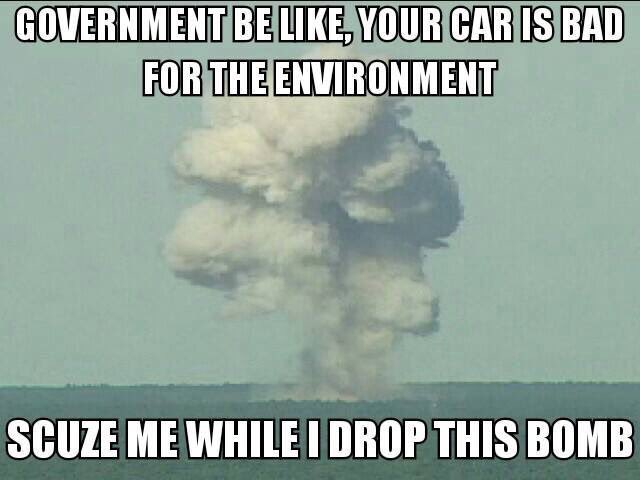
Remember Cash for Clunkers?

President-elect Joe Biden has received applause across the political spectrum over his picks for top foreign policy and national security roles in his incoming administration. But human rights groups and progressives have expressed concern about his choice for director of national intelligence (DNI), Avril Haines.
Haines, a former deputy CIA director who would be the first woman to serve as the top US spy chief if confirmed, played a central role in crafting the legal framework surrounding the Obama administration’s controversial, secretive drone war.
As a widely-cited 2013 Newsweek profile put it: “Haines was sometimes summoned in the middle of the night to weigh in on whether a suspected terrorist could be lawfully incinerated by a drone strike.”
“My concerns about her are more my concerns about the Obama administration,” Andrea J. Prasow, the deputy Washington director of Human Rights Watch, told the New York Times. “With these cabinet picks, we are returning to the previous administration instead of making bold and forward-leaning picks.”
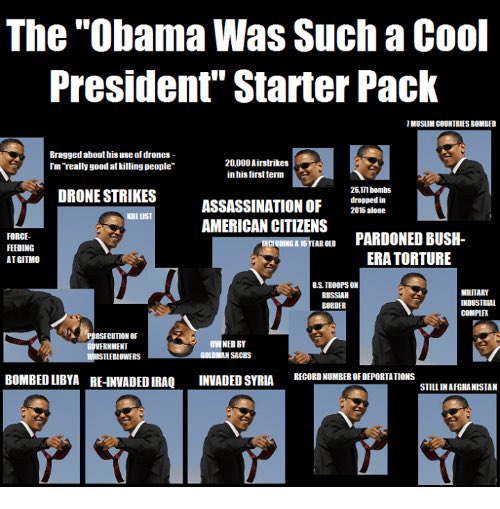
Former President Barack Obama still can’t shake his legacy as the “drone president” given he still holds the record for number of ordered covert assassination strikes via drones.
“There were ten times more air strikes in the covert war on terror during President Barack Obama’s presidency than under his predecessor, George W. Bush,” one prior human rights study found.
“Obama embraced the US drone program, overseeing more strikes in his first year than Bush carried out during his entire presidency. A total of 563 strikes, largely by drones, targeted Pakistan, Somalia and Yemen during Obama’s two terms, compared to 57 strikes under Bush,” the study said.
This infamously included not only the killing of Yemeni-American citizen Anwar al-Awlaki due to his suspected al-Qaeda links, but also his son, 16-year-old US citizen and Colorado native Abdulrahman Anwar al-Awlaki, by a drone airstrike ordered by Obama on October 14, 2011. The boy was not even suspected of a crime upon his death while he had been casually eating dinner with this friends at a cafe in Yemen.
The Obama administration later claimed the teen’s death was “collateral damage” and despite lawsuits related to the CIA operation, no US official has ever been held accountable for literally assassinating two US citizens without trial or so much as filing official charges.


If it wants to be taken seriously on the world stage, Russia should take a leaf out of Washington’s book and deploy more of its soldiers in other countries. That’s according to former US President Barack Obama.
In his new book, ‘A Promised Land’, the two-term president claimed that while Russia has “a nuclear arsenal second only to our own,” the country “wasn’t a superpower anymore,” as it “lacked the vast network of alliances and bases that allowed the United States to project its military power across the globe.”
Despite this view, Obama vented frustration at how effectively Moscow had been able to oppose many of Washington’s diplomatic goals. In particular, he bemoaned that “when US-backed initiatives came before the UN Security Council … Russia blocked them or watered them down.”
Back in 2008, Barack Obama famously harnessed the internet and social media to help win the White House. He kept up the embrace once he got there.
Now he worries that the internet and social media have helped create “the single biggest threat to our democracy.”
Obama has been saying a version of this for four years — since he left the White House — but his words are getting steadily more pointed. He’s clearly sounding an alarm, but it’s not exactly clear what he thinks we should do about it.

 Hellbound and Down
You must be logged in to post a comment.