
On memes…



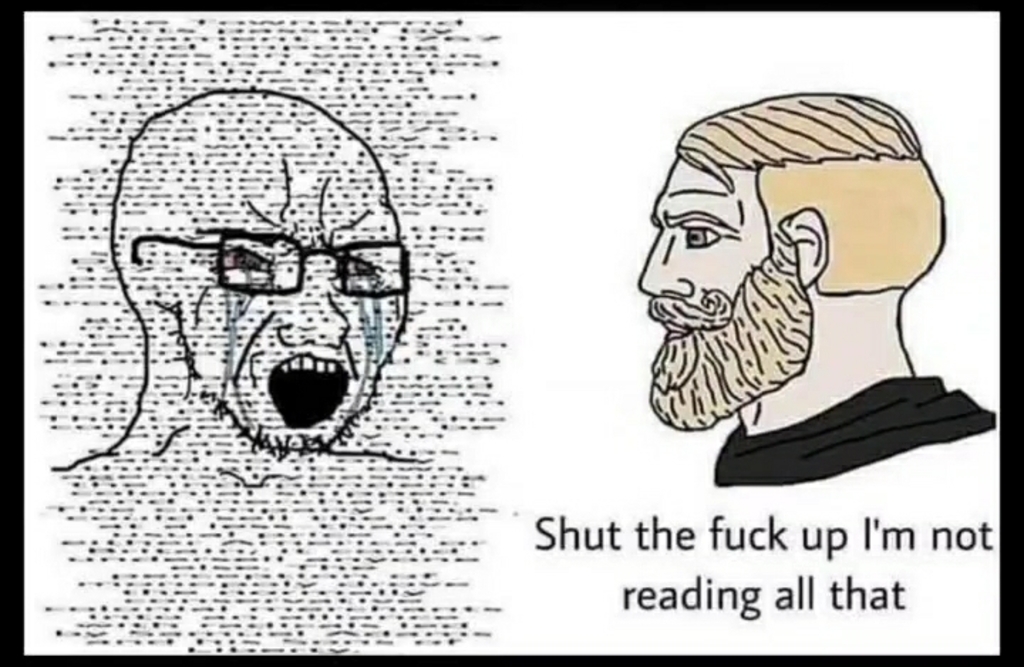
At Urban Dictionary, a user named Dankulous Memeulon plumbs the wisdom of the ancient truism that the political left tends to generate inept, insipid internet memes. He describes this phenomenon as “an absolute fact: Leftists and their shills CANNOT meme, and any attempt by them to do so ends up as either cringe-worthy and biased propaganda, or [as] cancerously inaccurate.” But Memeulon goes a step further and posits an explanation as to why this is true: “a possible cause […] is perhaps a leftist’s despicable attempts to stay politically correct, like all cucks, and thus they cannot, by their very nature, produce memes without fear of offending a minority who couldn’t care either way.”
I must confess that as a bald, cis-gendered, white, monogamous, conservative, heterosexual, Christian, male, English professor in his early 40s, I am too square to claim any expertise in creating dope-ass memes. But I do study them, along with the ongoing meme war that continues to intensify. Look no further than the WallStreetBets crowd over at Reddit, who have now learned how to burn hedge fund managers by pumping “meme stocks.”
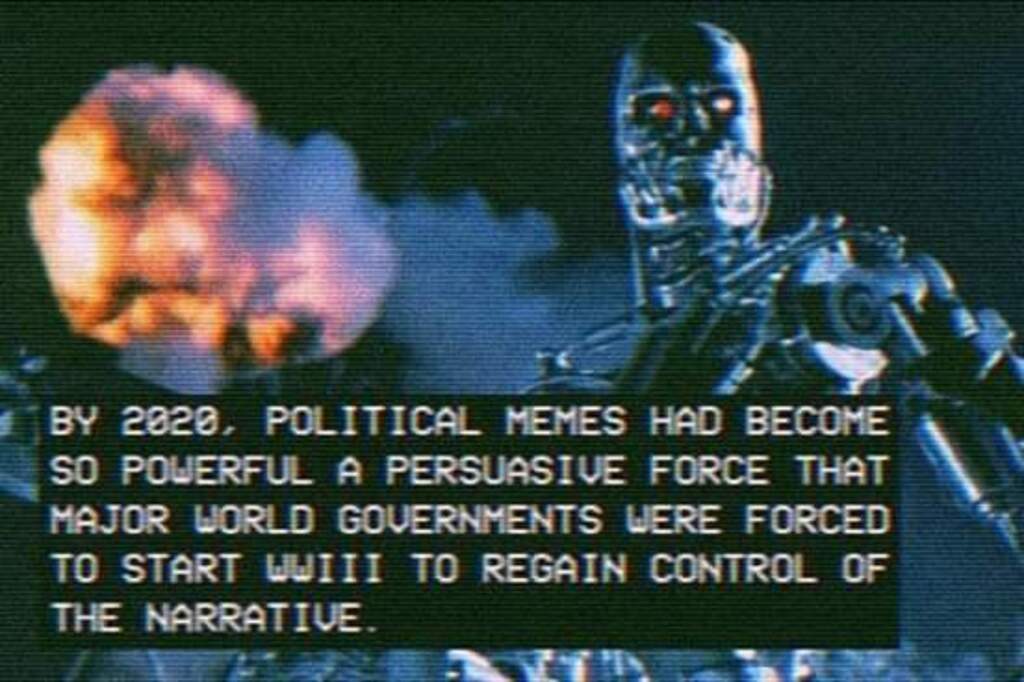
Many scholars have demonstrated the academic relevance of meme culture to understanding how digital communication helped to bring right-wing populism to a new prominence in American politics. But the circulation of political memes (and their resulting formalization as a genre of public discourse) hints at why it is that as mainstream culture moves further left, the culture also grows more ossified, more staid, and more rigid in its demands that people conform to a particular set of puritanical expectations regarding political speech.
Distilled to its essential rhetorical function, the purpose of the political meme is to expand the range of topics that are eligible for public scrutiny. Generally, this is achieved through an imagistic, minimalist lampooning of our culture’s prevailing pieties and the supposedly unquestionable assumptions that undergird them. In short, the key pathos of meme culture is irreverence: a disrespectful attitude toward the things that polite society holds sacred. Understanding how irreverence has operated in modern American life, and how the objects of American reverence have recently changed, not only sharpens the contours of the political realignment that is unfolding, it also explains why the left exhibits such inferior skill when it comes to creating internet memes.
There is no doubt that Douglass Mackey, the man behind the 2016 election-era alt-right “Ricky Vaughn” Twitter troll account, is a miscreant. He spewed anti-Semitic and otherwise abhorrent bile from his pseudonymous perch, contributing to a hostile Twittersphere climate.
Nevertheless, the Biden Department of Justice (DOJ) is legally wrong—and engaging in petty harassment of a political enemy—to expend limited prosecutorial resources to target Mackey, whose Twitter account has long been suspended, for alleged conspiracy to deprive others of their constitutional rights.
DOJ’s press release summarizes Mackey’s legally relevant underlying conduct: “As alleged in the complaint, between September 2016 and November 2016, in the lead up to the November 8, 2016, U.S. presidential election, Mackey conspired with others to use social media platforms, including Twitter, to disseminate fraudulent messages designed to encourage supporters of one of the presidential candidates…to ‘vote’ via text message or social media, a legally invalid method of voting.” The DOJ complaint specifies that the law Mackey is charged with violating is 18 U.S.C. § 241, which covers, in relevant part: “two or more persons conspir[ing] to injure, oppress, threaten, or intimidate any person in any State, Territory, Commonwealth, Possession, or District in the free exercise or enjoyment of any right or privilege secured to him by the Constitution or laws of the United States.”
Hold aside the point that voting in the United States constitutional order is, contrary to what myriad progressive Supreme Court justices have mused, better understood not as a “right” but as a state-regulated privilege subject only to federal oversight via circumscribing constitutional (namely, the 15th, 19th, 24th, and 26th Amendments) and statutory (namely, the Voting Rights Act of 1965) provisions. Prosecutors in the Eastern District of New York (EDNY) still have to prove an actively coordinated, multi-party conspiracy, and that such a conspiracy did not merely produce fraudulent tweets, but that those tweets actually had the effect of oppressing, threatening, or intimidating Hillary Clinton supporters who intended to vote for their preferred candidate. That is, in short, highly dubious—this case isn’t going anywhere. Moreover, who would have guessed that the Biden DOJ took such a dim view of Clinton voters, believing them to be so easily manipulated?


 Hellbound and Down
You must be logged in to post a comment.