Reasons…


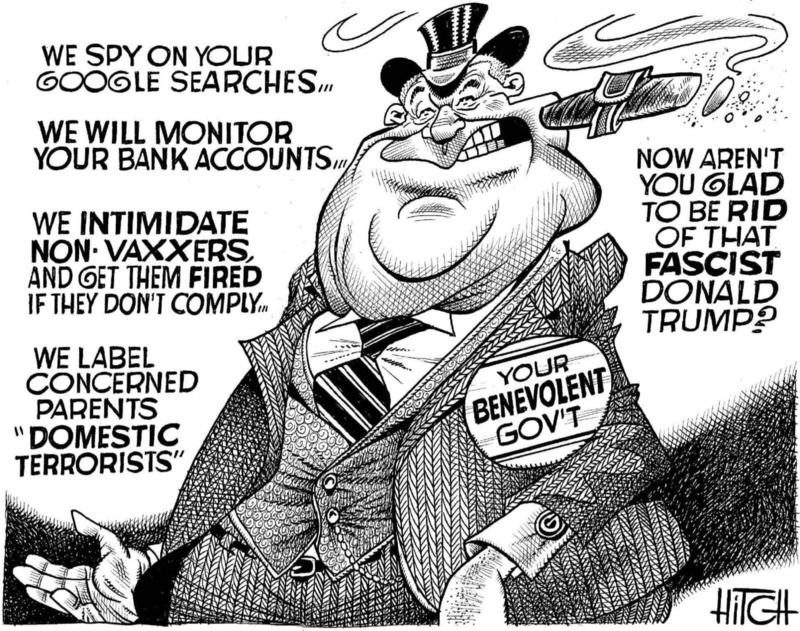
Los Angeles police officers have been directed to collect social media information on every civilian they interview, including people who haven’t been arrested or accused of a crime, according to the Guardian, citing leaked records.
According to the report, “field interview cards” used by LAPD officers contain instructions to record a civilian’s Facebook, Twitter, Instagram and any other social media accounts – along with basic biographical information. Chief Michael Moore has reportedly told cops to collect the data for use in “investigations, arrests, and prosecutions,” and has warned officers that the cards will be audited by supervisors to ensure they’re filled out completely.
“There are real dangers about police having all of this social media identifying information at their fingertips,” said Rachel Levinson-Waldman, a deputy director at the Brennan Center for Justice, which obtained the documents.
The Brennan Center conducted a review of 40 other police agencies in the US and was unable to find another department that required social media collection on interview cards (though many have not publicly disclosed copies of the cards). The organization also obtained records about the LAPD’s social media surveillance technologies, which have raised questions about the monitoring of activist groups including Black Lives Matter. -Guardian
Monitoring of social media accounts began in 2015, when the LAPD’s interview cards contained a line for “social media accounts.”
“Similar to a nickname or an alias, a person’s online persona or identity used for social media … can be highly beneficial to investigations,” wrote former LAPD Chief, Charlie Beck.
According to the LA Times, over half of civilians stopped by LAPD and had their personal details taken were not arrested or cited. Last October, criminal charges were filed against three officers in the LAPD’s metro division for using cards to falsely label civilians as gang members once they were stopped.

The 20th anniversary of September 11, 2001 is a particularly somber one, not just because of the horrific nature of events of that day reaching its second-decade milestone, but because of how little we seem to have learned in that amount of time.
The fear and trauma generated by the events of 9/11 were used by the U.S. national security state and its civilian allies to great effect to divide the American population, to attack independent reporting as well as independent thought, to gut the anti-war movement, and to normalize the U.S. government’s overt and persistent degradation of the country’s Constitution. This, of course, is in addition to the illegal U.S. occupations and drone wars in the Middle East and elsewhere that were also born out of this event.
Banking industry officials and other financial services firms are bracing for a long fight over a bill that will require banks to share consumer account information with the Internal Revenue Service to boost federal tax revenue.
This notion originally gained traction this spring within the American Families Plan by the Biden administration. But bankers and even some consumer groups have slammed it as a compliance concern and a privacy issue. Financial institutions already provide the IRS with large quantities of data.
As part of the 3.5 trillion dollar budget reconciliation package proposed by the Biden administration, legislators are considering this invasive proposal as an income source to fund the massive budget.
The Biden administration argued that bank surveillance would prevent tax evasion, but many are obviously concerned that it’s a breach of the Fourth Amendment (which protects people from unreasonable searches and seizures by the government) and would also favor those who are embracing the move towards decentralized finance and cryptocurrencies, as well as those that use off-shore accounts.
The proposals would force banks to report every deposit and withdrawal related to a bank account and would also include centralized companies such as PayPal, Venmo, (owned by PayPal), CashApp, and cryptocurrency exchanges.
This past Sunday, an investigation into the global abuse of spyware developed by veterans of Israeli intelligence Unit 8200 gained widespread attention, as it was revealed that the software – sold to democratic and authoritarian governments alike – had been used to illegally spy on an estimated 50,000 individuals. Among those who had their communications and devices spied on by the software, known as Pegasus, were journalists, human rights activists, business executives, academics and prominent political leaders. Among those targeted political leaders, per reports, were the current leaders of France, Pakistan, South Africa, Egypt, Morocco and Iraq.
The abuse of Pegasus software in this very way has been known for several years, though these latest revelations appear to have gained such traction in the mainstream owing to the high number of civilians who have reportedly been surveilled through its use. The continuation of the now-years-long scandal surrounding the abuse of Pegasus has also brought considerable controversy and notoriety to the Israeli company that developed it, the NSO Group.
While the NSO Group has become infamous, other Israeli companies with even deeper ties to Israel’s intelligence apparatus have been selling software that not only provides the exact same services to governments and intelligence agencies but purports to go even farther.
Originally founded by former Israeli Prime Minister and Jeffrey Epstein associate Ehud Barak, one of these companies’ wares are being used by countries around the world, including in developing countries with the direct facilitation of global financial institutions like the Inter-American Development Bank (IDB) and the World Bank. In addition, the software is only made available to governments that are “trusted” by Israel’s government, which “works closely” with the company.
Despite the fact that this firm has been around since 2018 and was covered in detail by this author for MintPress News in January 2020, no mainstream outlet – including those that have extensively covered the NSO Group – has bothered to examine the implications of this story.
Many people claim they have nothing to hide and use that as the reason they don’t object to the expanding web of surveillance being weaved over them. These people ignore the fact we are surrendering our right to freedom when we as a society go down this path. The reality is that when someone knows all about you and your deepest thought they gain tremendous power over you. This is directly linked to the ability to control you.
This weekend on a short trip I came across a couple of annoying examples of the government dirtying the waters and making our lives more difficult and less free. These include turning parts of the interstate system into a toll road then not taking cash as payment and so-called “photo enforcement” of traffic laws. While many states have gone to using cameras to some extent for enforcing traffic laws, the practice remains highly controversial. Whether it is incorporated in the notion of reducing labor, streamlining the system, or ending counterfeiting or money laundering, the above can complicate our life. Tech is not the gift of freedom many people think. It could be said we are being boxed in and many of our options are not being preserved.
If you were wondering what a tyrant like Stalin or Mao would do in the age of technology, take a look down under.
The Australian parliament passed unprecedented legislation that gives federal police near-unrestricted powers to spy on any Australian citizen – by gaining access to their social media and email accounts without their knowledge – if they have been ‘suspected of criminal activity.’
The totalitarian “Identify and Disrupt” bill creates 3 new types of “data disruption” warrants that the Australian Federal Police and the Australian Criminal Intelligence Commission can use to copy, delete and modify content on individuals online accounts.
Federal authorities will be able to impersonate the account holder and send emails or messages to their online correspondents.
The World Economic Forum (WEF), that gave us the “Great Reset” concept, is at it again, “glimpsing” into the future, this time trying to predict the consequences of the response to the pandemic.
The WEF went to the trouble of creating a video to illustrate a write up on its site that talks about what the organization calls long-term effects of the COVID pandemic, divides these into five categories, and stresses the central role of “digital transformation” affecting economies, people, and governments.
A new, innovative form of invasive mass surveillance features in passing in one of the categories of these long-term effects.
The predictions touch on the way office workers forced to work remotely will live and work going forward, suggests that people will be increasingly boxed in and physically constrained in their everyday activities to what’s referred to as “15 minute (away from home) spaces” like restaurants and gyms we’ll be likely to go to in the future.
Other points concern the rise of food delivery and what the WEF, which teamed up with US consulting firm Cognizant to produce this, calls “ghost kitchens,” then the future of education, which is said to likely be a hybrid of homeschooling and students attending classes in schools.
But what’s particularly interesting is how the WEF envisages the future of security: putting to use a little-thought-of unique biometric marker: the human heartbeat.
The Department of Homeland Security (DHS) is considering hiring private firms to analyze public social media posts for extremism “red flags”, sparking debate on such threat monitoring without violating the civil liberties of citizens.
The DHS and other law enforcement and intelligence agencies were blamed by the media for ignoring the signs of the Jan. 6 riot in Capitol Hill through content shared on social media platforms.
According to a report in the Wall Street Journal, the DHS is considering hiring private firms to analyze public social media posts.
Sources claim that the effort, which is still under discussion and has not received funding, would involve sifting through public social media posts for narratives providing leads in potential attacks, whether by domestic or foreign actors.
“What we’re talking about now is dramatically expanding our focus,” said John Cohen, the DHS official spearheading the project.
However, the project has sparked debate within the agency and the White House on the balance between security efforts and the protection of civil liberties. Some feel that sifting through social media posts is governmental overreach, a concern shared by civil and digital rights advocacy groups.
You must be logged in to post a comment.