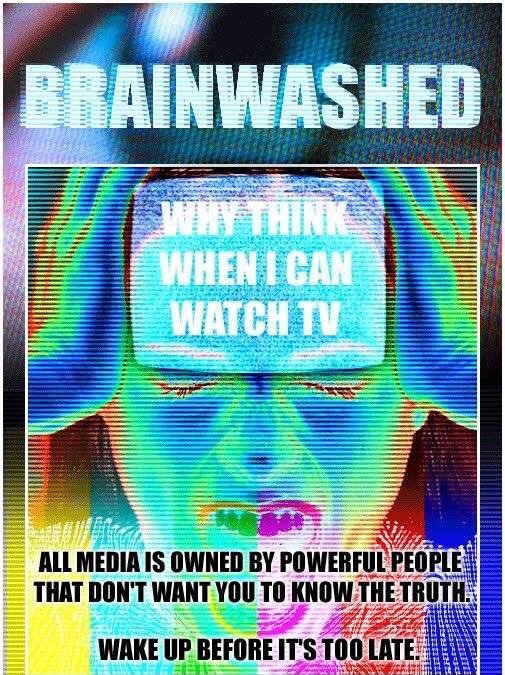
Columbia Journalism Review Explains How The Gates Foundation Manipulates The Media Narrative

Most of the feature stories published by the Columbia Journalism Review, a mostly-digital biannual “magazine” published and edited by the Columbia School of Journalism and its staff, is sanctimonious media naval-gazing filtered through a lens of cryptomarxist propaganda, written by a seemingly endless procession of washed-up magazine writers.

But every once in a while, just like the NYT, Washington Post and CNN, even CJR gets it (mostly) right. And fortunately for us, one of those days arrived earlier this month, when the website published this insightful piece outlining the influence of the Gates Foundation on the media that covers it.

Most readers probably didn’t realize how much money the Gates Foundation spends backing even for-profit media companies like the New York Times and the Financial Times, some of the most financially successful legacy media products, thanks to their dedicated readerships. For most media companies, which don’t have the financial wherewithal of the two named above, the financial links go even deeper. Schwab opens with his strongest example: NPR.

LAST AUGUST, NPR PROFILED A HARVARD-LED EXPERIMENT to help low-income families find housing in wealthier neighborhoods, giving their children access to better schools and an opportunity to “break the cycle of poverty.” According to researchers cited in the article, these children could see $183,000 greater earnings over their lifetimes—a striking forecast for a housing program still in its experimental stage.

If you squint as you read the story, you’ll notice that every quoted expert is connected to the Bill & Melinda Gates Foundation, which helps fund the project. And if you’re really paying attention, you’ll also see the editor’s note at the end of the story, which reveals that NPR itself receives funding from Gates.

NPR’s funding from Gates “was not a factor in why or how we did the story,” reporter Pam Fessler says, adding that her reporting went beyond the voices quoted in her article. The story, nevertheless, is one of hundreds NPR has reported about the Gates Foundation or the work it funds, including myriad favorable pieces written from the perspective of Gates or its grantees.

And that speaks to a larger trend—and ethical issue—with billionaire philanthropists’ bankrolling the news. The Broad Foundation, whose philanthropic agenda includes promoting charter schools, at one point funded part of the LA Times’ reporting on education. Charles Koch has made charitable donations to journalistic institutions such as the Poynter Institute, as well as to news outlets such as the Daily Caller, that support his conservative politics. And the Rockefeller Foundation funds Vox’s Future Perfect, a reporting project that examines the world “through the lens of effective altruism”—often looking at philanthropy.

As philanthropists increasingly fill in the funding gaps at news organizations—a role that is almost certain to expand in the media downturn following the coronavirus pandemic—an underexamined worry is how this will affect the ways newsrooms report on their benefactors. Nowhere does this concern loom larger than with the Gates Foundation, a leading donor to newsrooms and a frequent subject of favorable news coverage.

It’s just the latest reminder that all of NPR’s reporting on the coronavirus and China is suspect due to its links to Gates and, by extension, the WHO. Back in April, we noted this piece for being an egregious example of a reporter failing to make all of the sources links to China explicitly clear. Though a few clues were included.

Keep reading

CNN’s Cuomo: Being Allowed to Protest and Being Allowed to Go to Church Have ‘Nothing to Do with the Other’

During CNN’s coverage of the 2020 Republican National Convention on Monday, CNN host Chris Cuomo stated that protesting and church attendance have “nothing to do” with each other and protests are “people who are responding in this country to outrageous acts of social injustice. To say, well, it’s the same as going to church, no, it isn’t.” And that “you would have chaos” if you told people you couldn’t protest.

Keep reading

The ‘Highest Single-Day of COVID-19 Deaths’ That Wasn’t

Under the best of circumstances, reporting on COVID-19 is tough. There are simply too many unknowns, and even when officials aren’t manipulating the truth they aren’t always willing to cop to the fact that they really don’t have solid answers.

But there’s really no excuse for journalism as sloppy and misleading as the August 13 ABC News segment whose headline blared “US reports highest single-day of COVID-19 deaths.” This video was widely shared, appearing not just on the main ABC News site, but also on Good Morning AmericaMSN.com, and elsewhere. And it simply wasn’t true.

Keep reading