Congress in lockdown: Will we just ‘get used to it’?

When I first came to Washington in 1995 as a CBS News correspondent, the U.S. Capitol building was truly “The People’s House.” Anybody could walk in and browse around, walk the historic marble floors, look at the historic statues. No metal detectors. No police or security guards removing perfume from your purse in case it’s a plot to build an explosive device from liquid.

The same sort of access was available to the public and press at most federal buildings at the time.

Even the White House, more secure than the other buildings back then, was less like a command bunker. Anybody could drive right along the public street adjacent to the back of the White House and take a look. 

Of course everything, understandably, changed with the 9/11 terrorist attacks. Most any building occupied by the federal government became a fortress. Concrete barriers were erected all over the city to make it harder for a car bomber to drive into a building. Police are routinely stationed on streets, at places they rarely were seen before. Metal detectors, police and security guards, sweeps with mirrors under your car as you enter a parking garage, all became the norm. 

A complete web of rules and restrictions was adopted, dictating who could enter what building and when. It involved various combinations of: Call ahead. Get clearance. Submit your Social Security number. Show your driver’s license. Have an escort.

And that street by the White House was closed to ordinary vehicle traffic. It’s been treated to an expanding array of fencing, guard shacks and Secret Service presence.

Shortly after 9/11, many of us wondered if the changes to our nation’s capital would be permanent — and hoped it would not have to be. Since then, security measures have expanded further. And with each new restriction, there’s opportunity for abuse. Federal officials sometimes use supposed security concerns as an excuse to control access and information; the public becomes further distanced from the elected and hired officials who are supposed to work for them.

Years ago, when I was breaking news about the Obama administration’s “Fast and Furious” scandal, it was nearly impossible for me to get access to then-Attorney General Eric Holder to ask any questions. One day, the Department of Justice (DOJ) hastily announced a briefing about Fast and Furious to be held at its offices. CBS sent me out the door to attend. 

As I rushed out the door, Holder’s right-hand press aide, Tracy Schmaler, called to tell me I would not be admitted. Only the friendly beat reporters regularly assigned to DOJ would be allowed in through security. 

Clearly, I wasn’t a security concern. They knew me and, besides, I had undergone FBI background checks to get White House hard passes; I was no threat. This was a seminal moment. At the time, I told CBS managers we should challenge the administration’s use of “security concerns” to exert politically motivated control over who enters a public building. I argued that it would only get worse if we allowed federal officials to use a security posture as a way to determine who covers them and who does not. Although the managers agreed, we didn’t pursue the challenge.

Some years ago, after a set of budget cuts, the main public entrance to the Russell Senate Office Building across from the Capitol was temporarily shut down. I wondered if it was part of an effort by sequestration opponents to make it visibly look as if important, tangible things were being cut. After all, the closing of the entrance inconvenienced thousands of people daily visiting and working at the Capitol. Years later? The grand entrance never reopened, as far as I know.  

This week, upon my most recent visit to Capitol Hill for work, security was tighter than I’ve ever seen before. Tighter than after 9/11, and tighter than during the presidential inaugurations I’ve covered. Unspecified fears over some sort of upcoming security threat have led to what looks like a militarized zone, with police, National Guard troops, blocked roads and new fencing sporting circles of barbed concertina wire atop. They call the circle around the fortification “The Perimeter.” 

“Are you trying to get into The Perimeter?” a military officer asked as my Uber driver pulled up to find out if we could get anywhere close to the congressional offices surrounding the Capitol. 

Then, on Thursday, House Speaker Nancy Pelosi (D-Calif.) demanded more funding for more security, blaming COVID-19 and the Jan. 6 Capitol riot conducted by what she called “all the president’s men.” And the Pentagon said it is reviewing a Capitol Police request to extend the National Guard’s presence for two months beyond the deployment’s scheduled end on March 12. All this on a day when Capitol Hill security was tightened even further because of reports that some members of an unnamed militia group chatted online about trying to breach the Capitol again. 

Admittedly, I don’t have access to the intelligence to which they’re responding, and the measures could well be appropriate. But I’ve been to war-torn and third-world nations that didn’t look anything like this. The security measures, to me, looked like enough to fight a large army. 
Keep reading

WHO says there’s no ‘silver bullet’ to defeat coronavirus and ‘there might never be’

The World Health Organization said Monday there may never be a magical cure for the coronavirus even as scientists and drugmakers across the globe race to find a safe and effective vaccine.

Scientists have made progress in identifying treatments that can help people with the most severe forms of Covid-19, and a number of vaccines are in late-stage trials, WHO Director-General Tedros Adhanom Ghebreyesus said during a press conference from the agency’s Geneva headquarters. “However, there is no silver bullet at the moment and there might never be.”

Tedros wasn’t asked about Russia’s claims that it will be ready to start mass inoculations in October.

There are no-FDA approved drugs for the coronavirus, which has infected more than 18 million people worldwide and killed at least 689,625, according to data compiled by Johns Hopkins University. 

In May, the FDA granted antiviral drug remdesivir an emergency use authorization, allowing hospitals and doctors to use the drug on patients hospitalized with the disease even though the drug has not been formally approved by the agency. The FDA has also said it is looking at dexamethasone, a steroid already authorized in the U.K. for the treatment of Covid-19. 

However,  public health officials say there is no returning to “normal” until there’s a vaccine. There are more than 150 vaccines under development worldwide, according to the WHO. At least 25 are already in clinical trials. On Thursday, senior administration officials at the Department of Health and Human Services said drug companies Pfizer and Moderna, which both began a phase-three trial for their leading vaccine candidates last week, have already vaccinated “several hundred people” within the first few days.

Keep reading

NYC coronavirus lockdown led to sharp rise in domestic violence, data shows

At the height of New York’s coronavirus lockdown, domestic violence in the five boroughs skyrocketed, data show.

When the pandemic first laid siege, experts predicted that mandatory lockdowns and soaring unemployment would cause a rise in household abuse, and figures now bear them out — with domestic-violence reports at some agencies doubling and even tripling in the past few months.

“We’ve never been busier,” lamented Nechama Bakst, senior director of the Met Council’s family-violence program.

“We have seen people who never experienced violence starting to experience violence, and people who have experienced violence experience worse violence.”

Typically, the non-profit gets about 70 new cases a month — but in April, they juggled 135, another 145 in May and 146 more in June, the organization said.

“We see more choking, more sexual violence, kind of much more intense and serious acts of crime,” the director said.

Keep reading

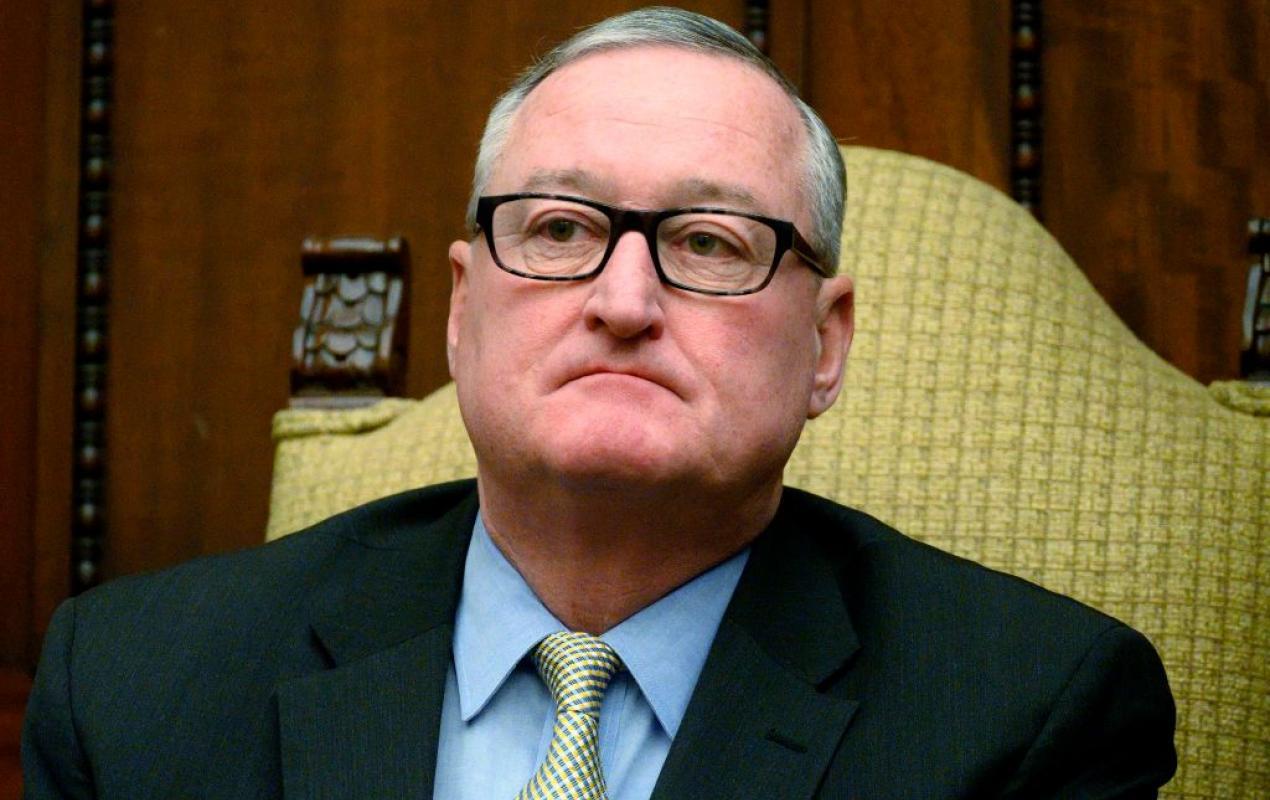
Philly Mayor’s Ban On Large Events “Does Not Apply” To Protests Or “Demonstrations”

Philadelphia Democratic Mayor James Kenney says his city-wide ban on large events and gatherings through February 2021 does not apply to protests.

“The city’s office of special events will not accept, review, process or approve applications, issue permits or enter into agreements for special events or public gatherings of 50 people or more on public property through the end of February. The moratorium will apply to special events and public gatherings, including but not limited to festivals, parades, concerts, carnivals, fairs and flea markets,” Kenney said during a coronavirus video update on Tuesday.

“In addition, permit applications for residential block permits will not be accepted until further notice. The timeline when such activities may resume will be communicated as soon as possible. To be clear, this hold on large public events does not, does not apply to demonstrations and First Amendment protected activities,” he added.

Keep reading

What Is The Real Purpose Of The Lockdowns?

If given the choice between maintaining a toxic world of fear, pollution and violence controlled by the State or a society of prosperity and compassion based on freedom and individual rights, there is little doubt that the majority of Americans would want the old paradigm of synthetic events to take a hike; except that choice has been distorted under the guise of what the World Health Organization (WHO) has mislabeled the most deadly virus in history.

The coronavirus crisis arrived in a flash with little time to analyze exactly WTF was going on. Americans struggled to process what is real, trustworthy and authentic as the unraveling of deep political decay revealed a behind-the-scenes subterranean power struggle that has surfaced with the intent on disintegration of American Society.

While the country is fast approaching an existential crisis on steroids, millions experienced an inner knowing that some indefinable thing was not right with recognition that the early explanations were hogwash while others, addicted to mainstream/social media who still believed in the illusion of democracy, were on board with the litany of spin from the medical and political establishment.

While the Lockdown could have been a wake up call for humanity to change its consciousness with a paradigm shift – whether it be a spiritual awakening, a political realignment or re-evaluating one’s own personal health choices, since, after all, humanity was locked in a major health crisis. And most importantly, it was an opportunity to acknowledge that the planet itself is ailing from abuse and neglect with CV as a metaphor urging a personal reconnection with Nature.

In early 2020, Neil Ferguson of the UK’s Imperial College used a scare tactic to predict that 80% of Americans would be infected and that there would be 2.2 million American deaths – neither of which materialized. Yet Ferguson’s extremism accomplished its intended purpose in establishing the basis for draconian Lockdown requirements. Ferguson later retracted his earlier prediction down to 20,000 fatalities.

With current infection fatality rate at 0.20%, Lockdowns have been devoid of science and are based on arbitrary, contradictory and inconsistent requirements.

Keep reading