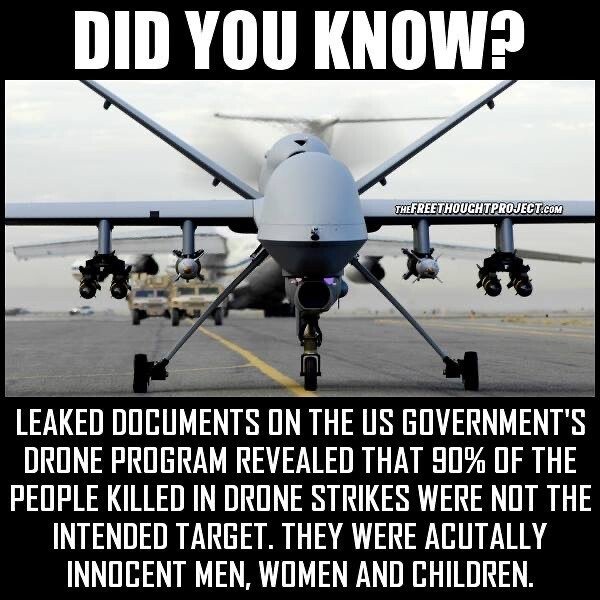
Collateral damage…



A staple of mainstream U.S. discourse is that the United States opposes tyranny and despotism and supports freedom and democracy around the world. Embracing murderous despots is something only Donald Trump did, but not normal, upstanding American Presidents. This belief about the U.S. role in the world permeates virtually every mainstream foreign policy discussion.
When the U.S. wants to start a new war — with Iraq, with Libya, with Syria, etc. — it accomplishes this by claiming that it is, at least in part, motivated by horror over the tyranny of the country’s leaders. When it wants to engineer regime change or support anti-democratic coups — in Venezuela, in Iran, in Bolivia, in Honduras — it uses the same justification. When the U.S. Government and its media partners want to increase the hostility and fear that Americans harbor for adversarial countries — for Russia, for China, for Cuba, For North Korea — it hauls out the same script: we are deeply disturbed by the human rights violations of that country’s government.
Yet it is hard to conjure a claim that is more obviously and laughably false than this one. The U.S. does not dislike autocratic and repressive governments. It loves them, and it has for decades. Installing and propping up despotic regimes has been the foundation of U.S. foreign policy since at least the end of World War II, and that approach continues to this day to be its primary instrument for advancing what it regards as its interests around the world. The U.S. for decades has counted among its closest allies and partners the world’s most barbaric autocrats, and that is still true.
Indeed, all other things being equal, when it comes to countries with important resources or geo-strategic value, the U.S. prefers autocracy to democracy because democracy is unpredictable and even dangerous, particularly in the many places around the world where anti-American sentiment among the population is high (often because of sustained U.S. interference in those countries, including propping up their dictators). There is no way for a rational person to acquire even the most minimal knowledge of U.S. history and current foreign policy and still believe the claim that the U.S. acts against other countries because it is angry or offended at human rights abuses perpetrated by those other governments.

US foreign policy has clearly continued in the same direction, without missing a beat. Unlike in previous transitions in the White House, this time US President Joe Biden has not even really tried to promise even the faintest hope that it wouldn’t.There were a few glimpses of remote hope – particularly regarding the possibility the US wouldn’t abandon its last arms treaty with Russia, New START (Strategic Arms Reduction Treaty) – and Biden’s promise of returning to the Joint Comprehensive Plan of Action (JCPOA), also known as the Iran Nuclear Deal.
However, in Biden’s first speech regarding foreign policy since taking office, now posted on the White House’s official website and titled, “Remarks by President Biden on America’s Place in the World,” reveals that, if anything, US belligerence on the global stage is set to only expand.
“America is back. Diplomacy is back at the center of our foreign policy.”
Biden’s opening remarks attempt to suggest that America has drifted away under his predecessor US President Donald Trump. But when he says “America is back,” we are left to assume he means “back” to what the US was doing under the administration of US President Barack Obama under which he served as vice president.
This was a president elected into office by the American people to end the wars of his predecessor, US President George W. Bush. Not only did he fail to end those wars – one in Iraq and one in Afghanistan – he expanded both. He also started several new wars including in Libya, Syria, and Yemen.
Under the administration of Obama-Biden, the US also overthrew the government of Ukraine in 2014 precipitating deadly violence in the nation’s eastern region.
Obama also continued Bush-era policies aimed at overthrowing the government of Venezuela and instituted the so-called US “pivot” to Asia in which US meddling was expanded in a bid to peel Southeast Asian states away from China’s orbit – or create an arc of chaos to disrupt China’s rise, trying.
And in Biden’s recent foreign policy speech – he has vowed to continue all of this.
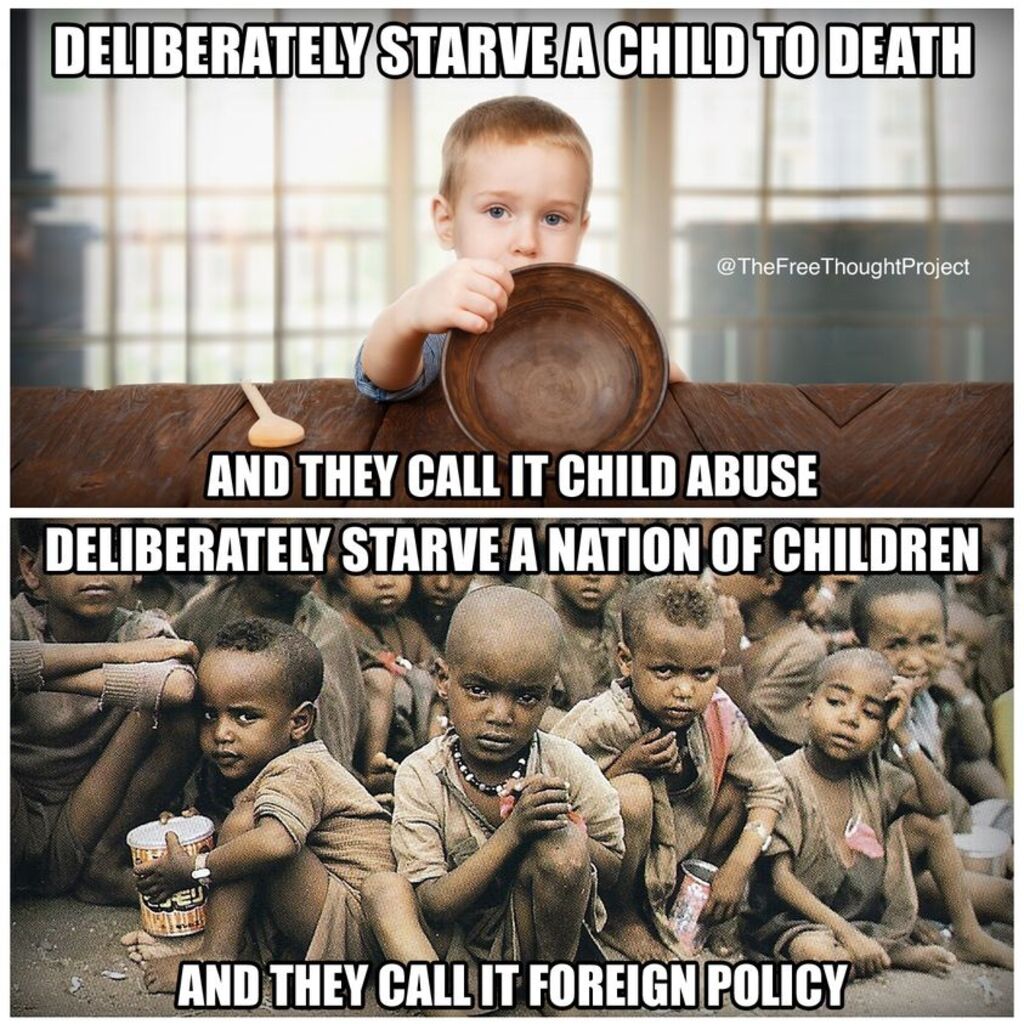
President Joe Biden’s nomination of Victoria Nuland for Under Secretary for Political Affairs, the third-highest position at the State Department, is a dangerous sign. Nuland exemplifies the neoconservatives who have led American foreign policy from one disaster to another for the past 30 years, all while evading any shred of accountability.
As a top-level appointee, Nuland must still be confirmed by the Senate. And while pro-peace groups have waged a campaign to stop her confirmation, reflecting on her career in public service makes clear why she is incompetent, highly dangerous, and should not be confirmed.
In a new interview with CBS Evening News, President Biden confirmed that his administration will not be lifting sanctions imposed upon Iran in order to bring Tehran to the negotiating table for the restoration of the Joint Comprehensive Plan of Action (JCPOA), commonly known as the Iran nuclear deal.
“Will the U.S. lift sanctions first in order to get Iran back to the negotiating table?” Biden was asked by CBS’s Norah O’Donnell.
“No,” the president replied.
“They have to stop enriching uranium first,” asked O’Donnell.
Biden nodded in response.
 Hellbound and Down
You must be logged in to post a comment.