The sources who lie and the reporters who protect them

Protecting anonymous sources – or covering-up government misconduct?

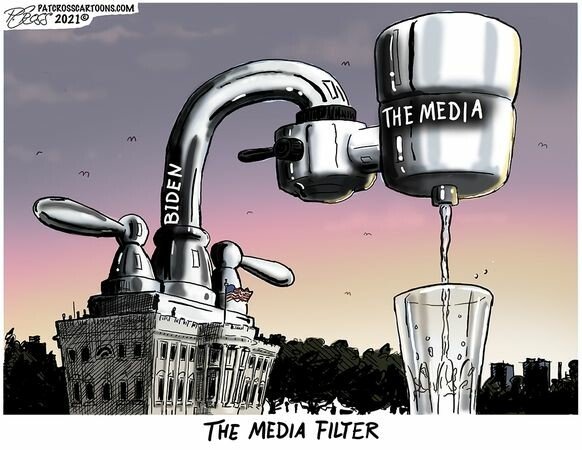
Imagine you’re a major media outlet like The Washington Post or CNN. You have a huge platform on the web, in print, or on TV. You publish consequential stories with information from anonymous sources on Trump/Russia collusion, an email Donald Trump, Jr. received about a Wikileaks release, and President Trump’s instructions to a Georgia election investigator to “find the fraud.” Your stories shape agendas and become national news. They fuel conspiracies, divide Americans, and influence elections.

And then you realize you’ve been played. Your anonymous sources gave you false information. You have to issue a correction. Why should that be the end of the story?

Keep reading

New York Times Writers May Have Deceived Readers in Stories About Project Veritas: Court

Writers for the New York Times may have spread deceptive claims about the nonprofit journalism group Project Veritas, a judge ruled this week.

In stories from 2020 about Project Veritas videos, writers Maggie Astor and Tiffany Hsu inserted sentences that were opinions despite the articles being billed as news, New York Supreme Court Justice Charles Wood said.

“If a writer interjects an opinion in a news article (and will seek to claim legal protections as opinion) it stands to reason that the writer should have an obligation to alert the reader, including a court that may need to determine whether it is fact or opinion, that it is opinion,” Wood wrote in a 16-page decision denying the paper’s request to dismiss a lawsuit from Project Veritas.

“The Articles that are the subject of this action called the Video ‘deceptive,’ but the dictionary definitions of ‘disinformation’ and ‘deceptive’ provided by defendants’ counsel certainly apply to Astor’s and Hsu’s failure to note that they injected their opinions in news articles, as they now claim,” he added.

At issue are five articles that Project Veritas alleges contained false and defamatory information. All five were about a 2020 video report from the journalism group on alleged illegal voting practices in Minnesota.

Keep reading

Media’s Entire Georgia Narrative Is Fraudulent, Not Just The Fabricated Trump Quotes

The Washington Post was busted for publishing fabricated quotes from an anonymous source, attributing them to a sitting president, and using those quotes as a basis to speculate the president committed a crime. The invented Donald Trump quotes, which related to a fight over election integrity in Georgia, were cited in Democrats’ impeachment brief and during the Senate impeachment trial.

But the fake quotes, bad as they were, are just one of many ways the media have done a horrible job of covering election disputes in the state.

According to the media narrative, the Georgia presidential election was as perfectly run as any election in history, and anyone who says otherwise is a liar. To push that narrative, the media steadfastly downplayed, ignored, or prejudiciously dismissed legitimate concerns with how Georgia had run its November 2020 election and complaints about it.

That posture was the complete opposite of how they were reporting on Georgia elections prior to Democrats performing well in them. In the months prior to November, some media sounded a bit like Lin Wood when they wrote about Secretary of State Brad Raffensperger, Dominion Voting Systems, legal challenges in the state, and Georgia election integrity in general.

Keep reading

Journalists, Illustrating How They Operate, Yesterday Spread a Significant Lie All Over Twitter

Journalists with the largest and most influential media outlets disseminated an outright and quite significant lie on Tuesday to hundreds of thousands of people, if not millions, on Twitter. While some of them were shamed into acknowledging the falsity of their claim, many refused to, causing it to continue to spread up until this very moment. It is well worth examining how they function because this is how they deceive the public again and again, and it is why public trust in their pronouncements has justifiably plummeted.

The lie they told involved claims of Russian involvement in the procurement of Hunter Biden’s laptop. In the weeks leading up to the 2020 election, The New York Post obtained that laptop and published a series of articles about the Biden family’s business dealings in Ukraine, China and elsewhere. In response, Twitter banned the posting of any links to that reporting and locked The Post out of its Twitter account for close to two weeks, while Facebook, through a long-time Democratic operative, announced that it would algorithmically suppress the reporting.

The excuse used by those social media companies for censoring this reporting was the same invoked by media outlets to justify their refusal to report the contents of these documents: namely, that the materials were “Russian disinformation.” That claim of “Russian disinformation” was concocted by a group of several dozen former CIA officials and other operatives of the intelligence community devoted to defeating Trump. Immediately after The Post published its first story about Hunter Biden’s business dealings in Ukraine that traded on his influence with his father, these career spies and propagandists, led by Obama CIA Director and serial liar John Brennan, published a letter asserting that the appearance of these Biden documents “has all the classic earmarks of a Russian information operation.”

News outlets uncritically hyped this claim as fact even though these security state operatives themselves admitted: “We want to emphasize that we do not know if the emails…are genuine or not and that we do not have evidence of Russian involvement — just that our experience makes us deeply suspicious that the Russian government played a significant role in this case.” Even though this claim came from trained liars who, with uncharacteristic candor, acknowledged that they did not “have evidence” for their claim, media outlets uncritically ratified this assertion.

Keep reading

High-profile failures, errors threaten media’s credibility with already skeptical public

Major media outlets in recent weeks have been struggling under a flood of major reporting failures, scrambling to address significant lapses in reporting as nationwide trust in media reaches record lows.

The Washington Post this week revealed that it had significantly misreported a story in which then-President Donald Trump was alleged to have called one of Georgia’s top elections investigators and urged that official to “find the fraud” in the state’s election data. The Post, which had relied on anonymous sourcing to verify the claim, said that a review of an audio file of the call discovered this month revealed that Trump had never uttered those words. 

Those allegations were explosive at the time they were reported, even finding their way into the impeachment trial memorandum of Senate Democrats. The Post in its correction indicated that its reporter has not listened to the recording prior to reporting on it, instead relying on “information provided by a source” to bolster the allegations in the report. 

Other media outlets picked up on the allegation as well, including CNN, which after the discovery of the recording quietly updated its own report on the alleged scandal. But its 10.5-font-sized “Editor’s Note” did not specify the errors from the earlier report, instead linking readers to a report on the recently discovered recording that itself did not identify the error from the network’s original article. 

The New York Times has been involved in several corrections, some big like the elaborate hoax played on its Caliphate podcast and others small but still affecting reputations on Twitter. Last month, for instance, Times technology reporter Taylor Lorenz had to be corrected when she tweeted an allegation that tech entrepreneur Marc Andreessen had used  “the r-slur” during a forum, only to have one of the forum’s moderators deny it happened. Lorenz then tweeted back: “Thanks for clarifying.” 

The Capitol riot on Jan. 6 resulted in more journalism malpractice, so much so that award-winning journalist Glenn Greenwald wrote an entire essay about “false and exaggerated” media claims he had uncovered. “False reporting is never justified, especially to inflate threat and fear levels,” he declared.

Keep reading

Recording Of Georgia Phone Call Shows Multiple News Outlets Ran Fabricated Trump Quote

Multiple news outlets ran a story with fake quotes attributed to former President Donald Trump, according to a now-released recording of Trump’s call with Frances Watson, the chief investigator of the Georgia secretary of state’s office.

The Washington Post first reported the false quotes via an anonymous source in January and said that Trump urged Watson to “find the fraud,” adding she’d be a “national hero.” The Post updated its article with a lengthy correction on March 11 after a recording of the phone call revealed no such quotes from Trump.

In the audio, Trump said he won the 2020 election and pushed Watson to look into ballots in Fulton County, Georgia, as he was convinced there was “dishonesty” going on there. The former president also told Watson she had “the most important job in the country right now” – not, as The Post claimed, that she’d be a “national hero” if she found fraud.

Multiple publications swiftly followed The Post’s reporting, citing both the newspaper and the anonymous source as evidence. CNN published an article on the phone call declaring “Trump pressured Georgia elections investigator to ‘find the fraud’ in 2020 election.’”

The network issued an “editor’s note” on March 15 after The Post’s quotes were determined to be inaccurate. The “editor’s note” came after a request for comment from the Daily Caller on Monday.

Keep reading

How Do Big Media Outlets So Often “Independently Confirm” Each Other’s Falsehoods?

There were so many false reports circulated by the dominant corporate wing of the U.S. media as part of the five-year-long Russiagate hysteria that in January, 2019, I compiled what I called “The 10 Worst, Most Embarrassing U.S. Media Failures on the Trump-Russia Story.” The only difficult part of that article was choosing which among the many dozens of retractions, corrections and still-uncorrected factual falsehoods merited inclusion in the worst-ten list. So stiff was the competition that I was forced to omit many huge media Russiagate humiliations, and thus, to be fair to those who missed the cut, had to append a large “Dishonorable Mention” category at the end (note: the Intercept’s site seems to be down for the moment, rendering that first link inoperable).

That the entire Russiagate storyline itself was a fraud and a farce is conclusively demonstrated by one decisive fact that can never be memory-holed: namely, the impetus for the scandal and subsequent investigation was the conspiracy theory that the Trump campaign had secretly and criminally conspired with the Russian government to interfere in the 2016 election, primarily hacking into the email inboxes of the DNC and Clinton campaign chief John Podesta. And a grand total of zero Americans were accused (let alone convicted) of participating in that animating conspiracy.

Keep reading

Biden-boosting influencer ‘Brooklyn Dad’ slammed for taking PAC money

A Joe Biden-boosting social media influencer known as “Brooklyn Dad Defiant” came under fire Wednesday for reportedly failing to disclose that he accepted tens of thousands of dollars from a Democratic political action committee.

Majid Padellan, who runs the nearly 900,000-follower-strong Twitter account — and has been slammed previously for urging Bernie Sanders to drop out of the 2020 presidential race — allegedly accepted more than $57,000 from a pro-Biden PAC, Really American, last year, according to Refinery29.com, which cited tweets circulating Tuesday.

In his Twitter bio, Padellan says he’s a senior adviser to the PAC — but followers slammed him for failing to admit he allegedly got paid to post pro-Biden opinions and theories, according to the outlet.

“Brooklyn Dad being a paid Dem op is pretty unsurprising, it absolutely does pay to have/promote sh–ty political opinions in America,” one user tweeted.

Keep reading