
Remember ‘slow the spread’?

A painter has been jailed in New Zealand after he broke lockdown rules by entering a coronavirus quarantine facility and hugging a friend who was isolating.
Jesse Courtney Welsh, 33, from Morningside, Auckland, received a six week prison sentence after hugging a friend who was isolating after returning home from Australia, according to the New Zealand Herald.
Welsh appeared at Whangārei District Court yesterday after previously pleading guilty to being unlawfully in an enclosed yard.
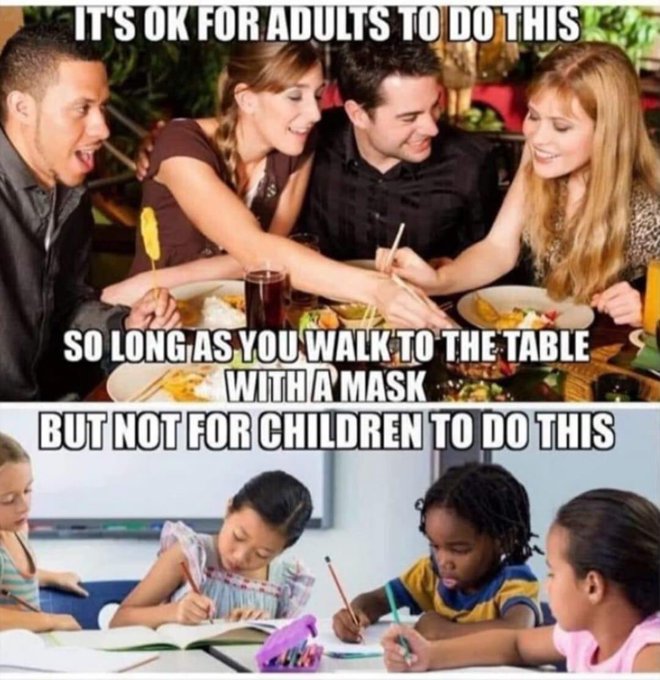
This is not a joke. Syracuse.com reported the story.
There is no dancing allowed in New York’s bars and restaurants, even at a wedding reception, according to the New York State Liquor Authority.
To control the spread of the coronavirus, Gov. Andrew Cuomo’s liquor authority has also specifically banned darts, pool, cornhole, karaoke and exotic dancing.
Bar owners are already struggling to stay open after being shut down for months. The new rules are causing a lot of anxiety as business owners are being threatened with their licensing if they don’t comply.
The intent is to reduce the number of people congregating in bars. If you go to a bar, you must sit at a table or move along, according to the liquor authority’s guidelines.
“I don’t let people dance,” said Dan Palladino, who owns Heritage Hill Brewhouse in Pompey. “I think it’s kind of sad, but I don’t want to risk my license.”
I’ve already been to an illegal wedding where there was a lot of dancing— and they’re becoming more popular. People having weddings in New York have to hide the location until the last minute and keep all signs of partying out of sight. It’s kind of exciting in a speakeasy sort of way but also extremely stupid. You cannot keep people from living their lives. And if you try to outlaw fun, they’re just going to break those laws and do it anyway.
Not only has dancing been outlawed, but pool, darts, cornhole, and karaoke are also off-limits. How much longer do the dictators in charge really think they can keep this up? I never thought I’d see the day when Democrats became pulpit-pounding puritans keeping the kids from dancing, but here we are.
Ready for another rendition of the “no one could have known” routine made famous by all the self-proclaimed liberals who shamelessly went along with the Neo-Cons planned and lie-supported destruction of the Middle East nearly two decades ago?
As in “no one could have known” that by shutting down life as we know it to focus obsessively on a virus mostly affecting what is still a relatively small number of people at the end of their lives (yes, oh squeamish ones we must summon the courage to talk about Quality Adjusted Life Years when making public policy) we probably would:
1. Cause economic devastation and hence excess deaths, suicides, divorces depressions in much larger numbers than those killed by the virus.
2. Provide an already monopolistic and predatory online retailing establishment with competitive advantages in terms of capital reserves and market share that will make it virtually impossible at any time in the near or medium future for the country’s and the world’s small and even medium-sized businesses to ever catch up to them. And that this will plunge huge sectors of the world-wide economy into serf-like ruin, with all that this portends in terms of additional death and human suffering.
3. Cause greatly increased misery and countless additional deaths in the so-called Global South where many people, rightly or wrongly, depend on the consumption patterns of us relatively fortunate sit-at-homers to make it through the week.
4. Destroy much of what was attractive about urban life as we know it and lead to a real estate collapse of extraordinary proportions, turning even our few remaining showplace cities into crime-ridden reserves of ever more desperate people.
5. Force state and local governments, already struggling before the crisis, and unable to print at money at will like the Feds, to cut their already insufficient budgets at a time when their broke and stressed constituents need those services more than ever.
6. Push “smart” monitoring of our lives, already intolerable for anyone still clinging to memories of freedom in the pre-September 11th world, to the point where most people will no longer understand what people used to know as privacy, intimacy or the simple dignity of being left alone.
7. Train of a generation of children to be fearful and distrustful of others from day one, and to view bending to diktats “to keep them safe”, (no matter how empirically dubious the actual threat to them might be), rather than the courageous pursuit of joy and human fullness, as the key goal in life.

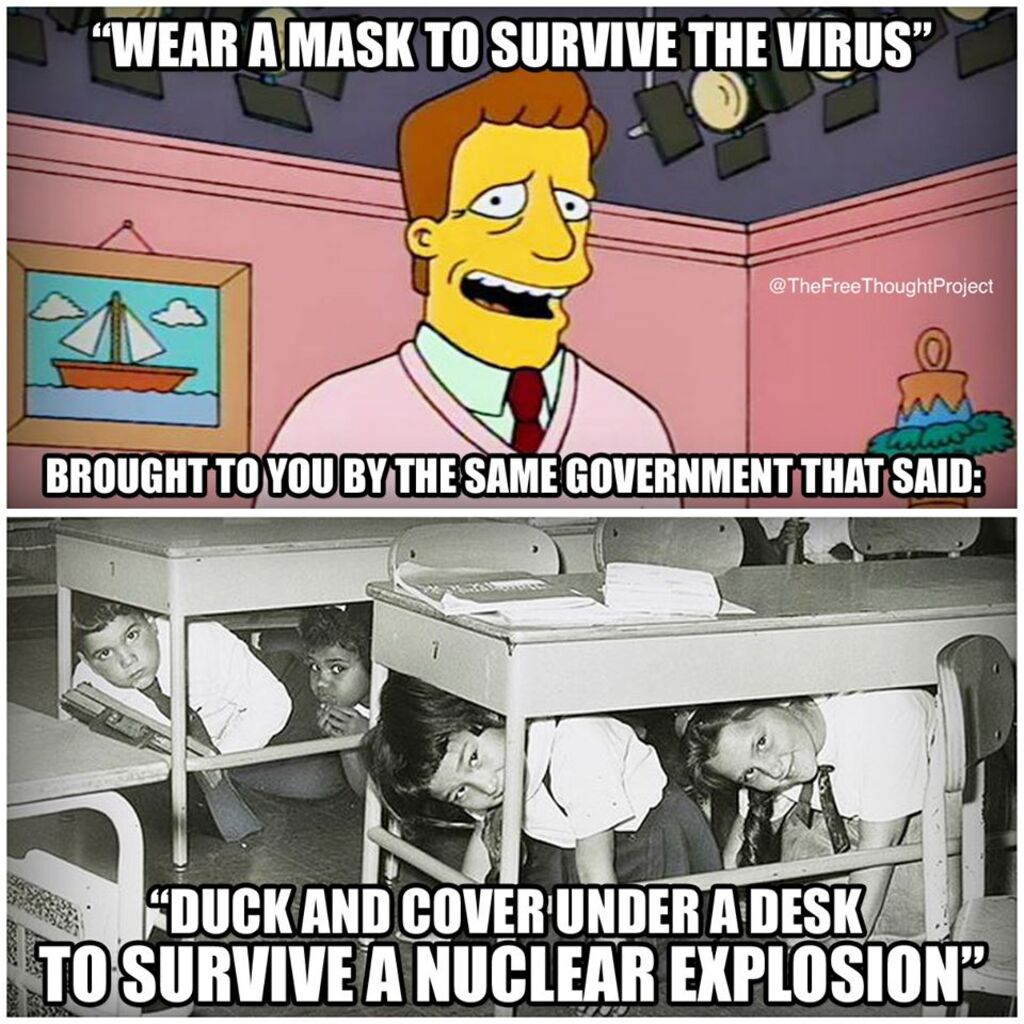
As Friday’s hospitalization numbers across the Sun Belt appear to confirm CDC head Dr. Robert Redfield’s assertion that the American COVID-19 outbreak has peaked and is starting to fade, the State of Virginia is setting a new precedent by seriously discussing forcing Virginians to be vaccinated with whatever rushed-to-marked candidate the FDA approves first.
During an interview that aired on Friday, the state’s health commissioner said he planned to invoke state law to make vaccinations mandatory – once a western product is available, presumably.
Coronavirus will be present “forever in some form or another”, a member of the government’s Scientific Advisory Group for Emergencies (Sage) has said.
Sir Mark Walport said people would need to be vaccinated at regular intervals.
His comments come after the head of the World Health Organization (WHO) said he hoped the pandemic would be over within two years, as the Spanish flu had taken two years to overcome.
Sir Mark said denser populations and travel meant the virus spread easily.
He also said the world population was now much larger than in 1918.
Speaking to BBC Radio 4’s Today programme, Sir Mark said that, in order to control the pandemic, “global vaccination” would be required, but coronavirus would not be a disease like smallpox “which could be eradicated by vaccination”.

 Hellbound and Down

You must be logged in to post a comment.