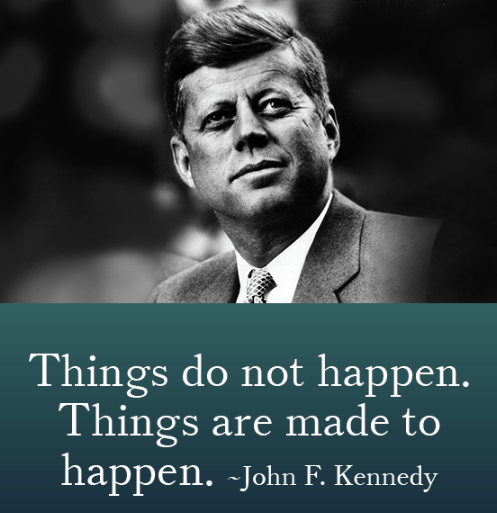
He should know…

Twitter announced on Tuesday it has begun taking sweeping actions to limit the reach of QAnon content and banned many of the conspiracy theory’s followers due to ongoing problems with harassment and the dissemination of misinformation.
Twitter will stop recommending accounts and content related to QAnon, including in email and follow recommendations and will take steps to limit content circulation in places like trends and search. This action will affect approximately 150,000 accounts, according to a spokesperson, who asked to remain unnamed due to concerns about the targeted harassment of social media employees.
The Twitter spokesperson also said the company had taken down more than 7,000 QAnon accounts in the last few weeks for breaking its rules on targeted harassment as part of its new policy.
The sweeping enforcement action will ban QAnon-related terms from appearing in trending topics and the platform’s search feature, ban known QAnon-related URLs, and ban “swarming” of victims who are baselessly targeted by coordinated harassment campaigns pushed by its followers.
With the pandemic and a global uprising against racial injustice to be explained away, conspiracy communities are bleeding into each other, merging into one gigantic mass of suspicion.
The Russian Prosecutor General’s Office has come to a conclusion that an avalanche killed the Dyatlov group in the Ural Mountains in 1959, Andrei Kuryakov, a deputy chief of the directorate of the Russian Prosecutor General’s Office for the Ural Federal District, told reporters on Saturday.
“[The dead tourists’] injuries are characteristic for the injuries of rock climbers caught in an avalanche,” Kuryakov said.
In February 2019, the Prosecutor General’s Office announced an inquiry into the Dyatlov group case, 60 years after their mysterious death.
The Primary Subsource said at first that maybe he had asked some of his friends in Russia – he didn’t have a network of sources, according to his lawyer, but instead just a “social circle.” And a boozy one at that: When the Primary Subsource would get together with his old friend Source 4, the two would drink heavily. But his social circle was no help with the Manafort question, and so the Primary Subsource scrounged up a few old news clippings about Manafort and fed them back to Steele.
Also in his “social circle” was Primary Subsource’s friend “Source 2,” a character who was always on the make. “He often tries to monetize his relationship with [the Primary Subsource], suggesting that the two of them should try and do projects together for money,” the Primary Subsource told the FBI (a caution that the Primary Subsource would repeat again and again.) It was Source 2 who “told [the Primary Subsource] that there was compromising material on Trump.”
And then there was Source 3, a very special friend. She would borrow money from the Primary Subsource that he didn’t expect to be paid back. She stayed with him when visiting the United States. The Primary Subsource told the FBI that in the midst of their conversations about Trump, they would also talk about “a private subject.” (The FBI agents, for all their hardnosed reputation, were too delicate to intrude by asking what that “private subject” was).

First of all, how many more completely unsubstantiated government agency allegations about Russian nefariousness are we the public going to accept from the corporate mass media? Since 2016 it’s been wall-to-wall narrative about evil things Russia is doing to the empire-like cluster of allies loosely centralized around the United States, and they all just happen to be things nobody can actually provide the public with hard verifiable evidence of.
Ever since the shady cybersecurity firm Crowdstrike admitted that it never actually saw hard proof of Russia hacking the DNC servers, the already shaky and always unsubstantiated narrative that Russian hackers interfered in the US presidential election in 2016 has been on thinner ice than ever. Yet because the mass media converged on this narrative and repeated it as fact over and over again they’ve been able to get the mainstream headline-skimming public to accept it as an established truth, priming them for an increasingly idiotic litany of completely unsubstantiated Russia scandals, culminating most recently in the entirely debunked claim that Russia paid Taliban-linked fighters to kill coalition forces in Afghanistan.
Secondly, the news story doesn’t even claim that these supposed Russian hackers even succeeded in doing whatever they were supposed to have been doing in this supposed cyberattack.
“Officials have not commented on whether the attacks were successful but also have not ruled out that this is the case,” Wired reports.
Thirdly, this is a “vaccine” which does not even exist at this point in time, and the research which was supposedly hacked may never lead to one. Meanwhile, Sechenov First Moscow State Medical University reports that it has “successfully completed tests on volunteers of the world’s first vaccine against coronavirus,” in Russia.
Fourthly, and perhaps most importantly, how obnoxious and idiotic is it that coronavirus vaccine “secrets” are a even a thing??? This is a global pandemic which is hurting all of us; scientists should be free to collaborate with other scientists anywhere in the world to find a solution to this problem. Nobody has any business keeping “secrets” from the world about this virus or any possible vaccine or treatment. If they do, anyone in the world is well within their rights to pry those secrets away from them.


You must be logged in to post a comment.