Seriously…

Grab some swag HERE and in the Merch Shop for even more designs!
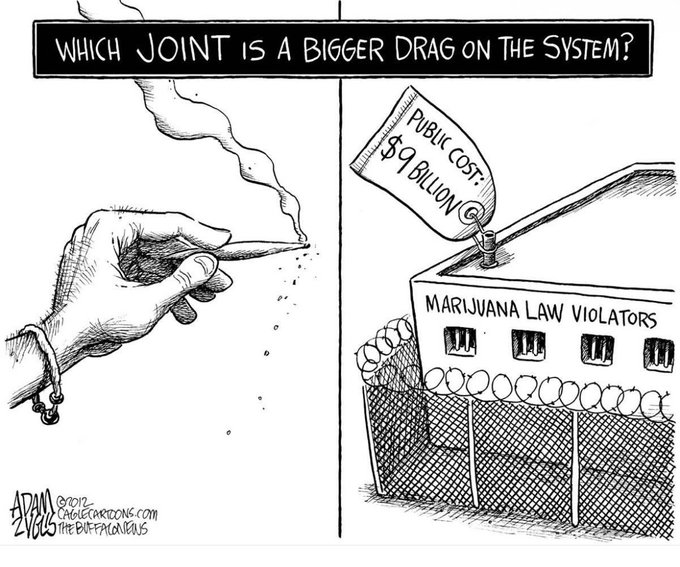
On April 1, 2025, Somerset County sheriff’s deputies executed a warrant at a South Road property in Harmony and arrested Wenfeng Chen, 51, of Malden, Massachusetts. Inside, they found 1,405 marijuana plants, approximately 100 pounds of processed cannabis, a 9mm pistol, ammunition, and $1,600 in drug proceeds. Chen and his co-defendant, Xinwen Zhang, 71, of Boston, now face Class B felony charges — unlawful cultivation and drug trafficking — the kind of charges that can put you in prison for ten years, or get you deported.
It was the second time law enforcement had hit the same Harmony property. Deputies raided it in May 2024 and seized more than 1,200 plants, but no one was home.
Law enforcement would have to wait another eleven months to find Wenfeng Chen on the premises.
But one year before Chen was arrested with illicit drugs, cash, and a firearm, the Maine Wire photographed a 2017 Mercedes-Benz sedan bearing Massachusetts plates registered in Chen’s name at his Charles St. address in Malden, Mass.
The vehicle was parked at the site of a separate illicit cannabis grow, 51 Cider Hill Road in Corinna, where the local code enforcement officer had repeatedly denied requests from the owners to upgrade the electrical capacity because large-scale cannabis cultivation is illegal in that town.
Chen happened to share an address with Xiling Ou, 44, the man who owned the Corinna property until he gave it away, allegedly to his mother, Xiaoyu Lu of Guangdong Province, China.
The attorney who made that gift happen was Paul H. Mills — better known as the brother of Maine Gov. Janet Mills (D), the woman currently vying for the Democratic U.S. Senate nomination and a chance to square off against Republican U.S. Sen. Susan Collins.
A federal judge has denied a request from a coalition of anti-marijuana organizations that sought to immediately block the Trump administration’s initiative to cover hemp-derived CBD and THC products through Medicare from launching on Wednesday.
The groups’ overall lawsuit challenging the policy is still under consideration, however, with a hearing on their separate motion for a preliminary injunction scheduled for April 20, which coincidentally is known as the unofficial cannabis cultural holiday 4/20.
Judge Trevor N. McFadden on Tuesday rejected the request from Smart Approaches to Marijuana (SAM) and nine other drug prevention groups to issue a temporary restraining order to halt the federal cannabis initiative, which is being facilitated by the Centers for Medicare & Medicaid Services (CMS), from taking effect.
McFadden, in his one-page order, quoted case law holding that a temporary restraining order is an “extraordinary and drastic remedy” that can only be granted if a party makes a “clear showing that four factors, taken together, warrant relief: likely success on the merits, likely irreparable harm in the absence of preliminary relief, a balance of the equities in its favor, and accord with the public interest.”
“Having considered the arguments in Plaintiffs’ motion and at a motions hearing, the Court finds that Plaintiffs have not met this high standard,” the judge wrote. “The motion for a temporary restraining order is thus denied. The Court will consider Plaintiffs’ motion for a preliminary injunction and motion to stay upon the completion of briefing.”
Defendants in the lawsuit—CMS Administrator Mehmet Oz and U.S. Department of Health and Human Services (HHS) Secretary Robert F. Kennedy, Jr.—now have until April 9 to file briefs responding to the prohibitionist groups’ motion for a preliminary injunction. The plaintiffs then have a reply brief due on April 13, a week ahead of the 4/20 hearing on the matter.
The lawsuit comes as CMS is set to start covering CBD and THC products under select federal health insurance programs as a Substance Access Beneficiary Engagement Incentive (BEI) beginning on Wednesday.
Under the BEI, patients enrolled in specific federal health insurance programs could have up to $500 worth of hemp-derived products covered each year. The CBD-focused plan will also allow a certain amount of THC in products, but the agency said that the rules are subject to change if federal hemp policy changes, as is currently expected under a law set to take effect later this year.
Americans across every demographic—age, gender, religion and political affiliation—all agree that using marijuana is not morally wrong, according to a new polling report from the Pew Research Center. However, Republicans are still twice as likely as Democrats to say consuming cannabis is a moral no-no, the survey results show.
The analysis was based on a recent poll that asked Americans about their views on the morality of a variety of behaviors and policies. Overall, 76 percent of U.S. adults said using marijuana is either morally acceptable or not a moral issue at all, compared to 23 percent who said the activity is immoral.
That puts marijuana use in roughly the same moral standing as getting a divorce and spanking children, at least from the average American perspective.
More Americans believe using marijuana is not morally wrong than those who feel the same about gambling, watching pornography, having an abortion, being gay, the death penalty and more.
Cannabis is considered decidedly less moral than alcohol, however, with only 16 percent of respondents calling it morally wrong to drink.
That said, a closer look at the demographic data on the marijuana question shows that, by and large, the prevailing opinion is that smoking marijuana doesn’t make someone a bad person.
The age breakdown for those who said cannabis use isn’t morally wrong shows little deviation among younger and older adults: 18-29 (79 percent), 30-49 (76 percent), 50-64 (77 percent) and 65+ (73 percent).
There’s also general uniformity in the belief that cannabis use is not morally wrong among people who subscribe to different religious denominations: Christian (72 percent), Protestant (73 percent), Catholic (74 percent), Jewish (85 percent). Atheists and agnostics were even less likely to regard marijuana use as immoral, with 98 percent and 94 percent percent describing the activity as morally acceptable or not a moral issue, respectively.
Men and women were equally likely to say using cannabis isn’t immoral, at 76 percent.
Compounds found in cannabis could provide a new roadmap for treating the world’s most common chronic liver disorder, according to a study released by the Hebrew University of Jerusalem.
The research, published in the British Journal of Pharmacology, found that cannabidiol (CBD) and cannabigerol (CBG) significantly reduced liver fat and improved metabolic health in experimental models.
CBD is the more widely studied non-intoxicating cannabinoid, while CBG is a less common “precursor” cannabinoid from which CBD is formed.
Unlike THC, the primary psychoactive component in cannabis, these compounds do not produce a “high,” making them viable candidates for long-term medical treatment, the study suggests.
Metabolic dysfunction-associated steatotic liver disease (MASLD) currently affects approximately one-third of the global adult population, according to health data.
The condition, which is closely linked to obesity and insulin resistance, has few approved pharmaceutical treatments, the researchers said, leaving patients to rely largely on lifestyle changes that can be difficult to maintain.
“Our findings identify a new mechanism by which CBD and CBG enhance hepatic energy and lysosomal function,” said lead study author Joseph Tam, director of the Multidisciplinary Center for Cannabinoid Research at Hebrew University, in a press release.
The study highlights a process called “metabolic remodeling,” in which the cannabis compounds created a “backup battery” for the liver by increasing levels of phosphocreatine, a high-energy molecule stored in muscle cells.
A GOP congressman running for governor in Florida who has opposed marijuana legalization in the state and sponsored federal legislation to upend a Washington, D.C. sentencing reform law has admitted for the first time that he was arrested for selling cannabis as a young adult.
Rep. Byron Donalds (R-FL), a Trump-endorsed GOP candidate vying to replace Florida Gov. Ron DeSantis (R), was pressed on the apparent disconnect during an interview with CBS Miami that aired on Saturday.
While it was previously known that Donalds faced an arrest over marijuana in 1997—only to have the charges dropped years later as part of a pre-trial diversion program—this marked the first time he’s publicly admitted to selling small amounts of cannabis and acknowledged that he benefitted from the type of criminal justice reform law he’s worked to undermine in the District of Columbia.
“Honestly, I was walking down the street, I was leaving a party, officers came up, asked me if I would empty my pockets. I said, ‘Yes, of course.’ I had a dime bag of marijuana in my pocket. That’s the story,” the congressman said. “It was bad decisions. I can’t undo that decision.”
Donalds said he sold “low-level amounts” of marijuana, reiterating that he made “terrible decisions” and that it was among the things he did in his early adulthood that he wishes he could “undo.”
“I wish I could undo [it]. I wish I could, but I can’t do that,” he said. “I would tell people, if you examine my life since 20 years old, my life has really been a story of redemption.”
But that redemption arc was made possible, in part, thanks to sentencing policy that afforded Donalds a level of relief that he’s sought to deprive D.C. residents of—a point that Rep. Jasmine Crockett (D-TX) raised during a House floor debate last year where she slammed her GOP colleague over the apparent double standard.
“Imagine standing in front of a judge with your life hanging in balance, and instead of prison you’re given a promise of mercy. Your record is wiped clean, and you’ve got a second chance at life,” Crockett said. “Imagine turning that into a promotion and you go to college and get a job and even become a member of Congress. That’s what redemption looks like.”
Cannabis use by older adults is not associated with either accelerated cognitive decline or greater risk of dementia, according to findings published in the journal BMJ Mental Health.
Investigators affiliated with Yale University and the University of Oxford in the United Kingdom assessed cognitive performance in lifetime cannabis consumers and non-users across various domains — including memory, intelligence, and problem solving. Data was drawn from two large nationally representative cohorts (the UK Biobank and the US Million Veteran Program), consisting of several hundred thousand participants.
Researchers reported that those with a history of cannabis use “demonstrated significantly better cognitive performance,” a finding that is consistent with prior studies. Cannabis use “was not associated with increased risk of dementia” and researchers found “no supporting evidence of a causal link with [longitudinal] cognitive decline in later life.”
The study’s authors concluded: “This study represents one of the largest observational investigations to date examining the relationship between cannabis use, cognitive function and dementia risk in older adults. … Our findings are broadly consistent with prior population-based longitudinal studies that have not observed accelerated age-related cognitive decline associated with cannabis use. … Clinicians can consider that occasional or prior cannabis use may not be a major contributor to cognitive aging in this population.”
Commenting on the findings, NORML’s Deputy Director Paul Armentano said: “These results contradict one of the more prominent and longstanding stereotypes about cannabis and cannabis consumers. It is unfortunate that these stereotypes often go unchallenged in the media and elsewhere. It is even more unfortunate that studies refuting these long-held stereotypes seldom receive the type of mainstream attention they deserve.”
Several other recent studies have reported similar results. For example, an Israeli study of over 67,000 older adults reported that participants with a history of cannabis use “performed better across all cognitive domains: attention, executive function, processing speed, visual and working memory. … Additionally, past use was associated with a slower decline in executive function.”
A Danish study similarly concluded that cannabis consumers experienced “significantly less cognitive decline” over their lifetimes than did non-users.
Most recently, a study published in January in the Journal of Studies on Alcohol and Drugs concluded: “Greater lifetime [cannabis] use was also associated with better performance on cognitive tasks assessing learning, memory, processing speed, and task switching, aligning with growing evidence of potential neuroprotective effects of cannabis in aging populations. … This study adds to a growing body of evidence that cannabis use may be associated with greater brain volume and cognitive performance in aging adults, especially in regions rich in cannabinoid receptors.”
New research suggests cannabis use may date back 20,000 years or more, far earlier than previously thought.
Most scholars agree cultivation of cannabis began in Asia between 10,000 and 12,000 years ago, during the advent of farming following the last ice age. But a 2023 morphometric study of ancient cannabis seeds suggests it may have begun far earlier — 20,000 years ago or more — in what is now Western China and the Tibetan Plateau.
The study looked at the size of seeds, which began to change as people started using them thousands of years ago.
People have been living in the Tibetan Plateau for up to 38,000 years, and in Central Asia for up to 50,000 years, so it is plausible cannabis has been used up to that long.
Cannabis has been around for millions of years, and the oldest plant material discovered so far is seeds dated to 8000 BC, found in Okinoshima, Japan at a neolithic site linked to the Jomon people. The seeds were likely used as food and to make oil.
Pottery found at an ancient archaeological site in Taiwan and dated to the same period, around 8000 BC, has impressions made with hemp cord, meaning cannabis was used widely across Asia by that time.
Along with using it as a source of food, the 2023 study suggests that by 6000 BC, cannabis was being cultivated for its fibre — what we now call hemp. It was around 3000BC that people began selecting cannabis for its trichomes, which contain the medicinal and psychoactive compounds.
Those findings align with a 2021 genomic study that also places domestication around 10000 BC, with a slightly different timeline — hemp selection beginning around 4000 BC, and medicinal/psychoactive use emerging around 3000 BC. Cannabis also appears to have reached the Indian subcontinent from China around that time.
“The first users were probably nomadic peoples,” explains Barney Warf, a professor of geography at the University of Kansas. “We know this from burial mounds of chieftains.”
Warf authored the 2014 paper High Points: An Historical Geography of Cannabis, which traces the spread and use of cannabis from ancient to modern times.
Several nomadic tribes are thought to have been the main conduit for bringing cannabis from Central Asia into India, the Middle East, Northern Africa and Europe between 4000 BC and 2000 BC, says Warf, along routes that would later become known as the Silk Road.
One possible origin for the word ‘Cannabis’ is the Scythian word, ‘Kanab,’ which itself may have come from the Assyrian word ‘Qunubu’. The Scythians were a nomadic group dated to between 900 BC and 200 BC and the Assyrians were in Mesopotamia between 2000 BC and 600 BC.


You must be logged in to post a comment.