TWITTER SEES JUMP IN GOVT DEMANDS TO REMOVE CONTENT OF REPORTERS, NEWS OUTLETS

Twitter Inc (TWTR.N) saw a surge in government demands worldwide in 2020 to take down content posted by journalists and news outlets, according to data released by the social media platform.

In its transparency report published on Wednesday, Twitter said verified accounts of 199 journalists and news outlets on its platform faced 361 legal demands from governments to remove content in the second half of 2020, up 26% from the first half of the year.

The biannual report on Twitter’s enforcement of policy rules and the information and removal requests it receives comes as social media companies including Facebook Inc(FB.O) and Alphabet Inc’s (GOOGL.O) YouTube face government scrutiny worldwide over the content allowed on their platforms.

Twitter ultimately removed five tweets from journalists and news publishers, the report said. India submitted most of the removal requests, followed by Turkey, Pakistan and Russia.

The social media platform did not previously track such data on requests pertaining to journalists or publishers.

Keep reading

YouTube censors New Jersey Senate hearing about kids’ mask mandates

As YouTube continues to censor a wide array of topics, not least those around the Covid pandemic, so it’s independent competitors like Rumble continue to attract more creators.

The trend was unbroken last week when Google’s video giant censored a video showing a New Jersey Senate hearing on the topic of forcing school children to wear masks, which concluded the policy may be harmful.

New Jersey-based talk show host and former chair of the College Republican National Committee Bill Spadea announced this, accusing the Democratic majority in the state’s capital, Trenton, of shunning the official event, and YouTube of eventually “not liking” the content of the discussion, and for that reason removing the video.

However, as Spadea explained, the video can still be found on his new channel on Rumble.

Keep reading

YouTube reverses censorship of journalist Alison Morrow who highlighted YouTube pro-corporate media bias

YouTube censored and suspended the channel of independent journalist Alison Morrow after she posted a video highlighting several examples of the mainstream media violating the “medical misinformation” rules that are regularly used by the tech giant to punish independent creators on the platform.

After facing mounting backlash over the decision, YouTube reinstated the video.

In the now reinstated video, which is titled “Corporate news can break YouTube’s rules” and features Matt Orfalea (an independent video producer who was recently censored by YouTube for highlighting YouTube censorship), Morrow highlighted two examples of corporate news channels violating YouTube’s medical misinformation policy.

The first example showed a February 2020 clip from the NBC News YouTube channel where one of the presenters states: “Experts caution, masks are not always the answer.” Another presenter states: “If you’re sick or somebody in the family’s sick, then doctors say the mask is an effective way to prevent that virus from spreading, but in a public place, not so much.”

The second example showed a March 2020 clip from the CNN YouTube channel where its Chief Medical Correspondent Dr. Sanjay Gupta discusses the coronavirus and says “there’s some solace in this idea that the vast majority of people aren’t going to get sick from this” and “this is reminding people, I think a little bit, of, of, just flu in general.”

Morrow noted that both of these corporate news clips violate YouTube’s current medical “misinformation” policy but have not been removed with the first clip violating the rule that prohibits claims “claims that masks do not play a role in preventing the contraction or transmission of COVID-19” and the second clip violating the rule that prohibits “claims that the symptoms, death rates, or contagiousness of COVID-19 are less severe or equally as severe as the common cold or seasonal flu.”

She also emphasized that YouTube’s medical misinformation policy is antithetical to the purpose of both science and journalism:

“How is science not always going to be medical misinformation, if science is the very practice of discovering new things? It’s just impossible to do science on YouTube or journalism for that matter. You can’t really do journalism on YouTube unless you’re a corporate entity because obviously journalism is also about questioning narratives and proposing new ideas and you can’t do that if the community guidelines are all about protecting the status quo.”

Morrow then suggested that the purpose of YouTube’s medical misinformation policy is to create “a cast of safe characters that are basically part of the same corporate class as YouTube” and notes that “you could even be saying the exact same thing the corporate news is saying” and still “face the consequences that they are not going to face.”

Keep reading

Meet Jigsaw: Google’s Intelligence Agency

It’s no secret that Google regularly collaborates with intelligence agencies. They are a known NSA subcontractor. They launched Google Earth using a CIA spy satellite network.

Their executive suite’s revolving door with DARPA is well known.

In the wake of the January 6th Capitol event, the FBI used Google location data to pwn attendants with nothing more than a valid Gmail address and smartphone login:

The police were then able to obtain an Instagram registration email, which turned out to be a Gmail address. With that in hand, investigators ordered Google to provide any location data they had on that Gmail user, which the tech giant duly provided after it identified a linked smartphone.

A stark reminder that carrying a tracking device with a Google login, even with the SIM card removed, can mean the difference between freedom and an orange jumpsuit in the Great Reset era.

But Google also operates its own internal intelligence agency – complete with foreign regime-change operations that are now being applied domestically.

And they’ve been doing so without repercussion for over a decade.

Keep reading

Over 70 Percent of YouTube Videos Viewers Deemed Objectionable Were Recommended by YouTube’s Own Algorithm

A new study by software nonprofit Mozilla Foundation found that 71 percent of videos study participants deemed objectionable were suggested to them by YouTube’s own recommendation algorithm.

“Research volunteers encountered a range of regrettable videos, reporting everything from COVID fear-mongering to political misinformation to wildly inappropriate “children’s” cartoons,” Mozilla Foundation wrote in a post.

The largest-ever crowdsourced probe into YouTube’s controversial recommendation algorithm found that the automated software continues to recommend videos viewers considered “disturbing and hateful,” Mozilla said, including ones that violate YouTube’s own content policies.

The study involved nearly 38,000 YouTube users across 91 countries who volunteered data to Mozilla about the “regrettable experiences” they have had on the world’s most popular video content platform. Overall, participants flagged 3,362 regrettable videos between July 2020 and May 2021, with the most frequent “regret” categories being misinformation, violent or graphic content, hate speech, and spam/scams.

Mozilla said that almost 200 videos that YouTube’s algorithm recommended to volunteers have since been removed from the platform, including several that YouTube deemed violated their own policies.

Keep reading

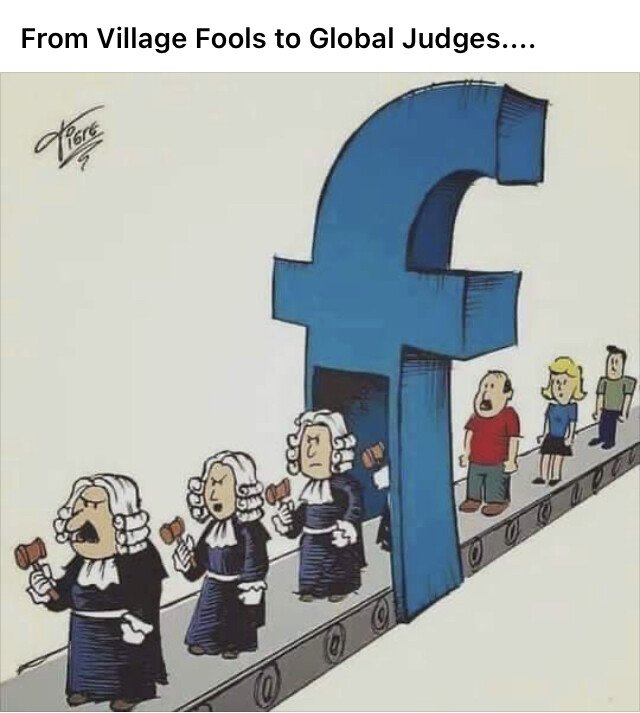
Facebook is banning anyone charged (not convicted) with participating in January 6 US Capitol riot

Facebook has revealed that it will ban anyone who’s charged in connection with the riot at the US Capitol on January 6 and may start “fact-checking” claims that the riot was staged.

In an article detailing how Alan Hostetter, a man who has been charged with obstructing official government proceedings and breaching restricted government property, was banned from Facebook and Instagram within hours of posting a video describing the January 6 riot as a “false flag” and a “fakesurrection” because he believed infiltrators were in the crowd, The Washington Post notes that:

“Facebook says that it does not allow people charged in the insurrection on the platform and that it may fact-check claims that the riot was staged.”

In the case of Hostetter, the prosecutors do not allege that he was violent or entered the Capitol building but claim that he “pushed through the area that the law enforcement officers had been blocking, moved up the stairs onto a structure erected for the Inauguration, and continued moving on to the Upper West Terrace.”

Keep reading

Rep. Ken Buck (R-CO) Speaks Out On Reining in Big Tech and Why Many House Members Refuse

Last June, the House subcommittee overseeing antitrust law issued a comprehensive 450-page report that concluded that four Silicon Valley companies — Facebook, Amazon, Google and Apple — are classic monopolies. It was by far the most in-depth and serious governmental attempt in the U.S. to grapple with the unprecedented and increasingly concentrated power of these tech giants.

The report documented the multiple ways that the centralized power and anti-competitive practices of these four tech companies are damaging both consumers and the broader society. It proposed numerous solutions to address those harms — from breaking them up to legislative and regulatory changes to enable more competition. The report narrated that these “companies that once were scrappy, underdog startups that challenged the status quo have become the kinds of monopolies we last saw in the era of oil barons and railroad tycoons.” And it concluded that “these firms typically run the marketplace while also competing in it — a position that enables them to write one set of rules for others, while they play by another, or to engage in a form of their own private quasi regulation that is unaccountable to anyone but themselves.”

The report, which came to be known as the Cicilline Report after subcommittee Chair David Cicilline (D-RI), was widely praised by antitrust activists and scholars. Yet it highlighted a strange political phenomenon. House Republicans have been flamboyantly waving the anti-Big-Tech banner with increasing passion and aggression, often in response to growing online censorship. Virtually every television appearance or in-district rally by a House Republican entails righteous denunciations of Silicon Valley monopoly power. Yet none of the Committee Republicans was willing to sign onto or support the Cicilline report. It was left to Cicilline and House Judiciary Committee Chair Jerrod Nadler (D-NY) to echo what their Republican colleagues were expressing with words to Fox News audiences or at town halls: “Our investigation leaves no doubt that there is a clear and compelling need for Congress and the antitrust enforcement agencies to take action that restores competition, improves innovation, and safeguards our democracy.”

In sum, there was a huge gap between GOP rhetoric about the evils of Big Tech and the actions of House Republicans, which not only failed to follow through on their fiery language but oftentimes seemed devoted to protecting the interests of the very Silicon Valley giants they were publicly denouncing. But now, one key House Republican — Rep. Ken Buck, who was first elected to represent Colorado’s 4th Congressional District back in 2012, when he ran as a Tea Party conservative, and became a vocal supporter of former President Trump — has changed that dynamic. Using his vital position as ranking member of the subcommittee, Buck has become increasingly outspoken about the need for legislative and regulatory action, rather than just cable-friendly rhetoric, to rein in the abuses of Big Tech, and has been working with a bipartisan coalition he helped assemble to pass consequential legislation.

Among other things, Buck is now a co-sponsor of various legislative measures that would more assertively enforce antitrust laws in order to foster greater competition. He has, as The Denver Post noted last week, been increasingly vocal in his criticism of his GOP colleagues for failing to follow through on what they tell their base. Along with his GOP Senate colleague Mike Lee (R-UT), Democratic Sen. Amy Klobuchar (D-MN), and Cicilline, Buck announced last week that this bipartisan group is urging new Federal Trade Commission Chair Lina Khan “to pursue antitrust enforcement action against Facebook.”

Keep reading