Covid-19 vaccine trial participant had serious neurological symptoms, but could be discharged today, AstraZeneca CEO says

The participant who triggered a global shutdown of AstraZeneca’s Phase 3 Covid-19 vaccine trials was a woman in the United Kingdom who experienced neurological symptoms consistent with a rare but serious spinal inflammatory disorder called transverse myelitis, the drug maker’s chief executive, Pascal Soriot, said during a private conference call with investors on Wednesday morning.

The woman’s diagnosis has not been confirmed yet, but she is improving and will likely be discharged from the hospital as early as Wednesday, Soriot said.

The board tasked with overseeing the data and safety components of the AstraZeneca clinical trials confirmed that the participant was injected with the company’s Covid-19 vaccine and not a placebo, Soriot said on the conference call, which was set up by the investment bank J.P. Morgan.

Keep reading

World’s Largest Vaccine Maker Suing Man for Saying COVID-19 Vaccine Injured Him

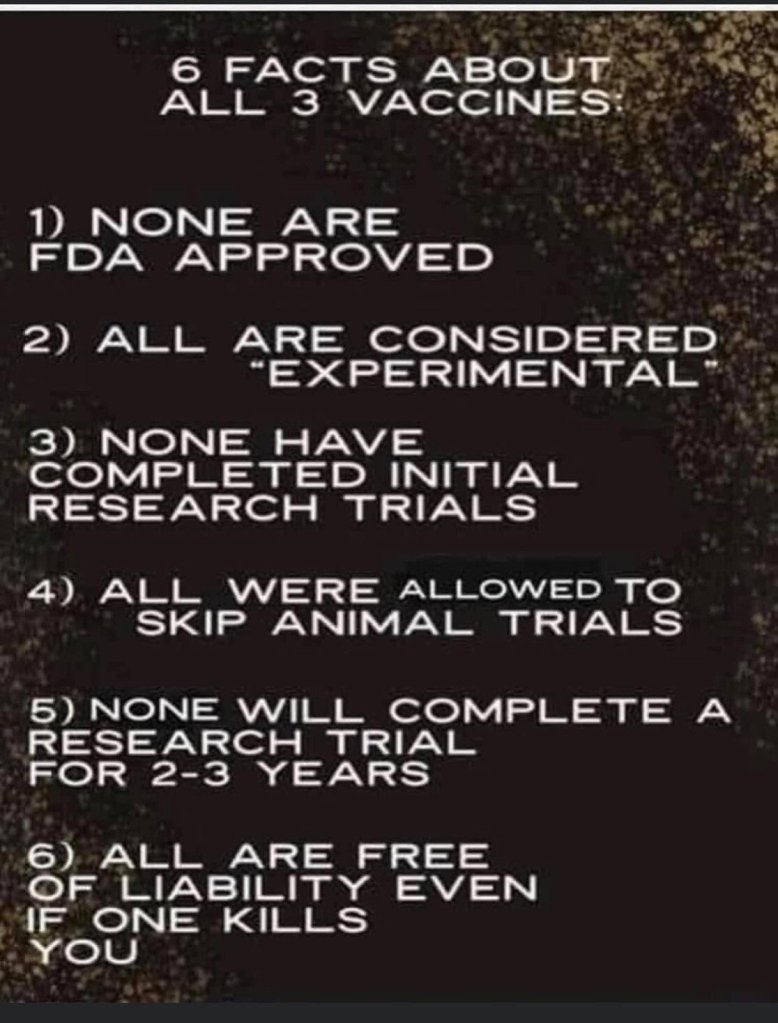
It should have already been considered a crime against humanity decades ago that law makers were lobbied (bribed) into passing legislation in which vaccine manufacturers cannot be held legally liable for any damage their products may cause. It was an act which established official protocols, such as the secret vaccine injury court to largely sweep under the rug any instances of such side effects.

But now a new lawsuit filed by the world’s largest vaccine manufacturer Serum Institute of India, in association with multinational pharmaceutical giant AstraZeneca, seeks to take this a step further — by attempting to set the precedent that vaccine manufacturers can actually sue those that may have been harmed by their faulty products.

The litigation filed in an Indian court is a countersuit to a lawsuit that has been filed against SII by one of the volunteers who participated in a trial study for the developmental Covisheild. A vaccination for SARS-CoV-2.

After participating in the trial study, the yet to be named volunteer flagged severe neurological and psychological symptoms 10 days after the first injection. Symptoms which were then diagnosed as acute neurological encephalopathy, resulting in memory loss, lapses in cognitive functions such as reasoning, and changes in personality. A legal notice had been sent to ICMR, DCGI, AstraZeneca and Oxford University to stop testing, manufacturing and distributing the vaccine. The plaintiff filed a suit after the notice failed to receive response.

SII then filed a countersuit, worth $13.5 million, for defamation after alleging that the volunteers illness had nothing to do with the vaccine trial. This is a statement which was also backed up by the Data and Safety Monitoring Board (DSMB) and DCGI (Drugs Controllor General of India). However, these assertions have been challenged by independent researcher Dr. Anant Bhan, the former President of the International Association of Bioethics and current professor at India’s Yenepoya Medical University. Dr. Bhan notes that both of these institutions are government entities directly affiliated with SII, and stresses that transparency should be the top priority given that the parties vested financial interests.

Keep reading

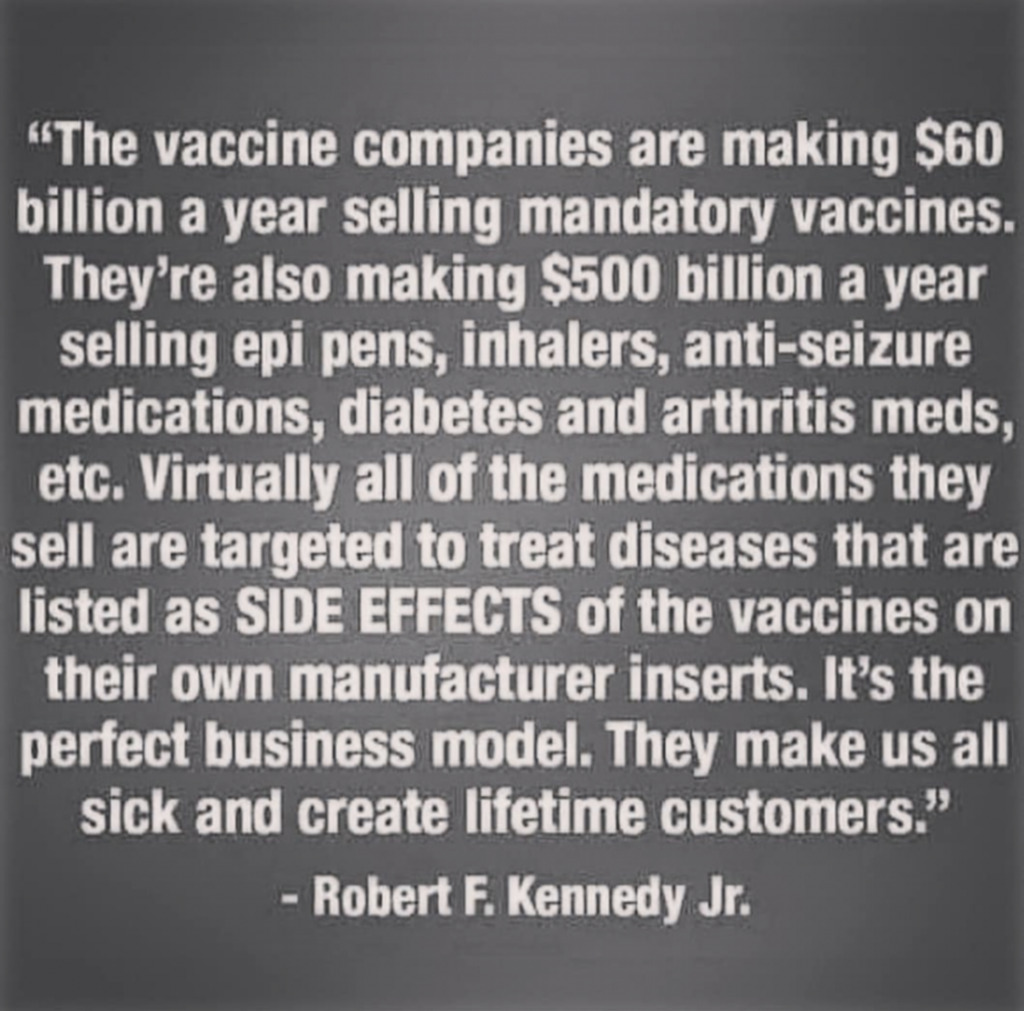
Pfizer and Moderna could score $32 billion in Covid-19 vaccine sales — in 2021 alone

The imminent authorization of Pfizer’s Covid-19 vaccine in the United States is a momentous occasion for science, the economy and humanity. The milestone is also a major moneymaker for the companies that developed the vaccines.Wall Street analysts are projecting Pfizer and Moderna will generate $32 billion in Covid-19 vaccine revenue — next year alone.

Keep reading

The ‘Vaccine Court’ Is Hazardous To Your Health

The National Childhood Vaccine Injury Compensation Act was passed in 1986, under the shadow of multi-million dollar jury verdicts against the makers of the Diphtheria Pertussis and Tetanus (DPT) vaccine. Congress announced that vaccine injuries and deaths are real and provided that vaccine-injured children and their families would be financially compensated. Part of the larger Vaccine Act, the Vaccine Injury Compensation Program (VICP) was modeled after workers’ compensation programs. It was to be a “no-fault” program.

Very well. As one of the earliest “vaccine attorneys”—a very limited practice niche—I know first-hand it didn’t work that way. I practiced in the National Childhood Vaccine Injury Compensation Program for more than 25 years after its inception in 1988, and have been personally involved in over 100 vaccine-injury cases. I represented an entire fragile population in omnibus proceedings. I was able to obtain reversal in the Federal Circuit Court of Appeals of the denial of compensation to a vaccine-injured child in a case that the government appealed to the United States Supreme Court as Shalala v. Whitecotton. It was the only Vaccine Act case to be argued before the United States Supreme Court until Sebelius v. Cloer in 2013, where I was co-counsel for the vaccine-injured petitioner, and guided the attorneys-fees litigation that the Supreme Court upheld on review against the government’s objection. I have seen the injured and their families cruelly oppressed.

From the passing of the legislation in 1986, the process has been rigged, one major step at a time, in favor of the vaccine-industrial complex. Policy makers nationwide are yearning, with financial support and lobbying from the pharmaceutical industry, for mandatory vaccination. Before further compulsory vaccinationlegislation passes—on a state or federal level—the failure of the VICP must be acknowledged and properly addressed. The VICP creates a classic moral hazard, granting immunity from suit to the vaccine industry while providing insurance against any loss. The vaccine-industrial complex has become a thriving giant; according to a 2013 report presented by the Pharmaceutical Research and Manufacturers of America, nearly300 vaccines were reported to be in development. Its lobbying money drives agency denial of the reality of vaccine injury, which in turn permeates policy decisions in a sinister fashion.

Keep reading