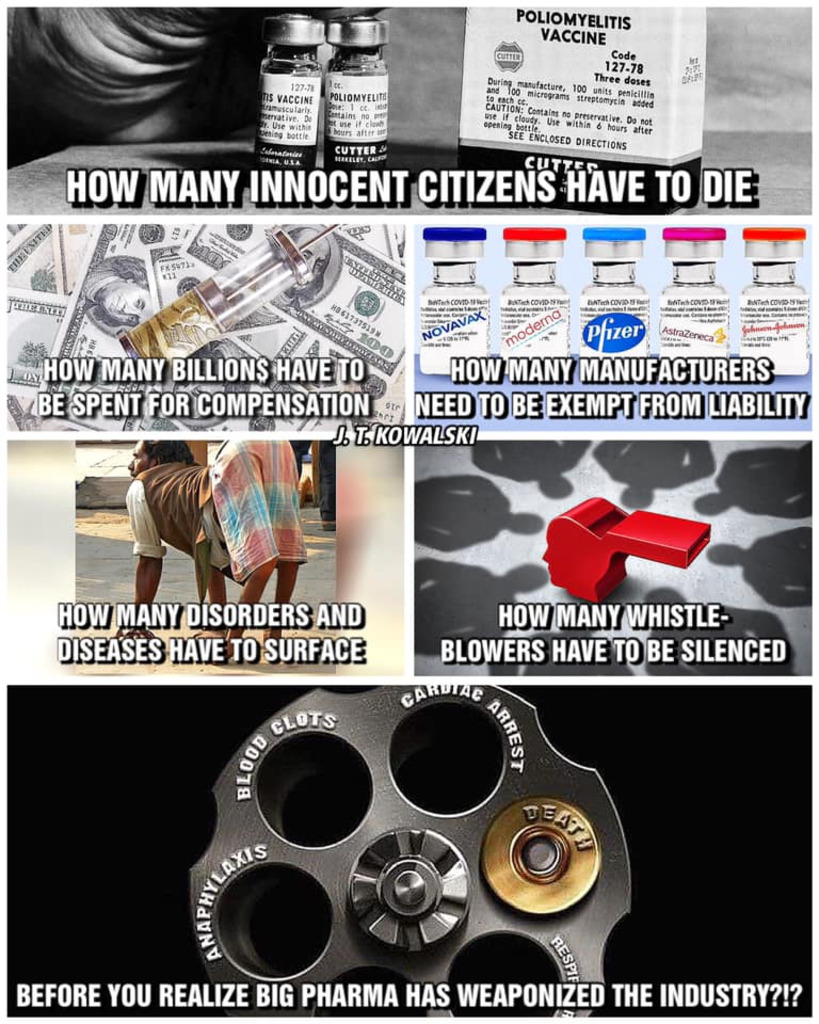
How many?



On Monday, the FDA announced that it had approved the Pfizer-BioNTech COVID-19 vaccine for the prevention of the disease in individuals 16 years of age and older, but the rushed nature of their announcement raises questions.
Liberal media hacks rejoiced and gleefully spread the news they had been waiting for since Trump left office and the vaccine magically transformed into their only hope for mankind.
“Time for mandates!” They exclaimed, in some form or another, as they feverishly began plotting how they could now call for conservatives to be held down while a needle gets jammed in their arm.
And how convenient, just in time for booster shots!
The tyrants in Biden’s regime also jumped at the news and immediately said they would force all active-duty military members to get the jab. They are expected to implement even more draconian restrictions now that the FDA has given the experimental and highly controversial mRNA vaccine their ‘blessing.’
Parents across the nation are facing a new threat to their children: the transgender-industrial complex. For different but sometimes overlapping reasons, the medical establishment, Big Pharma, the culture industry and government agencies are leading our kids on the road toward “transitioning” — whether parents like it or not.
For the private-economy actors, especially, the spread of gender ideology is a big boon to their bottom line.
To be sure, people experiencing gender dysphoria deserve compassionate care. But that’s very different from enabling minors in a vulnerable state of mind in these sexually confusing times to irreversibly alter their bodies with the latest in medical and pharmaceutical science.
Actually, that bit about the latest science isn’t quite right. Medroxyprogesterone acetate, a common drug in “gender-affirming therapy,” has long been used to chemically castrate sex offenders.
Another widely used medication is Lupron, a controversial hormone blocker. Lupron was initially developed to lower testosterone levels in men with prostate cancer, effectively chemically castrating them. It’s now used as a puberty blocker in the booming business of “transitioning” children.

Big pharmaceutical companies have made billions of dollars from the sale of Wuhan coronavirus (COVID-19) vaccines.
Pfizer, BioNTech, Moderna, AstraZeneca and Johnson & Johnson have all made or are expected to make billions from the sale of the COVID-19 vaccines by the end of the year. (Related: Big money for Big Pharma: World Bank to inject more money into Big Pharma’s accounts.)
The biggest winners are Pfizer and its German partner BioNTech. These two corporations got a headstart over their competitors in the creation of the COVID-19 vaccines.
The Pfizer-BioNTech COVID-19 vaccine clinical trials were the first to supposedly receive positive results. Because of this, its vaccine was the first to get emergency use authorizations from drug regulatory bodies in the United States and the European Union.
Because of their headstart, Pfizer and BioNTech were able to make the most money from selling COVID-19 vaccines. Pfizer alone raked in over $10.8 billion in the first half of 2021 alone. The company has already raised its outlook for the rest of the year. It expects to make at least $33.5 billion in vaccine sales before 2022.
On Tuesday, Aug. 10, BioNTech reported making $7.3 billion during the first half of 2021. The company expects full-year revenues from the COVID-19 vaccines to be about 15.9 billion euros ($18.6 billion). This is a significant increase from its previous forecast of 12.4 billion euros ($14.5 billion).
This forecast would push BioNTech into the ranks of the world’s top 20 drugmakers by revenue this year. BioNTech recently announced that it had signed contracts to supply nations with 2.2 billion doses of the vaccine for delivery by the end of the year, and at least another billion doses for 2022 and beyond.
Company co-founder and CEO Ugur Sahin also recently announced that it and Pfizer have delivered at least one million doses of the COVID-19 vaccine.
Moderna reported making $5.9 billion in the first six months of the year. It expects to make over $20 billion by the end of 2021 in revenues.
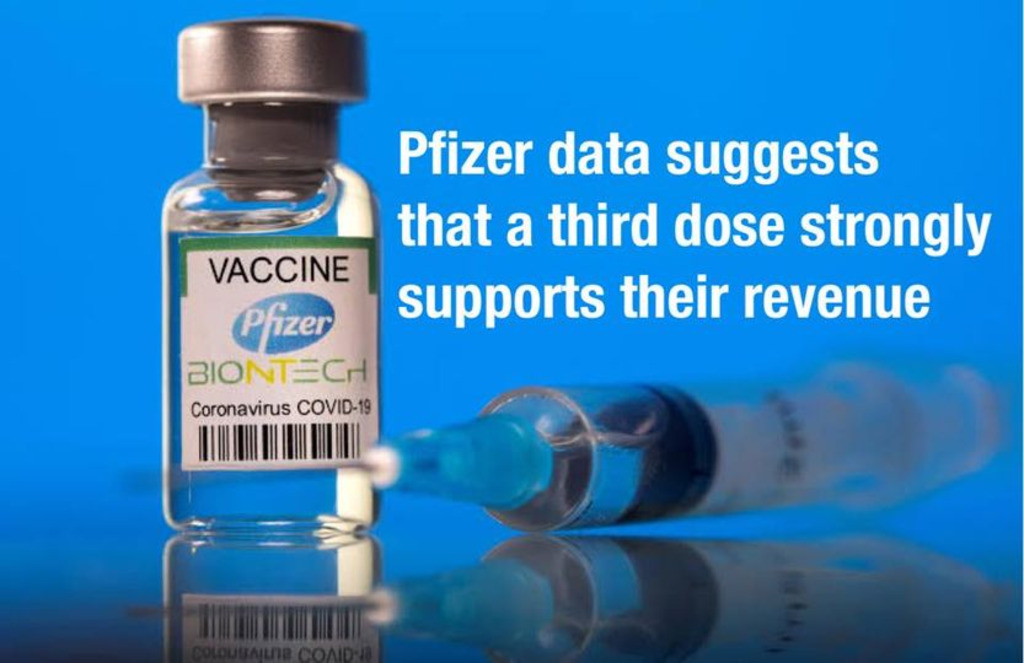
Pfizer said Wednesday it sold $7.8 billion in Covid-19 shots in the second quarter and raised its 2021 sales forecast for the vaccine to $33.5 billion from $26 billion, as the delta variant spreads and scientists debate whether people will need booster shots.
The company’s second-quarter financial results also beat Wall Street expectations on earnings and revenue. Here’s how Pfizer did compared with what Wall Street expected, according to average estimates compiled by Refinitiv:
Pfizer expects an adjusted pretax profit in the high 20% range of revenue for the vaccine.
The company now expects full-year earnings in the range of $3.95 to $4.05 per share. That’s up from its prior range of $3.55 to $3.65 per share. It expects revenue in the range of $78 billion to $80 billion, up from its previous estimate of $70.5 billion to $72.5 billion.


You must be logged in to post a comment.