
Virginia Teacher Reveals The Left’s Next Public School Quest: Convincing Autistic Kids They’re Trans

During a county school board meeting in Arlington, Virginia, on Oct. 13, Carly Hughes, a teacher in Long Branch Elementary School’s Multi-Intervention Program for Students with Autism (MIPA), spoke against Virginia Gov. Glenn Youngkin’s proposed public school policies for transgender-identifying students. Her reason? She believes her autistic students “may experience gender queerness more than other students.”

“I did my master’s study in queer inclusion in public schools,” Hughes told the school board. “My study told me that including trans students in all spaces is best practice. It also told me there are trans kids of every age — one I actually worked with in my student teaching. He was in the third grade.” 

Youngkin’s model policies specify that taxpayer-funded public schools cannot facilitate a child’s so-called “transition” without written consent from a parent. Additionally, the guidance prescribes that bathroom and locker room access and sports participation should be based strictly on a student’s sex. These policies are a reversal of previous guidance from former Democratic Gov. Ralph Northam, which asked schools to hide a student’s “gender identity” from his or her parents. 

Hughes herself identifies as a “queer” special education teacher. “I found that autistic students, the population I work with, may experience gender queerness more than other students,” she said. “These students … have helped me learn so much about myself as well.” 
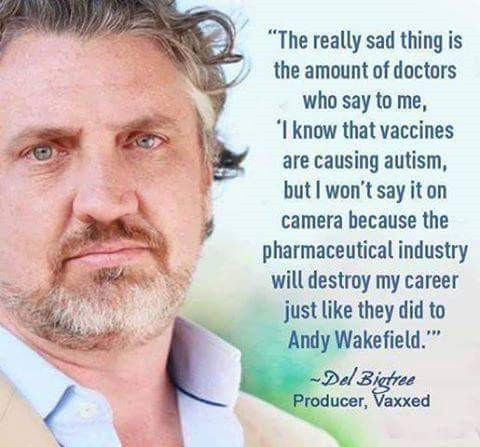
Keep reading

One in 44 U.S. children diagnosed with autism, new data suggests

New autism numbers released Thursday suggest more U.S. children are being diagnosed with the developmental condition and at younger ages.

In an analysis of 2018 data from nearly a dozen states, researchers at the Centers for Disease Control and Prevention found that among 8-year-olds, 1 in 44 had been diagnosed with autism. That rate compares with 1 in 54 identified with autism in 2016.

U.S. autism numbers have been on the rise for several years, but experts believe that reflects more awareness and wider availability of services to treat the condition rather than a true increase in the number of affected children.

A separate CDC report released Thursday said that children were 50 percent more likely to be diagnosed with autism by age 4 in 2018 than in 2014.

Keep reading

CDC senior scientist: ‘We trashed data showing vaccine-autism link in African-American boys’

Here is the full statement by current CDC Senior Scientist on Vaccine-Autism questions: Dr. William Thompson. Stay tuned to this website for an update on the story, soon.

I regret that my [CDC] coauthors and I omitted statistically significant information in our 2004 article published in the Journal of Pediatrics.

My primary job duties while working in the immunization safety branch from 2000 to 2006 were to lead or colead three major vaccine safety studies. The MADDSP MMR-Autism Cases 
Control Study was being carried out in response to the Wakefield Lancet study that suggested an association between the MMR vaccine and an autism-like health outcome.
There were several major concerns among scientists and consumer advocates outside the CDC in the fall of 2000 regarding the execution of the Verstraeten study.

One of the important goals that was determined upfront in the spring of 2001 before any of these studies started was to have all three protocols vetted outside the CDC prior to the start of the analyses so that consumer advocates could not claim that we were presenting analyses that suited our own goals and biases.
       
We hypothesized that if we found statistically significant effects at either 18- or 36-month thresholds, we would conclude that vaccinating children early with MMR vaccine could lead to autism-like characteristics or features.
       
We all met and finalized the study protocol and analysis plan. The goal was to not deviate from the analysis plan to avoid the debacle that occurred with the Verstraeten Thimerosal study published in Pediatrics in 2003.
       
At the September 5 meeting, we discussed in detail how to code race for both the sample and the birth certificate sample. At the bottom of table 7, it also shows that for the 
nonbirth certificate sample, the adjusted race effect statistical significance was huge.
       
All the authors and I met and decided sometime between August and September 2002 not to report any race effects for the paper. Sometime soon after the meeting, where we decided to exclude reporting any race effects, the coauthors scheduled a meeting to destroy documents related to the study.

The remaining four coauthors all met and brought a big garbage can into the meeting room and reviewed and went through all the hard copy documents that we had thought we should discard and put them in a huge garbage can.
       
However, because I assumed it was illegal and would violate both FOIA and DOJ requests, I kept hard copies of all documents in my office, and I retained all associated computer files.

Keep reading

Immunoexcitotoxicity as the central mechanism of etiopathology and treatment of autism spectrum disorders: A possible role of fluoride and aluminum

Our review suggests that most autism spectrum disorder (ASD) risk factors are connected, either directly or indirectly, to immunoexcitotoxicity. Chronic brain inflammation is known to enhance the sensitivity of glutamate receptors and interfere with glutamate removal from the extraneuronal space, where it can trigger excitotoxicity over a prolonged period. Neuroscience studies have clearly shown that sequential systemic immune stimulation can activate the brain’s immune system, microglia, and astrocytes, and that with initial immune stimulation, there occurs CNS microglial priming. Children are exposed to such sequential immune stimulation via a growing number of environmental excitotoxins, vaccines, and persistent viral infections. We demonstrate that fluoride and aluminum (Al3+) can exacerbate the pathological problems by worsening excitotoxicity and inflammation. While Al3+ appears among the key suspicious factors of ASD, fluoride is rarely recognized as a causative culprit. A long-term burden of these ubiquitous toxins has several health effects with a striking resemblance to the symptoms of ASD. In addition, their synergistic action in molecules of aluminofluoride complexes can affect cell signaling, neurodevelopment, and CNS functions at several times lower concentrations than either Al3+ or fluoride acting alone. Our review opens the door to a number of new treatment modes that naturally reduce excitotoxicity and microglial priming.

Keep reading