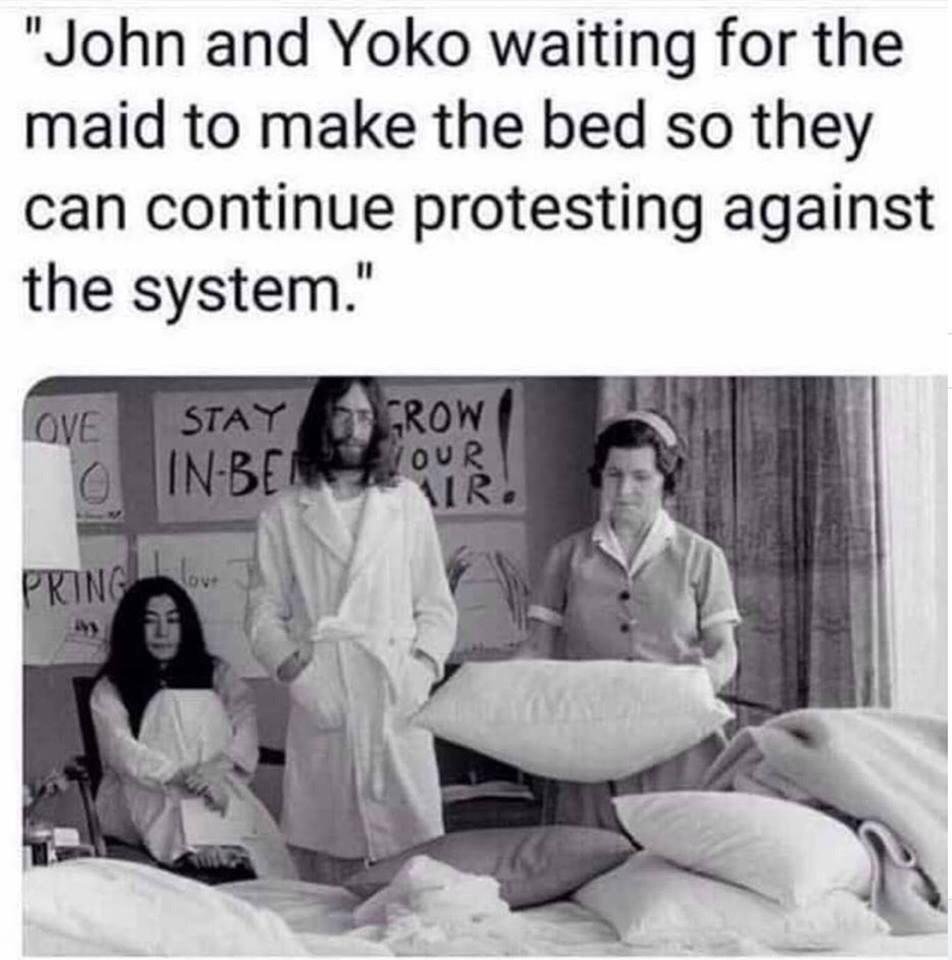
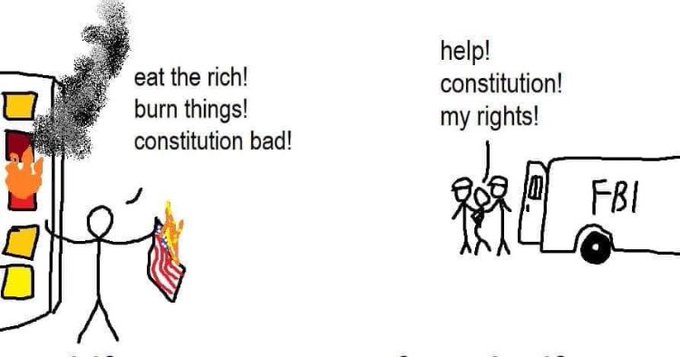
Celebrity protesters…


Joe Biden fundraiser and long-time left-wing actress Jane Fonda is insisting that COVID-19, which has killed over 211,000 Americans, devastated the lives and livelihoods of countless more, and tanked the global economy, is “God’s gift to the left.”
“I just think that COVID is God’s gift to the Left,” Jane Fonda said. “That’s a terrible thing to say. I think it was a very difficult thing to send down to us, but it has ripped the band-aid off who [Trump] is and what he stands for and what is being done to average people and working people in this country.”
Since 2015, George Soros has been executing a plan to reshape the country through local district attorney elections by pumping unprecedented amounts of money into races that typically only see candidates spend in the low five figures.
Here’s why he has an interest in these local races. Soros is exploiting the reality that all politics are local in some way. To transform America, you have to transform the way towns and cities operate.
A recent exchange on Fox News involving former House Speaker Newt Gingrich, Fox News host Harris Faulkner, Democrat commentator Marie Harf, and Fox commentator Melissa A. Francis made the hair on my arms stand up because I realized how many people were either unaware of what Soros is doing or have been silenced by the idea that it’s somehow antisemitic to criticize Soros’s political activity.
Far-left activists in Seattle are now suing the city with claims that they need costly protective gear to protest safely against the police. In other words, they want the city to pay protesters to conduct demonstrations.
The plaintiffs, who claim that “only a privileged few” can perform demonstrations safely, allege that the Seattle police department’s anti-riot tactics have forced them to acquire expensive gear to enjoy their First Amendment right to assemble.
First reported by KIRO-TV news, five protesters who filed their lawsuit on Monday say that they attended the July 25 protest on Capitol Hill, which was later declared a riot, are calling upon the city to stop its police department from using less lethal anti-riot measures including pepperballs and pepper spray.
Black bears will not be voting in the upcoming election, but that’s not stopping one bear from unknowingly showing a little support for the incumbent president.Help Asheville Bears (HAB), an organization in North Carolina, has put out a $5,000 reward to find the person or people responsible for putting a “Trump 2020″ sticker on the tracking tag of a black bear.”Whoever put these political stickers on these bears is cruel and heartless,” HAB wrote in a Facebook post. “HAB and our followers hope to stop and expose you. This is now the second bear this happened to, which can only mean either someone in the study is doing this or it is someone in the public. Either way, a full investigation needs to be done.”
By diluting the term “racism” into near-impotency, today’s activists have only lowered the bar for genuine heroism; it’s easy to fight racism if it’s on a box of taco shells.

How widespread this is, and whether they’re targeting vandals or casting a much broader net at demonstrators, are open questions as I write this. The two stories about this circulating today, one from WaPo and the other from Oregon Public Broadcasting, claim that “protesters” are being snatched as well.
What’s not in question is that this is twice at least in the past two months that federal agents kitted out in military or paramilitary trappings have appeared on America’s streets without any markings identifying who they are or what agency they’re with. When it happened in D.C. last month in the first flush of George Floyd protests, the agents at least looked like cops in riot gear, not soldiers. The agents on the streets of Portland this week look like troops; they have a completely generic “POLICE” tag on their chests but otherwise they seem poised to deploy.
Oliver Taylor, a student at England’s University of Birmingham, is a twenty-something with brown eyes, light stubble, and a slightly stiff smile.
Online profiles describe him as a coffee lover and politics junkie who was raised in a traditional Jewish home. His half dozen freelance editorials and blog posts reveal an active interest in anti-Semitism and Jewish affairs, with bylines in the Jerusalem Post and the Times of Israel.
The catch? Oliver Taylor seems to be an elaborate fiction.
His university says it has no record of him. He has no obvious online footprint beyond an account on the question-and-answer site Quora, where he was active for two days in March. Two newspapers that published his work say they have tried and failed to confirm his identity. And experts in deceptive imagery used state-of-the-art forensic analysis programs to determine that Taylor’s profile photo is a hyper-realistic forgery – a “deepfake.”
Who is behind Taylor isn’t known to Reuters. Calls to the U.K. phone number he supplied to editors drew an automated error message and he didn’t respond to messages left at the Gmail address he used for correspondence.
Reuters was alerted to Taylor by London academic Mazen Masri, who drew international attention in late 2018 when he helped launch an Israeli lawsuit against the surveillance company NSO on behalf of alleged Mexican victims of the company’s phone hacking technology.
In an article in U.S. Jewish newspaper The Algemeiner, Taylor had accused Masri and his wife, Palestinian rights campaigner Ryvka Barnard, of being “known terrorist sympathizers.”
Masri and Barnard were taken aback by the allegation, which they deny. But they were also baffled as to why a university student would single them out. Masri said he pulled up Taylor’s profile photo. He couldn’t put his finger on it, he said, but something about the young man’s face “seemed off.”
Six experts interviewed by Reuters say the image has the characteristics of a deepfake.
“The distortion and inconsistencies in the background are a tell-tale sign of a synthesized image, as are a few glitches around his neck and collar,” said digital image forensics pioneer Hany Farid, who teaches at the University of California, Berkeley.
Artist Mario Klingemann, who regularly uses deepfakes in his work, said the photo “has all the hallmarks.”
“I’m 100 percent sure,” he said.

You must be logged in to post a comment.