
Rene Descartes on seeking truth…

CNBC’s Becky Quick sits down with Microsoft Co-Founder Bill Gates at the World Economic Forum in Davos, Switzerland. Gates made a $10B investment on vaccine development and distribution over the last 20 years.
Watch video HERE
The World Health Organization, which is the medical epicenter of the depopulation lobby, now considers your child’s presence in school informed consent to vaccinate that child. Depopulation by vaccination us now fully outside the law and will sterilize, sicken and dumb down every child on earth but the children of the depop lobby members who don’t vaccinate their children.
Read the full story in WHO’s official document (PDF)
As the nation debates whether children should be forced to wear face masks at school, Dr. Anthony Fauci is now advocating for COVID-19 vaccination to be a condition of attending school.
Fauci, chief medical adviser to President Joe Biden, said on CNN’s “State of the Union” the COVID-19 vaccine should be added to the list of vaccines that most schools require students to have before admission.
“I believe that mandating vaccines for children to appear in school is a good idea,” Fauci said.
“This is not something new. We have mandates in many places in schools, particularly public schools, that if, in fact, you want a child to come in, we have done this for decades and decades, requiring polio, measles, mumps, rubella, hepatitis,” he continued. “So this would not be something new, requiring vaccinations for children to come to school.”
If you were wondering what a tyrant like Stalin or Mao would do in the age of technology, take a look down under.
The Australian parliament passed unprecedented legislation that gives federal police near-unrestricted powers to spy on any Australian citizen – by gaining access to their social media and email accounts without their knowledge – if they have been ‘suspected of criminal activity.’
The totalitarian “Identify and Disrupt” bill creates 3 new types of “data disruption” warrants that the Australian Federal Police and the Australian Criminal Intelligence Commission can use to copy, delete and modify content on individuals online accounts.
Federal authorities will be able to impersonate the account holder and send emails or messages to their online correspondents.
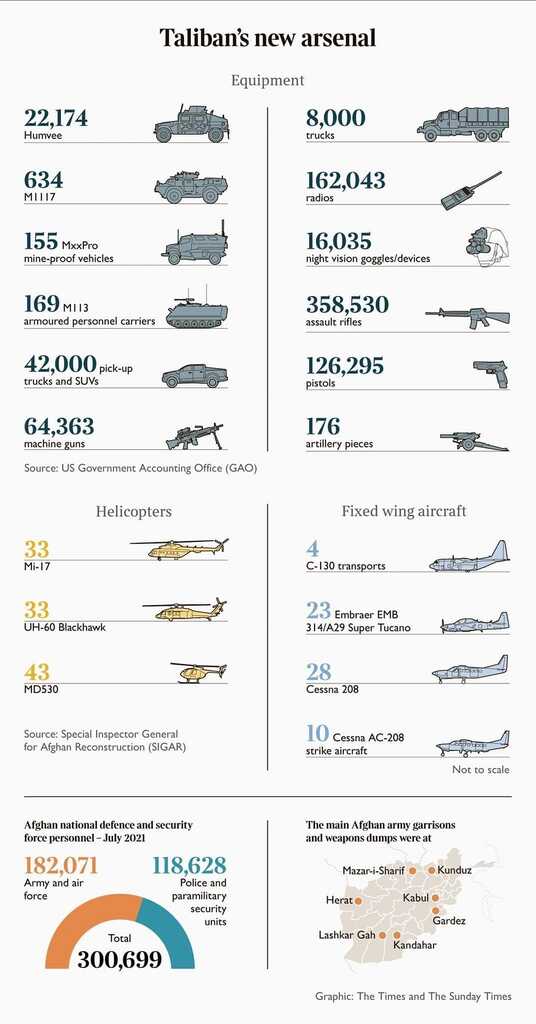
The RaidTeamCo Instagram account posted screenshots of the text message exchange on Sunday, accompanied by the caption “Meanwhile on the 24 MEU! 🤡s This was sent to us from one of the homies his wife is currently deployed and they are being told they have to clean before they can leave! WTF SHARE!”
In the messages, the claim is made that “We were supposed to leave last night,” “The general canceled our flight because the base was dirty.” After receiving the response, “What the f**k,” the Marine continues, “Yea I’m not joking,” “We had to clean the base for the Taliban.” The general being referred to is then identified as Brig. Gen. Farrell J. Sullivan of the Task Force 51/5th Marine Expeditionary Brigade.
In another text exchange, a service member states, “Came from higher we had to police call the terminal where the civilians were processed. We didn’t even get rooms to stay in like a lot of the other units. We slept in a gym, then had to clean the gym. We picked up water bottles and mre trash and shit paper. Reflip vehicles to the upright positions.”
Amid the intense battle over mask mandates, New York magazine noted a large-scale study published by the Centers for Disease Control and Prevention that found no statistically significant difference in schools that required students to wear masks compared to schools where masks were optional.
The study analyzed some 90,000 elementary students in 169 Georgia schools from Nov. 16 to Dec. 11.
“The 21% lower incidence in schools that required mask use among students was not statistically significant compared with schools where mask use was optional,” the CDC said.
“This finding might be attributed to higher effectiveness of masks among adults, who are at higher risk for SARS-CoV-2 infection but might also result from differences in mask-wearing behavior among students in schools with optional requirements.”
It happens when every baby is born in Michigan, blood sample is taken from the newborn.
But a judge has ruled the way the state of Michigan does this, is most likely unconstitutional.
Its a complicated legal ruling, but it may pave the way for changes in the newborn health screening process.
“They don’t tell the parents, they don’t explain it to the parents, they just do it,” says Saginaw County attorney Phil Ellison.
He is talking about the state of Michigan’s program where it takes a sample of blood from every newborn shortly after birth.
The blood is taken to test for diseases. He represents four parents and nine children, who claim the parents didn’t consent to have those blood samples stored and used in research.
A lawsuit was filed in 2018, claiming their constitutional rights were violated and recently a federal judge, in part, agreed.
“He ruled that the two parents of the two children who were born before May 1st 2010, had their constitutional substantive due process rights violated, basically your right to be a parent was violated when the government, being the state of Michigan, kept, retained without permission or consent the blood spots or blood samples of children that they had taken during the newborn screening process,” says Ellison.
The judge also ruled the process for blood taken from babies born after that May 2010 date, when consent forms for storage and research were in put in place, may also be unconstitutional, but wants to hear from the state on why blood samples are stored and exactly how many.
Millions of blood samples are stored in bio banks in Detroit and Lansing. Ellison says the health screening is important and should be done, but parents should be better informed about the whole process, including how the blood is stored and who has access to it.
“What starts out as a good, probably noble public policy idea of testing children early for diseases, now has turned into, we are going to keep the data, we are going to keep the blood samples , we are going to sell the blood samples, we are going to trade the blood samples, now law enforcement is accessing these samples, we have found out,” says Ellison.
“We are opposed around the world by a monolithic and ruthless conspiracy that relies primarily on covert means for expanding it’s fear of influence, on infiltration instead of invasion, on subversion instead of elections, on intimidation instead of free choice, on guerrillas by night instead of armies by day. It is a system which has conscripted vast human and material resources into the building of a tightly knit, highly efficient machine that combines military, diplomatic, intelligence, economic, scientific, and political operations. It’s preparations are concealed, not published. It’s mistakes are buried, not headlined. It’s dissenters are silenced, not praised. No expenditure is questioned. No rumor is printed. No secret is revealed.”
JFK


You must be logged in to post a comment.