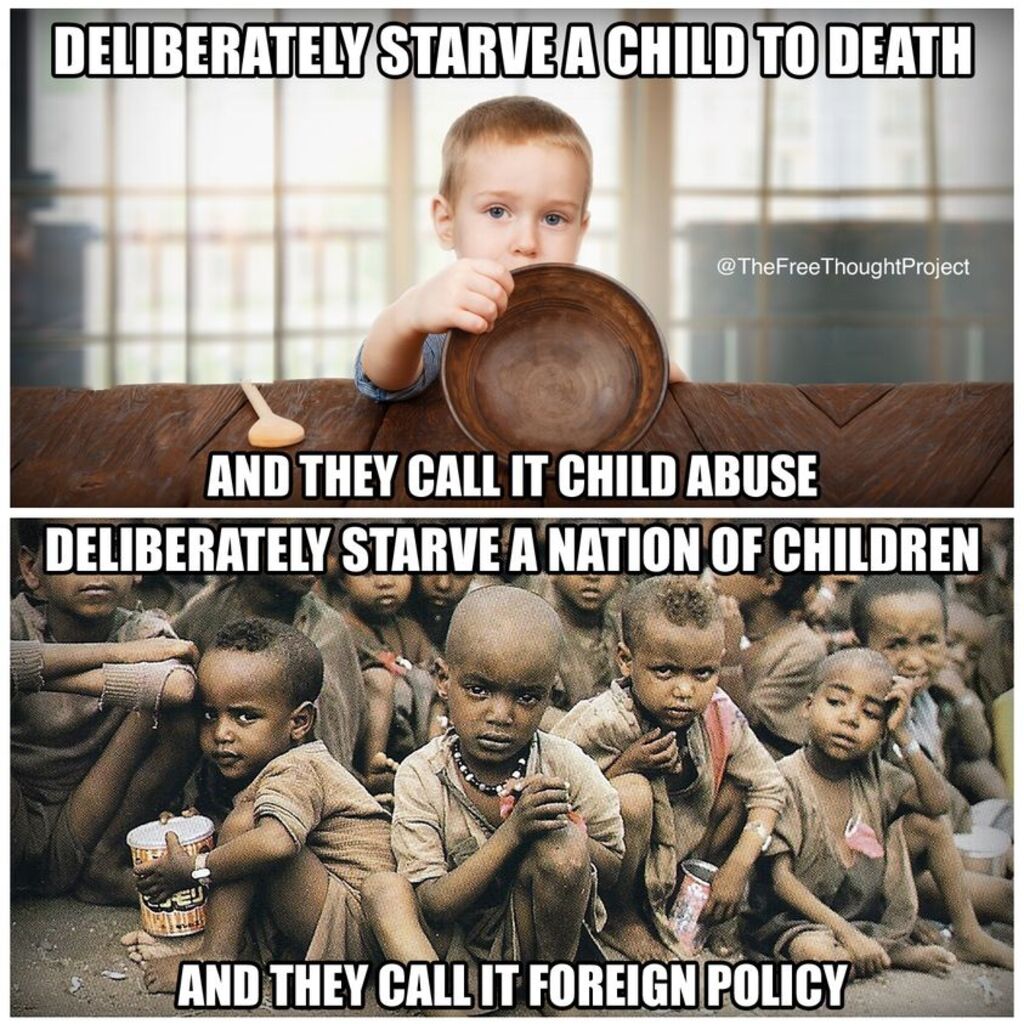
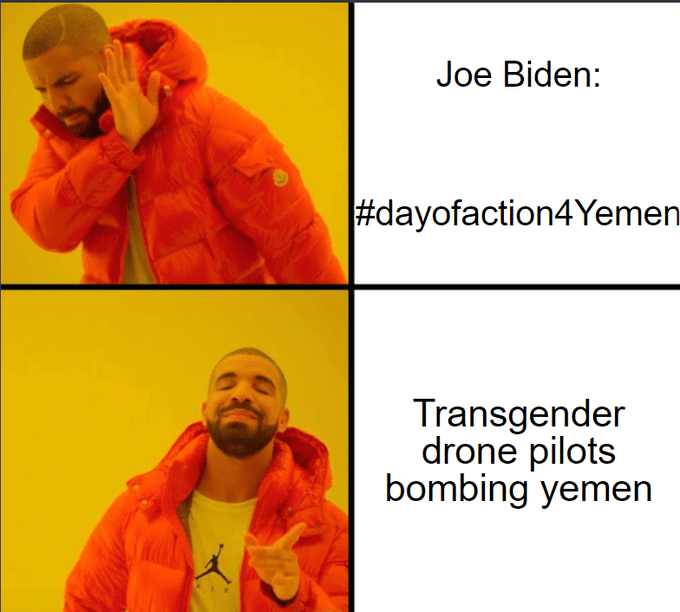
We care a lot!


“The war in Yemen must end,” declared President Joe Biden in his first major foreign policy speech; “and to underscore our commitment, we are ending all American support for offensive [Saudi] operations in the war in Yemen, including relevant arms sales.”
Yet studying sales records from the Department of Defense (DoD), MintPress can reveal that less than one year into his presidency, the Biden administration has already approved 20 separate weapons contracts, worth just shy of $1.2 billion, to Saudi Arabia alone. This includes a $100 million shipment of Black Hawk helicopters, support for Apache gunships, and a $78 million deal to buy 36 cruise missiles. A new and controversial $650 million deal announced earlier this month has yet to be finalized but will likely soon follow, boosting sales up to levels equal with the earlier years of the Trump presidency.
The Saudi-led Coalition is once again pummelling Yemen’s capital, Sana’a. Images appear to show U.S.-made aircraft attacking ground targets. This is hardly surprising: American arms sales to Saudi Arabia have long been a point of contention. But this MintPress investigation will reveal the extent to which private American companies are profiting off the infliction of suffering on the Yemeni people.
The Biden administration has finally admitted that the US is indeed providing offensive material support to Saudi Arabia’s genocidal assault on Yemen, directly contradicting Biden’s February claim that it would no longer be providing offensive support in that war. We are being lied to about yet another US war by yet another US president.
“The United States continues to provide maintenance support to Saudi Arabia’s Air Force given the critical role it plays in Saudi air defense and our longstanding security partnership,” Pentagon spokesperson Jessica McNulty has informed Vox reporter Alex Ward.
“Multiple US defense officials and experts acknowledged that, through a US government process, the Saudi government pays commercial contractors to maintain and service their aircraft, and those contractors keep Saudi warplanes in the air. What the Saudis do with those fighter jets, however, is up to them,” Ward reports. “The US could cancel those contracts at any time, thus effectively grounding the Saudi Air Force, but doing so would risk losing Riyadh as a key regional partner.”

A new exclusive from The Daily Beast titled “White House Reporters: Biden Team Wanted Our Questions in Advance” reports that the White House press corps is being pressured to provide briefing questions ahead of time in a way that makes even mainstream media journalists uncomfortable.
“While it’s a relief to see briefings return, particularly with a commitment to factual information, the press can’t really do its job in the briefing room if the White House is picking and choosing the questions they want,” one White House correspondent told The Daily Beast. “That’s not really a free press at all.”
“It pissed off enough reporters for people to flag it for the [White House Correspondents Association] for them to deal with it,” another source reportedly said.
While Obama’s deputy press secretary Eric Schultz calls the move “textbook communications work” designed to ensure that Biden’s press secretary has answers ready instead of having to “repeatedly punt questions”, clearly the reporters on the job feel differently.
“The requests prompted concerns among the White House press corps, whose members, like many reporters, are sensitive to the perception that they are coordinating with political communications staffers,” writes the Beast.
The day was supposed to be joyous. On December 12, 2013, the al Ameri and al Taisy families joined together in Yemen’s al Bayda province to celebrate the marriage of Abdullah Mabkhout al Ameri and his new wife Wardah al Taisy. During the traditional wedding procession from the bride’s home, a United States drone launched four missiles and killed 12 people. Seven members of the al Ameri family and five members of the al Taisy family were killed; six more were injured.
“Everyone here was shocked,” Ahmed Mohamed al Shafe’ee al Taisy, whose 25-year-old son was killed in the strike, said later in a witness statement. “Those drones don’t only fly, they kill people.”
Over the next five years, members of the al Ameri and al Taisy families, and their neighbors, were victims of six more attacks. The year 2017 was particularly brutal: they say that 15 members of their families were killed on January 29 after an on the ground raid, two distantly related neighbors died on March 6, one family member was killed on November 23, three died on November 26, and one died on December 22, during drone strikes. Less than a year later, on September 18, 2020, two more family members were killed. Over seven separate attacks by the United States—six drones strikes and one raid—36 members of the al Ameri and al Taisy families were killed. A quarter of them were children between the ages of three months and 14 years old. The families lost loved ones, homes, livestock, and neighbors, as 12 other people were killed by the strikes as well. Though U.S. government authorities have claimed throughout the years that the targets were terrorists, investigators and the families have consistently said that is untrue. While it has been seven years since the first strike, they still haven’t received any answers; instead, they live in fear.

Despite presenting itself as a force for good and peace in the Middle East, the United States sells at least five times as much weaponry to Saudi Arabia than aid it donates to Yemen. The State Department constantly portrays itself as a humanitarian superpower with the welfare of the Yemeni people as its highest priority, yet figures released from the United Nations and the Stockholm International Peace Research Institute (SIPRI) show that since the war in Yemen began, the U.S. government has given $2.56 billion in aid to the country, but sold over $13 billion in high-tech weapons to Saudi Arabia, the leader of the coalition prosecuting a relentless onslaught against the country.
Figures like these are always debatable. What constitutes legitimate “aid” is a question everyone would answer differently. Furthermore, the $13 billion figure does not include the enormous weapons deal Saudi Arabia signed with Donald Trump in 2017, which will reportedly see the Kingdom purchase $350 billion over ten years.
SIPRI is skeptical of the size of these numbers, but if they prove to be correct, once the orders begin arriving, they will make the paltry aid donations seem like small change by comparison. Sales include all manner of military equipment, from radar and transport systems to F-15 fighter jets, TOW missiles, Abrams tanks, and Paladin howitzers.

You must be logged in to post a comment.