Squish squish, darling…


A well-known Indian actor and state health ambassador died just one day after getting injected for the Wuhan coronavirus (Covid-19), reports indicate.
Vivekh, a comedian and the Tamilnadu state’s ambassador for public health messages, had pushed his followers to get the jab, touting it as “safe and effective.” He then got jabbed himself, only to die of cardiac arrest less than 24 hours later.
The 59-year-old was said to be in critical condition at a Chennai hospital after being brought in unconscious around 11am the day after his injection. At the facility, Vivekh underwent a coronary angiogram followed by angioplasty.
A medical bulletin explained that Vivekh was on ECMO support, which pumps and oxygenates blood outside the body. The next morning at around 4:35am, Vivekh died.
One of Vivekh’s main tasks was to convince people in his state to abide by government health and medical intervention guidelines. In this case, Vivekh was tasked with convincing people who live in the region to get injected in order to “stop the spread.”
Vivekh was given India’s Covaxin injection at the Tamil Nadu Government Multi Super Specialty Hospital in Chennai. He told others to come there as well to get injected.
Vivekh’s injection was public. He filmed it during an event with television channels carrying video and photographs of the shot being put into his arm. Vivekh also uploaded video of his injection to his Twitter account.
Since Vivekh quickly died following the injection, many began to question whether the shot was to blame. Government authorities, however, insist that the two events are completely unrelated.
Note: Most of the links below are from medical journals, the FDA, CDC, and other entities that generally support vaccination, yet the information in this article shows how EXTREMELY RISKY the COVID-19 vaccines are.
In my family, we have a rule: If you consider having an experimental medical procedure done,
I ask that you, the reader, at least take time to consider the above, and at least consider reading information in the links below, before submitting to this experimental medical procedure.
Is the COVID vaccine experimental? Pfizer and Moderna make the COVID-19 vaccines in the US. The FDA granted “emergency use authorization” for these vaccines (herein “COVID injections,” because they are unlike conventional vaccines). Emergency use authorization is required by law to be made only if there are no effective treatments for COVID-19.
Does the COVID injection work? The COVID injection is not even known to stop the spread of COVID. Dr. Larry Corey, who oversees National Institutes of Health COVID-19 vaccine trials said on 11/20/20: “The studies aren’t designed to assess transmission. They don’t ask that question, and there’s really no information on this at this point in time.” https://www.medscape.com/viewarticle/941388
What happened to the animals in the studies? This technology has been tried on animals, and in the animal studies done, all the animals died, not immediately from the injection, but months later, from other immune disorders, sepsis and/or cardiac failure. There has never been a long-term successful animal study using this technology. No experimental coronavirus vaccine has succeeded in animal studies. In this study, coronavirus vaccine caused liver inflammation in test animals.
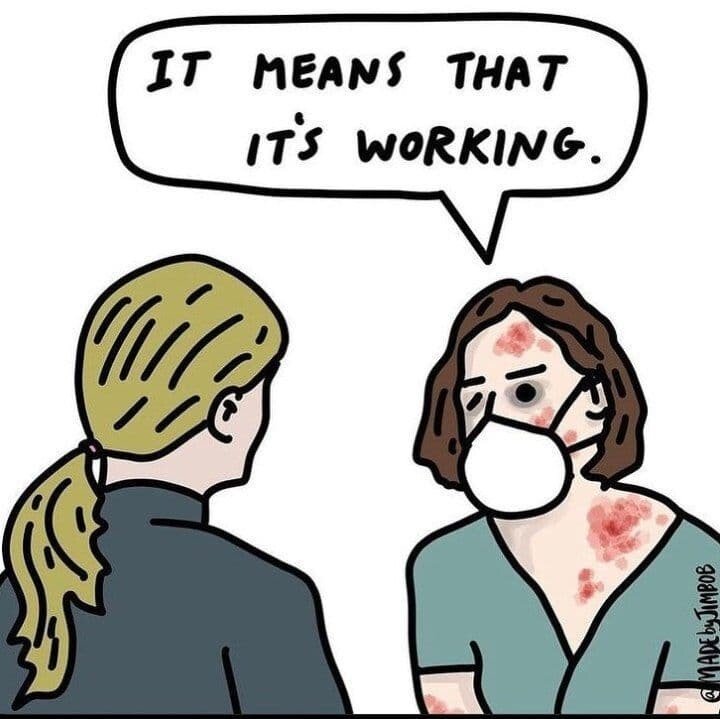
Herpes infections may be a side effect of the COVID-19 vaccine, experts have revealed.
Scientists in Israel identified six cases in a new study of patients developing a skin rash known as herpes zoster after receiving the Pfizer vaccine, according to a study in the Rheumatology journal.
Herpes zoster starts off as a small, itchy skin rash, but if left untreated, it could cause nerve damage and pain, the Jerusalem Post reported.
This can include a prolonged burning sensation on the skin even after the rash disappears.
Researchers from Tel Aviv Sourasky Medical Center and Carmel Medical Center in Haifa found those with autoimmune inflammatory rheumatic diseases had a higher risk of developing the herpes
Officials are investigating the death of a University of Cincinnati student one day after he received Johnson & Johnson’s one-dose COVID-19 vaccine.
John Foley, 21, a pre-med junior, passed away on Sunday. His body was discovered shortly afterwards by his college roommates, reported FOX 19.
The Ohio Department of Health and the Hamilton County Coroner’s Office are awaiting medical records and test results before determining the cause of death.
It comes as the Centers for Disease Control and Prevention (CDC) and the U.S. Food and Drug Administration (FDA) announced on Tuesday they were recommending a pause of the shot after six women developed rare, but serious, blood clots out of 7.2 million vaccinations.

A 2011 report by Harvard Pilgrim Health Care, Inc. for the U.S. Department of Health and Human Services (HHS) stated that fewer than one percent of all vaccine adverse events are reported to the government:4
Although 25% of ambulatory patients experience an adverse drug event, less than 0.3% of all adverse drug events and 1-13% of serious events are reported to the Food and Drug Administration (FDA). Likewise, fewer than 1% of vaccine adverse events are reported. Low reporting rates preclude or slow the identification of “problem” drugs and vaccines that endanger public health. New surveillance methods for drug and vaccine adverse effects are needed.
There have been 8,087 vaccine-related deaths reported to VAERS, but that number likely represents only one percent of the total number of deaths that have actually occurred and the real number may be 808,700 vaccine–related deaths. Similarly, 17,394 reports of permanent disabilities have been reported to VAERS, but that number likely is closer to 1,739,400 vaccine-related disabilities.
Although the 1986 Act legally requires doctors and other medical workers who administer vaccines in the U.S. to report vaccine reactions, Congress did not include legal penalties in the law for those who refuse to comply with the reporting requirement.5 Therefore, VAERS is really a “passive” reporting system because there is no mechanism to compel compliance and hold vaccine administrators accountable for failing to report serious health problems, hospitalizations, injuries and deaths that occur after vaccination to the government.

You must be logged in to post a comment.