
No, seriously…

What happens when you take two heavily criminalized and stigmatized activities and put them together. For many clients — and their sex work providers — it’s nothing short of magic
Ahead of a psychedelic trip, Malakai likes to do a lot of preparation. He curates a playlist to serve as a “rough indication” for how long he’s been tripping. He formulates a custom lighting set-up to avoid disrupting the mise en scène. He cleans the house so his mind won’t wander to the meaningless chores of a mundane reality.
Basically, when it comes to planning, Malakai doesn’t skimp on the details. But when he asked his regular sex-work provider to trip-sit him, a million more practicalities emerged. “What if I started crying?” Malakai, a pseudonym, recalls asking himself. “Would I fall in love with her? Would she get bored while I become detached from reality?” As it turns out, he needn’t have worried. “Rachel [also a pseudonym] saw no barriers to my concerns and seemed determined to turn my fantasy into a reality,” Malakai tells me.
A trip-sitter is a common phenomenon among psychedelic drug users, and it’s just a person who babysits you while you trip (most routinely with magic mushrooms, acid or DMT). The practice is credited as a form of harm reduction, offering those on the trip a sense of safety, and hopefully, a peace of mind for a more positive trip (though experts are quick to warn that this isn’t guaranteed). Typically, you might ask a friend or family member to trip-sit, or even hire a professional trip-sitter. Or you might knock on the door of your regular sex-work provider.
Psilocybin, the hallucinogen found in “magic mushrooms,” helped to relieve symptoms in people with hard-to-treat depression in the largest clinical trial of its kind to date, the trial’s organizers announced Tuesday (Nov. 9).
Earlier this year, a small study suggested that psilocybin might work as well as the common antidepressant escitalopram (Lexapro) at relieving moderate to severe depression, and other past research has hinted at the drug’s promise, Live Science previously reported. But this new trial, conducted by the pharmaceutical company Compass Pathways, is the largest gold-standard trial of psilocybin to date, so its results could carry more weight than previous research, STAT reported.

Despite the state spending thousands of dollars a second – ticketing, kidnapping, caging, and killing evil drug users, the rate of lethal drug overdoses in the last 15 years has skyrocketed at near-exponential rates.
According to the most recent data on overdose deaths, despite the states immoral war on drugs, 2020 went down as the deadliest year in history for overdoses.
In fact, according to data from the federal government: More Americans died from drug overdose in a 12-month period than at any other point in history.
Drug overdoses were linked to more than 81,000 people’s deaths between June 2019 and May 2020, according to the Centers for Disease Control and Prevention, jumping 18 percent compared to the previous 12-month period. Such deaths rose 20 percent or more in 25 states and the District of Columbia, the report said.
Across the board, drug use and deaths associated with drug use have increased at alarming rates. No amount of AR-15s, SWAT police, MRAPs, or any other military gear has had a hand in lowering these statistics. In fact, the increase in overdose deaths nearly perfectly coincides with the increase in militarization in the last decade and a half.
One drug, or rather plant, which is still viciously sought after in the state’s immoral war on drugs could be the key to slowing this epidemic. Cannabis.
However, in spite of some form of cannabis being legal in some fashion in well over half the country, the government still violently and with extreme prejudice continues to seek out those who dare possess it.
This violent prohibition continues despite research like the data published in the Journal of Addictive Diseases that shows this plant’s power to mitigate the opioid crisis.
What started out as a fishing expedition disguised as a window tint violation ended with two Hamilton County deputies placed on leave for strip searching and sodomizing a man suspected of possessing an illegal substance. Now, after the cops enjoy a months-long paid vacation, the taxpayers will be held accountable for their actions.
The victim in the incident, James Myron Mitchell has filed suit against the deputies, claiming the stop was for false allegations of a window tint violation which led to his horrifying treatment at the hands of two public servants.
As TFTP reported in July, deputies Daniel Wilkey and Bobby Brewer stopped Latisha Menifee (driver) and Mitchell (passenger) as they were driving in a Buick. As the stop began, Menifee was immediately handcuffed and brought to the rear of the vehicle. Mitchell was likewise handcuffed and brought to the front of the police cruiser and his following mistreatment was captured on dash cam footage. The stop, they were told, was over window tint. However, they would quickly realize this was not the case.
While in handcuffs Wilkey and Brewer can be seen groping Mitchell’s genitalia in an apparent search for drugs. Even though the traffic stop was reportedly about window tint, no tint meter appears to be used during the traffic stop.
The lawsuit says, “Wilkey then began to grab James’ genitals. When James told Wilkey that (he) had an untreated and large hernia and that Wilkey’s actions were causing (him) pain, Brewer and Wilkey jerked James’ arms high above his back, and slammed James face-down onto the hot engine hood, causing injury….”
Also of interest was how quickly officers escalated their use of force against Mitchell claiming the handcuffed man, who was doubled over their police cruiser, was somehow “resisting” arrest. Mitchell simply appeared to be squirming as he was handcuffed on the hood of a car and sodomized by cops in search of a substance deemed illegal by the state.
According to the lawsuit, the deputies then beat Mitchell with “fists, knees, and feet,” and slammed him to the ground. It was then, according to the lawsuit, that they removed his pants and shoes, while continuing to beat him.
As News 9 reports, the lawsuit says the deputies then picked Mitchell up and leaned him over the patrol car. It says Deputy Wilkey put on a set of gloves, pulled down his (Mitchell’s) underwear, and “conducted an anal cavity search of James.”
During the horrific event, the two law enforcement officers likely violated Mitchell’s 4th and 14th amendment rights as the search was provoked by a window tint violation. Mitchell was a passenger in the vehicle, not the driver, yet officers honed in on him.
According to the lawsuit, Menifee watched in horror as Mitchell was sodomized on the side of the road in search of a plant. She also stated that she was afraid the deputies were going to kill Mitchell.
Then, after Mitchell was put in the patrol car, according to the lawsuit, deputies approached Menifee and “told her that she did not see anything,” took off her cuffs and told her to leave.
A medical examination later revealed suffered “tearing in his anus, and multiple contusions,” along with an aggravation of a hernia that eventually required surgery, according to the lawsuit.
From Wall Street to Hollywood, psychedelics are having a cultural moment. For those of us who grew up in the “this is your brain on drugs” era, it’s hard to let go of stigma—and the mental image of an egg sizzling on a hot pan. But as a growing number of states and cities move to decriminalize drugs, and investors flock to an emerging market for psychedelic health care, substances like psilocybin, ketamine and LSD are edging into mainstream culture—and setting the stage for a paradigm shift in modern medicine.
Within the next few years, we could see psychedelic therapies prescribed for refractory depression and post-traumatic stress disorder (PTSD), or used in palliative care among those facing a life-limiting illness. But first we need to more deeply understand the benefits of psychedelic treatments. Right now, we are in the perfect storm to accelerate continued study—and health care workers are on the front lines.
It’s no coincidence that psychedelics are entering the conversation at the moment we most sorely need new ideas in mental health care. The world is experiencing mass trauma from COVID-19. It’ll take years for us to truly understand the magnitude of the pandemic’s toll on our collective mental health, but on the front lines, the picture is much clearer. In a recent survey of more than 20,000 frontline medical workers, 38% reported experiencing anxiety or depression during the pandemic, and 49% suffered burnout. Another survey found nearly one-quarter of all health care workers showed signs of probable PTSD.
When the American Association of Critical-Care Nurses surveyed 6,000 of their members this year, 66% said they had considered leaving their jobs because of the pandemic. “No amount of money could convince me to stay on as a bedside ICU nurse right now,” a Seattle-area nurse wrote in a resignation note posted on Twitter. “I can’t continue to live with the toll on my body and mind. Even weekly therapy has not been enough to dilute the horrors I carry with me from this past year and a half.”
Among health care workers, the prolonged battle against COVID-19 has intensified a long smoldering problem. Facing a fragmented medical sytem with frequently misaligned incentives, health care workers have been grappling with anxiety and depression—even before COVID, the suicide rate among doctors was more than twice that of the general public. From support groups and training to apps that monitor mental health, there are a number of programs that aim to solve and treat the problems leading to clinician burnout. But most have barely scratched the surface, and the prevalence of burnout during the pandemic has led researchers to explore alternative solutions—including psychedelic therapies.
A new study at the University of Washington is evaluating the efficacy of psychedelic-assisted psychotherapy using psilocybin for frontline health care workers experiencing COVID-related distress. “The situations that frontline doctors and nurses are facing is unprecedented,” says Dr. Anthony Back, who’s leading the study. “The symptoms of depression, burnout and moral injury call out for research that looks at whether psychedelics can play a role in healing the healers.” The U.S. is not alone in seeking alternative therapies for the growing number of health care workers in crisis: at Vancouver Island University in Canada, the Roots to Thrive ketamine-assisted therapy program treats health care providers and first responders with PTSD, depression, anxiety and addiction.
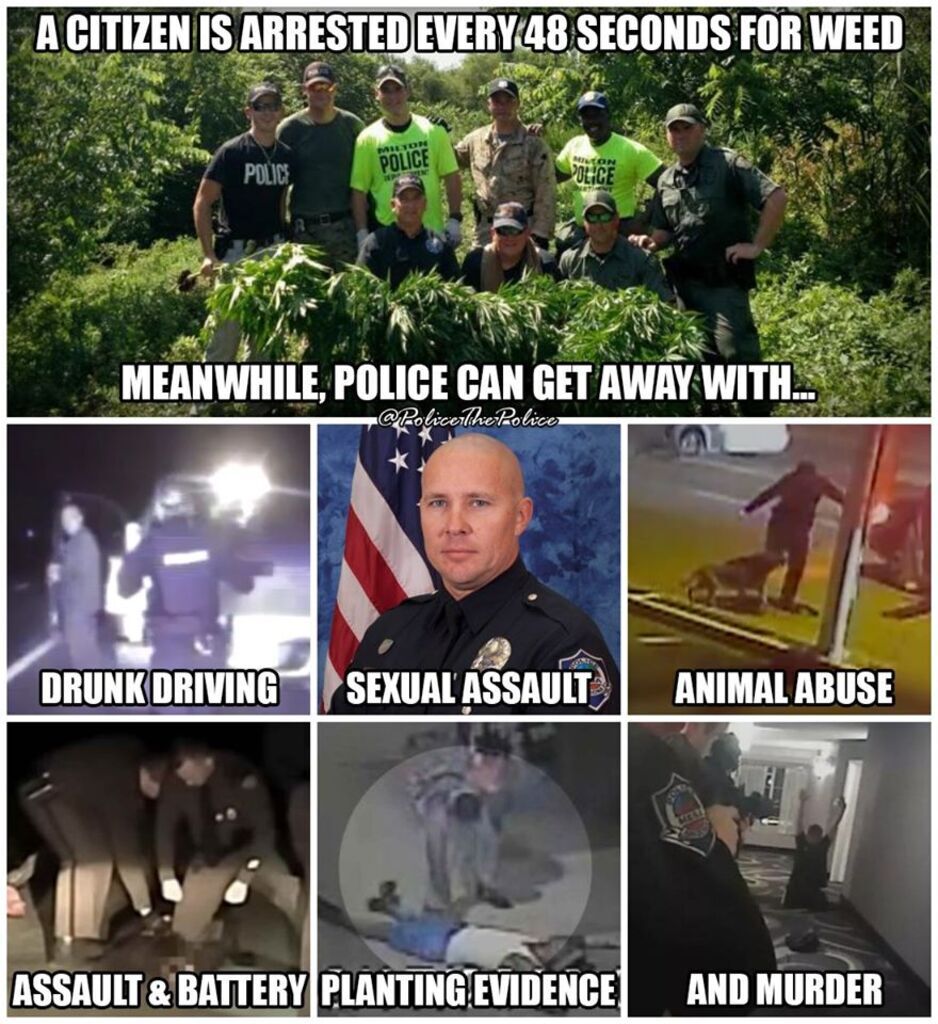
A federal court ruled this month that evidence of drugs obtained by police from a package at a FedEx sorting center was not seized unconstitutionally, rejecting the defendant’s arguments that the seizure violated his Fourth Amendment rights.
At the center of the decision is a little-known agreement allowing law enforcement agencies to confiscate parcels at the shipping behemoth’s sorting centers. Police are permitted to take packages only if a drug dog indicates there may be contraband inside. Individual cops, however, determine which packages merit attention, allowing them to zero in on people’s property, dress up as FedEx delivery men, and proceed with arrests if they testify that a drug dog alerted them appropriately.
 Hellbound and Down
You must be logged in to post a comment.