Pay close attention…






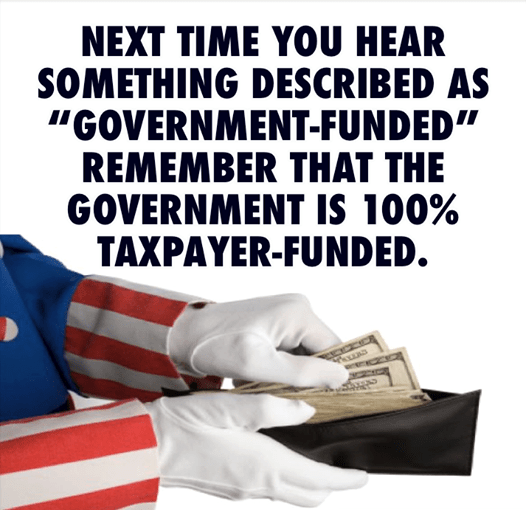
Instead of adhering to congressional intent by building up the nation’s inadequate supply of N95 masks and other equipment to combat the Covid-19 crisis, the Pentagon has funneled hundreds of millions of dollars in appropriated taxpayer funds to private defense contractors for drone technology, jet engine parts, Army uniform material, body armor, and other purposes not directly related to the pandemic.
As the Washington Post reported Tuesday morning, the Department of Defense—headed by former Raytheon lobbyist Mark Esper—”began reshaping how it would award the money” just weeks after Congress in March approved a $1 billion fund under the Defense Production Act to help the nation “prevent, prepare for, and respond to coronavirus.”
“The Trump administration has done little to limit the defense firms from accessing multiple bailout funds at once and is not requiring the companies to refrain from layoffs as a condition of receiving the awards,” the Post noted. “Some defense contractors were given the Pentagon money even though they had already dipped into another pot of bailout funds, the Paycheck Protection Program.”
As the U.S. still faces major shortages of testing supplies and N95 masks six months into the pandemic, the Post reported that the Pentagon has used congressionally approved funds to dish out $183 million to luxury carmaker Rolls-Royce and other companies to help “maintain the shipbuilding industry,” tens of millions for “drone and space surveillance technology,” and $80 million to “a Kansas aircraft parts business.”
A subsidiary of Rolls-Royce also received $22 million from the Pentagon “to upgrade a Mississippi plant,” according to the Post.
Starting in 2014, the National Institutes of Health granted millions of dollars in U.S. tax money to a “global environmental health nonprofit” called EcoHealth Alliance based in New York City.
The grant was for an eleven-year-long project entitled: “Understanding the risk of bat coronavirus emergence.” It aimed to study coronavirus in bats in China to determine which strains had the greatest risk of spillover to humans. (In other words, in hopes of preventing something like the Covid-19 pandemic and/or providing quick mitigation.)
A total of $3,748,715 was given for the project from 2014-2019.
EcoHealth Alliance’s partners on the taxpayer-funded project included scientist at China’s Wuhan Institute of Virology.
The Chinese researchers at the Wuhan Institute of Virology also “received assistance from the Galveston National Laboratory at the University of Texas Medical Branch and other U.S. organizations.”
The Wuhan Institute of Virology is located in the area of China where scientists believe the Covid-19 outbreak originated. Investigators have not ruled out the possibility that the virus was somehow released from the lab, either by accident or intentionally.
 Hellbound and Down
You must be logged in to post a comment.