Yesterday, the New York Post published several articles claiming to show evidence of corruption on the part of Joe Biden and his son Hunter.
The charges are varied but not really surprising. One article claims Hunter introduced his father to a Ukrainian energy magnate who asked the family to use their influence to shut down an investigation into his company.
Another story suggests Hunter Biden used his family name to secure a high-paid job and stock interests in a Chinese company.
The NYP evidence these claims with emails and documents allegedly retrieved from a laptop left at a computer repair store in Delaware. The owner of the store alerted the FBI to the computer’s existence when no one came forward to pay for the repairs and he could not contact the owner.
According to the NYP, both the hard drive and laptop were then seized by the FBI. They have a copy of the grand jury subpoena, which is certainly solid evidence, if genuine.
The owner of the store claims he, prior to it being seized, made a copy of the hard drive and sent it to Rudy Giuliani, Donald Trump’s lawyer.
While this is potentially intriguing, if true, it’s not really “news”. Biden’s corruption in Ukraine has been evident since his son was appointed to the board of the largest energy company in Ukraine within weeks of the US-backed coup in 2014 (a decision so obviously dodgy even the Guardian made a joke out of it). Joe Biden himself has even admitted to applying financial pressure to get a Ukrainian State Prosecutor removed from office.
None of this is really “big news”. Corruption is rampant in the halls of power, that is as certain as death and taxes, and will continue to be so, whether or not these specific allegations are accurate.
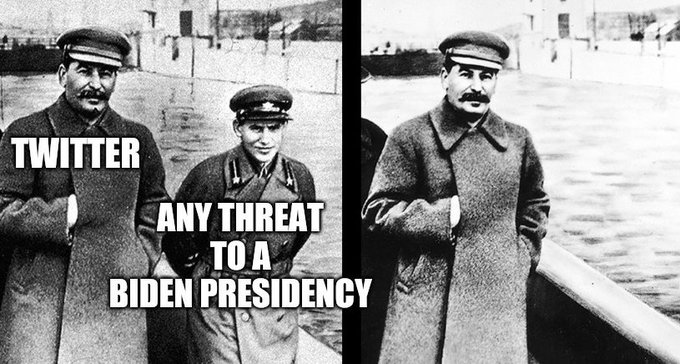
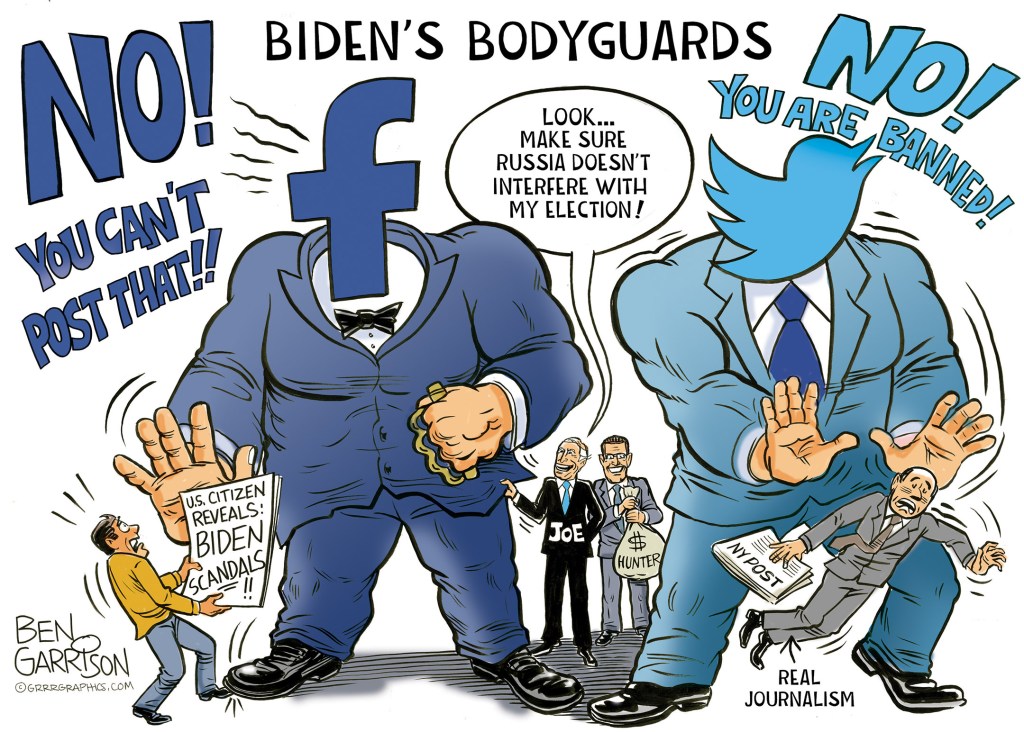
The big news, the part of this story that should concern everyone, is that Twitter has completely blocked this material on their platform.
And we’re not talking a “soft block”, we at OffG are more than familiar with twitter’s use of “warnings”, no they literally made it impossible to share the links, even in DMs. If you try, you get his warning:
We can’t complete this request because this link has been identified by Twitter or our partners as being potentially harmful. Visit our Help Center to learn more.”
We’ve talked about twitter’s “partners” before, and they are suspect. As for being “potentially harmful”, well isn’t that subjective? Fire is vital at times, but certainly “potentially harmful” at others. Water, in sufficient quantity, is “potentially harmful”.
If you’re a liar, the truth is “potentially harmful”.
Facebook has followed suit, if in less sweeping fashion. The social media giant’s spokesperson Andy Stone announced that they would be:
“…reducing its distribution on our platform. This is part of our standard process to reduce the spread of misinformation.
This decision is pending approval by their “independent fact-checkers”, which we have also covered in detail before.
*
So what are the social media companies’ excuses reasons for blocking this content?
Well, it depends who you ask.
Twitter claims that since the emails are potentially “hacked”, posting them violates their policy regarding illegally gathered material. (Interestingly this policy was never applied to Trump’s leaked tax returns.)
Facebook, on the other hand, claim to have blocked these stories because they might be “misinformation”. A truly ludicrous precedent to set. You can’t block something that might not be true, because that applies to literally almost everything.
You do have to admire the strategy though. The pincer movement is brilliant.
Keep reading

 Hellbound and Down
You must be logged in to post a comment.