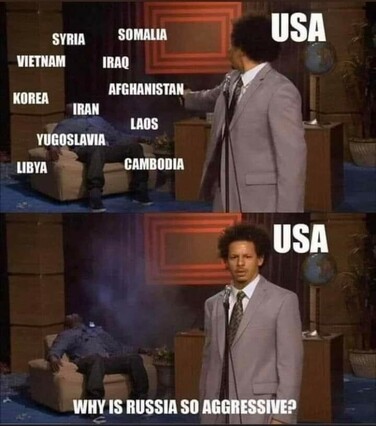
Bloodthirsty…


Facebook is reversing a ban on users praising Ukraine’s Neo-Nazi Azov Battalion, previously included in the platform’s Dangerous Individuals and Organizations policy, amidst Russia’s invasion of Ukraine.
Internal memos from the social media platform, which has routinely censored mainstream conservative content, reveal it will “allow praise of the Azov Battalion when explicitly and exclusively praising their role in defending Ukraine OR their role as part of the Ukraine’s National Guard.”
“Internally published examples of speech that Facebook now deems acceptable include “Azov movement volunteers are real heroes, they are a much needed support to our national guard”; “We are under attack. Azov has been courageously defending our town for the last 6 hours”; and “I think Azov is playing a patriotic role during this crisis,” added The Intercept, which first obtained the company memos.
“For the time being, we are making a narrow exception for praise of the Azov Regiment strictly in the context of defending Ukraine, or in their role as part of the Ukraine National Guard,” clarified a spokesperson from Facebook’s parent company Meta.
“But we are continuing to ban all hate speech, hate symbolism, praise of violence, generic praise, support, or representation of the Azov Regiment, and any other content that violates our community standards,” they added in a statement to Business Insider.
The internet is more than just hardware. It’s also a global network of shared standards and protocols. Some, such as Domain Name Server (DNS), provide the master address list for all internet resources.
Now, because of Russia’s invasion of Ukraine, Andrii Nabok, Ukrainian representative on the Internet Corporation for Assigned Names and Numbers (ICANN) and Ukrainian Vice Prime Minister and Minister of Digital Transformation Mykhailo Fedorov, have asked that Russia’s top-level domains (TLD), such as .ru, .рф, and .su be revoked along with their associated Secure Sockets Layer (SSL) certificates.
Why? To stop the Russian propaganda machine, and prevent further propaganda and disinformation.
“These atrocious crimes have been made possible mainly due to the Russian propaganda machinery using websites continuously spreading disinformation, hate speech, promoting violence and hiding the truth regarding the war in Ukraine,” Nabok said.
Fedorov has also asked that RIPE NCC, the regional Internet registry for Europe, the Middle East, and parts of Central Asia, withdraw Russia and its Local Internet Registries (LIR) rights to use their assigned IPv4 and IPv6 addresses and to block their DNS root servers.
If it were to happen, the move would be unprecedented. While Russia has deliberately disconnected itself from the internet in the past as a security test, this is an entirely different proposition.

Kremlin-backed media outlets have been banned throughout the European Union, both on television and on apps and online platforms. RT has lost its Sky TV slot in the UK, where the outlet is also blocked on YouTube. Australian TV providers SBS and Foxtel have dropped RT, and the federal government is putting pressure on social media platforms to block Russian media in Australia.
In the Czech Republic, Slovakia, and Latvia, speaking in support of the Russian invasion of Ukraine will get you years in prison.
Twitter, historically the last of the major online platforms to jump on any new internet censorship escalation, is now actively minimizing the number of people who see Russian media content, saying that it is “reducing the content’s visibility” and “taking steps to significantly reduce the circulation of this content on Twitter”. This censorship-by-algorithm tactic is exactly what I speculated might emerge after former Twitter CEO Jack Dorsey resigned back in November, due to previous comments supportive of that practice by his successor Parag Agrawal.
Twitter is also placing warnings labels on all Russia-backed media and delivering a pop-up message informing you that you are committing wrongthink if you try to share or even ‘like’ a post linking to such outlets on the platform. It has also placed the label “Russia state-affiliated media” on every tweet made by the personal accounts of employees of those platforms, baselessly giving the impression that the dissident opinions tweeted by those accounts are paid Kremlin content and not simply their own legitimate perspectives. Some are complaining that this new label has led to online harassment amid the post-9/11-like anti-Russia hysteria that’s currently turning western brains into clam chowder.


You must be logged in to post a comment.