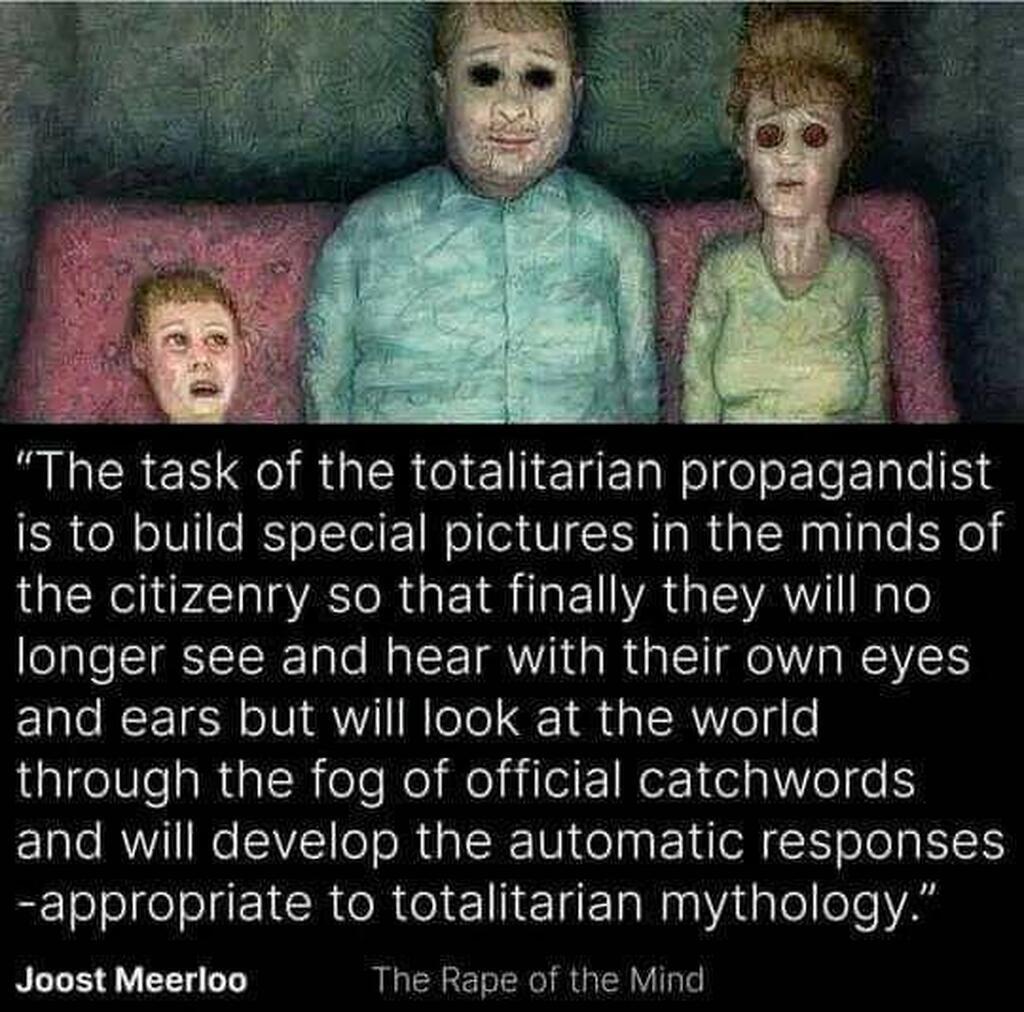
Regarding propaganda…


On January 24, 2023, Dr. Michael V. Callahan published an opinion piece in The New York Times entitled “The Indirect Ways the U.S. Can Help China Avoid Covid Catastrophe.”
If we assume this was written by a prominent doctor at a Harvard-affiliated hospital – an academic professional who bases his opinions on sound medical principles and scientific knowledge – it makes no sense at all. In fact, it is an embarrassment to the writer and the institution he represents.
If, however, we realize that this is just the latest in the quarantine-until-vaccine propaganda campaign of a CIA agent and top biosecurity cabal member, everything suddenly makes perfect sense. In fact, many of the points in the article map beautifully onto Robert Blumen’s helpful Covid propaganda grid.
Since the end of the Second World War (1939-1945), there have been many civil wars and several important regional military conflicts between two or more countries, but none has evolved into a general world war involving all the most heavily armed countries. The most serious regional wars were the Korean War (1950-1953), the Vietnam War (1955-1975), the Iraq War (2003-2011), the Syria War (2011- ), and the Ukraine War (2022- ).
Indeed, with no sign yet of peace in Ukraine, nine years after the overthrow of the elected Ukrainian government, in February 2014, and nearly one year after the Russian military invasion, last February 24—and with a real danger that such a prolonged proxy conflict between great powers could escalate into a nuclear world war—it may be appropriate to search for reasons why, in this 21st Century, the world is still threatened with murderous and destructive wars.
There are basic tendencies in human nature, structural institutional failures and geopolitical factors for why this is the case.
Let us identify the most important causes, which can explain why wars of aggression and proxy wars are still taking place today.
The US empire’s proxy war in Ukraine has had many jaw-dropping instances of imperialist sociopathy, propagandistic audacity and brazen journalistic malpractice that we’ve discussed in this space many times, but one of the most cringeworthy and degrading aspects of the globe-spanning narrative control campaign surrounding this war has been the way the nation’s president Volodymyr Zelensky has been turned into an ever-present corporate mascot for the most aggressive ad campaign ever devised. The way the most powerful institutions in the western world have been throwing their puppet in everyone’s face to sell the empire’s proxy warfare puts Ronald McDonald to shame.
Here are 20 of the cringiest moments of establishment PR using Zelensky to market the McProxy War to the western world, in no particular order.
The science of modern propaganda arguably got its start over a century ago during World War I when a young Edward Bernays was recruited to help sell the conflict to a reluctant American populace, after which he took what he’d learned on that front and folded it into a lifetime of work on the study of mass-scale psychological manipulation.
That was when propaganda as we know it today came into being, with the scientific method applied to the task of refining techniques for manipulating large-scale human behavior using modern media distribution. Those methods have been in research and development this entire time, and have advanced at least as much as our other instruments of warfare have advanced since World War I.
But that wasn’t the beginning of mass-scale psychological manipulation by the powerful. That has been going on since the dawn of civilization.
Back when humans were a nomadic hunter-gatherer species, there was no need for tribal leaders to impose mental narratives over their tribe in order to keep them moving and behaving in the way they wanted. The animal needs of food, drink, and safety were enough to keep those small societies moving, hunting, foraging, reproducing, and fighting wherever it was necessary; they would have done those things even without the existence of language, and our evolutionary ancestors probably did exactly that for millions of years before the behavior of speech first emerged in humans.
That all changed with the invention of agriculture some 10,000 years ago. Once humans began learning to trick the Earth’s biosphere into making the food appear next to them, they became capable of sticking around in one place without starving, and civilizations began to emerge. Where as hunter-gatherers humans were only organizing in groups of a few dozen, with the ability to settle and build things we began congregating in villages and cities of hundreds or thousands.
Once you’re dealing with human groups of that size with sustenance coming from farmlands and livestock, the animal impulses of hunger, thirst and safety are no longer complex enough to determine the way those humans are going to be behaving from day to day.
Copious amounts of language will now be needed. Agreements. Protocols. Rules. Etiquette. How is the civilization planned out? How are decisions made? Who does the work? How are resources allocated? How are children conceived and raised?
From here you can already see how the possibility of abuse is opening up. Someone’s going to be doing the work. Someone’s going to be making the decisions. Someone’s going to be deciding where the resources go, and potentially assigning a lot more to themselves than to others. Someone’s going to be deciding who gets to have sex, and potentially assigning that responsibility entirely to themselves and their supporters, and potentially not leaving any say in the matter to the women.
Once humans moved from organizing in villages and cities to moving in kingdoms and empires, the potential for abuses increased exponentially. Then you’ve got the matter of wars and who should fight in them. You’ve got money and the capacity for vast wealth. You’ve got laws and the ability to determine what they are and whom they benefit. And you’ve got someone holding an immense amount of power over a very large number of people.
The release of internal communications in the ongoing series of “Twitter Files” reveals a government bent on propaganda and censorship—and a Big Tech industry willing to play along. With each new thread detailing the internal workings and cozy relationship between the Twitter team and our government, the political right screams louder of First Amendment violations.
The First Amendment cannot be the whole answer to the problem, however, and, in fact, may not have even been transgressed. Americans are right to be outraged, but the solution doesn’t rest in constitutional claims. The deepest solution is in a resurgence in the values of free speech and a free press.
“Twitter, The FBI Subsidiary” was the spot-on title independent journalist Matt Taibbi crafted for the thread he published two weeks ago detailing the hand-in-glove relationship between the FBI and Twitter. But as Taibbi’s Christmas Eve sequel, “Twitter And ‘Other Government Agencies,’” revealed, it wasn’t just the FBI using Twitter as a corporate underling, nor is it just Twitter the government appropriates for this purpose.
Rather, as Taibbi reported, the “Twitter Files” “show the FBI acting as doorman to a vast program of social media surveillance and censorship, encompassing agencies across the federal government – from the State Department to the Pentagon to the CIA.” Beyond Twitter, “Facebook, Microsoft, Verizon, Reddit, even Pinterest, and many others,” as well as “industry players also held regular meetings” with the government, Taibbi revealed.
The internal documents released by Twitter’s new owner, Elon Musk, also exposed the U.S. government’s use of Twitter, and by extension other social media giants, “to carry out a covert online propaganda and influence campaign” with the goal of shaping “public opinion in countries including Yemen, Syria, Iraq, and Kuwait.”

Cathy Vogan, the executive producer of Consortium News‘ webcast CN Live!, recently coined a new term to describe rule by psyops, or psychological operations: psyopcracy. According to Wikipedia:
“Psychological operations (PSYOP) are operations to convey selected information and indicators to audiences to influence their emotions, motives, and objective reasoning, and ultimately the behavior of governments, organizations, groups, and individuals.
The purpose of United States psychological operations is to induce or reinforce behavior perceived to be favorable to U.S. objectives.”
William Casey, C.I.A. director under Ronald Reagan, said: “We’ll know our disinformation program is complete when everything the American public believes is false.”
Thus the American people are continuously subject to a number of psychological operations otherwise known as “the news.”
U.S. intelligence officials feed journalists disinformation to create a false narrative that is intended to mislead the public and cover-up what is actually taking place. The constant reinforcement of these lies becomes entrenched in the public mind and after time comes to be accepted as unquestionable truth.
Accusations of Chinese tyranny are often based on demands from Beijing that Google and Facebook comply with their censorship orders as a condition for remaining in China. Reports over the years suggested that these firms typically comply: Google was building a censored search engine suited to Chinese demands; The New York Times has claimed Facebook developed a censorship app as its entrance requirement to the Chinese market, and Vox accused Apple of succumbing to Chinese censorship demands by banning an app from its store that had been used by protesters in Hong Kong demanding liberation from control by the Chinese Communist Party (CCP).
But now the tables appeared to be turning when it comes to U.S. censorship demands and TikTok. Threats to ban or severely limit the Chinese-owned-and-controlled platform from the U.S. have been hovering over TikTok’s head through both the Trump and Biden years. The most common justification offered for the threat is that TikTok’s presence in the U.S. empowers China to propagandize Americans, a concern that escalated along with the platform’s massive explosion among Americans. Since early 2021, TikTok has been the most-downloaded app both worldwide and in the U.S. In August, Pew Research conducted a “survey of American teenagers ages 13 to 17” and found that “TikTok has rocketed in popularity since its North American debut several years ago and now is a top social media platform for teens among the platforms covered in this survey.”
Concerns over China’s ability to manipulate U.S. public opinion were based on claims that China was banning content on TikTok that was contrary to Beijing’s interests. Western media outlets were specifically alleging that the Chinese government itself was censoring TikTok to ban any content that the CCP regarded as threatening to its national security and internal order. “TikTok, the popular Chinese-owned social network, instructs its moderators to censor videos that mention Tiananmen Square, Tibetan independence, or the banned religious group Falun Gong,” warned The Guardian in late 2019.
Rather than ban TikTok from the U.S., the U.S. Security State is now doing exactly that which China does to U.S. tech companies: namely, requiring that, as a condition to maintaining access to the American market, TikTok must now censor content that undermines what these agencies view as American national security interests. TikTok, desperate not to lose access to hundreds of millions of Americans, has been making a series of significant concessions to appease the Pentagon, CIA and FBI, the agencies most opposed to deals to allow TikTok to stay in the U.S.
Among those concessions is that TikTok is now outsourcing what the U.S. Government calls “content moderation” — a pleasant-sounding euphemism for political censorship — to groups controlled by the U.S. Government:
TikTok has already unveiled several measures aimed at appeasing the U.S. government, including an agreement for Oracle Corp to store the data of the app’s users in the United States and a United States Data Security (USDS) division to oversee data protection and content moderation decisions. It has spent $1.5 billion on hiring and reorganization costs to build up that unit, according to a source familiar with the matter.
Perhaps one might view as reasonable U.S. concerns that China can weaponize TikTok to propagandize Americans and destabilize the U.S. through its power to censor the platform. Note, however, that this is precisely the same concern that countries like China, Iran and Russia all invoke to justify censorship compliance as a condition for U.S. internet companies to remain active in their country. Those countries fear that American tech companies — whose close partnership with U.S. security agencies has long been well-documented — will be used to propagandize and destabilize their populations and countries exactly the way that the U.S. Security State is apparently concerned that China can do to the U.S. via TikTok.


You must be logged in to post a comment.