
On a planet that increasingly resembles one huge maximum security prison, the only intelligent choice is to plan a jail break.
Robert Anton Wilson
Tag: police state
Don’t forget…
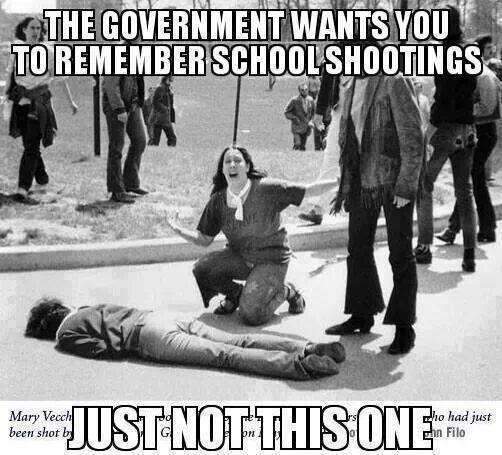
“Necessary” Is Not a Constitutional Argument
I hear a lot of bad constitutional arguments justifying this or that federal action. One common justification for expanding federal power is: “This thing is necessary! It needs to be done.”
But it doesn’t follow that the federal government has to do the thing. In fact, the founding generation expected that the states and the people would do most of the “necessary things” – not the federal government.
Tench Coxe was a prominent and influential advocate for ratification of the Constitution and a delegate for Pennsylvania to the Continental Congress in 1788-1789. He later served as Secretary of the Treasury. He wrote three essays published in the Pennsylvania Gazette in early 1788 under the pen-name “A Freeman.”
In these essays, Coxe offered some of the most forceful arguments asserting the limited nature of the federal government under the proposed Constitution. He insisted that many, if not most, of the “necessary” things for society would be taken on by state and local governments, not the federal government.
School Threatens 12-Year-Old With Arrest for Allegedly Missing 90 Minutes of Zoom Class
The parents of a seventh-grade boy received a letter from his school in Lafayette, California, warning of possible truancy charges if he missed any more virtual class sessions.
“Out of the blue, we got this letter,” Mark Mastrov, the boy’s father, told the East Bay Times. “It said my son had missed classes and at the bottom, it referenced a state law which said truants can go to jail for missing 90 minutes of class.”
Mastrov assumed the school had been sent in error, so he called the school. He was shocked to learn that the authorities meant business: The law says any kid who misses three full days of school or is tardy for a 30-minute class period on three separate occasions can face jail time.
The policy was obviously intended to cover unexcused absences for in-person education, but the district apparently intends to apply it to virtual education as well.
Mastrov contends that his son didn’t miss his classes but simply logged on after his teacher had already taken attendance.
“Who passed this law in their infinite wisdom?” he wonders. “Who in their right mind could do that?”
Virtual learning is a deeply frustrating experience for many families, and schools should be maximally patient with students and their parents. Unfortunately, education officials around the country have been making life unnecessarily difficult for students who don’t sign in to their classes on time. Some places have even required teachers to perform virtual wellness checks, and to call the cops on parents if their kids seem checked-out during class. One kid got in trouble because his camera caught a glimpse of a toy gun, as though that’s comparable to bringing an actual weapon to a physical school.
This pandemic has caused enough problems on its own. Parents don’t need to be threatened with jail time for failing to master a hopelessly frustrating—and temporary—new system.
For the First Time in US, City Proposes Ending Police Enforcement of Traffic Laws
In what is being touted as a first in the nation proposal, the City of Berkeley, California has proposed ending police traffic enforcement. The effects of such a radical shift in policing could be massive.
The move comes after claims that police officers all too often escalate minor traffic stops into deadly situations. These claims are well founded.
“Most traffic stops don’t really warrant a police officer,” said Darrell Owens, the co-executive of East Bay for Everyone, a housing and traffic non-profit. He helped pitch the new, one-year plan to Berkeley City Council. According to ABC 7, he says ideally the city would take money away from Berkeley PD to fund a new department.
“A minor traffic violation should not have resulted in the murder of a black or brown body, but at the same time we can also re-examine the nature of punitive law enforcement and broken windows policing that makes traffic enforcement so deadly to begin with.”
The officials who proposed ending police traffic enforcement dispelled any preconceived notions that this would allow dangerous criminals and drunks to rule the roads.
“We don’t want to inhibit apprehending dangerous criminals or drunk drivers. That is not the intent,” said Berkeley City councilmember, Lori Droste.
Though it is a step in the right direction, because government relies on revenue generated from traffic stops to fund itself, this proposal stops short of actually ending the practice of extorting citizens.
Activists Build Their Own Facial Recognition System to ID Bad Cops Who Hide Badges
“Beat them at their own game.” “Flip the script.” “Give them a taste of their own medicine.” Any of these phrases will apply to the absolutely ingenious measures taken by activists who are creating their own facial recognition systems to identify cops who hide their badges.
As TFTP reported during the George Floyd protests, across the country, in dozens of cities, cops were doling out unprecedented violence in the face of angry protests stemming from unchecked police brutality. Though Floyd’s death was the flash point of the unrest, the uprising represented something far deeper — systemic abuse by law enforcement of minorities, the poor, and everyone else not directly connected to the establishment. Countless incidents throughout this unrest involved officers who could not be identified and as a result of their anonymous instigation and violence, there has been no accountability.
In multiple states, police have been seemingly taking measures to avoid this accountability by removing their name tags or covering their badges. This is in direct violation of most departments’ policies. But no politicians, mayors, governors, or mainstream media seem to care.
Cops hiding their identification is ominous for two reasons. The first reason being that they can enact brutality against the innocent and we do not know who they are to hold them accountable. The second reason is the fact that anyone can dress up like a cop with no badge number and start doing whatever they want, up to and including inciting violence, detaining people, or any other numerous unscrupulous acts.
As we reported at the time, many of these departments appeared to have been given orders from the top down to cover their badge numbers and remove their name plates. This is not acceptable and thanks to a self-taught programmer, Christopher Howell, it no longer has to be.
Howell created a program that identifies cops who were permitted by their supervisors to cover their names while responding to protests.
“I am involved with developing facial recognition to in fact use on Portland police officers, since they are not identifying themselves to the public,” Howell told the NY Times.
Because Portland made it illegal to use facial recognition against the police, Howell had some barriers to using his software. However, as the NY Times reports, Portland’s mayor, Ted Wheeler, told Mr. Howell that his project was “a little creepy,” but a lawyer for the city clarified that the bills would not apply to individuals. The Council then passed the legislation in a unanimous vote.
“There’s a lot of excessive force here in Portland,” Howell told the NY Times. “Knowing who the officers are seems like a baseline.”
This self-taught computer programmer has since created a system that has led to flipping the script on police accountability.
Cop Assaults, Cuffs Autistic Child, Kneels on His Neck, Pepper Sprays His Dog for Not Using a Leash
A 14-year-old boy with autism was left traumatized and physically injured last month after one of Topeka’s finest felt it necessary to throw him to the ground, handcuff him and then kneel on his neck in the same move that proved fatal for George Floyd — a fully grown man. The boy’s mother is now speaking out and seeking justice for her child.
According to police, they were responding to a call about the boy bringing his dog on a walk without a leash. There had been no incident — meaning the dog never once harmed anyone — but fear of an unleashed dog led to a police response.
“At around 4:26 p.m. the officer located the 14-year-old in the neighborhood a third time and conducted a pedestrian stop,” the police Facebook post said. “He did not comply with the officer’s commands. A use of force was generated when he was taken to the ground and handcuffed.”
The officer informed the boy that he was in violation of city law the first time and told him to take the “goddamn dog home” the second time, according to body-camera footage detailed in the audit report, and reported on by VICE.
The boy — who was likely scared to death when the armed man began yelling at him — did not immediately comply and decided to keep riding his bicycle home. When the officer finally caught up to the boy, violent force was used against him and his dog.
Unqualified Impunity: When Government Officials Break the Law, They Often Get Away With It
The horrifying video of George Floyd’s death, and the protests that followed, led to a rare occurrence: The police officers responsible are being prosecuted. Former Minneapolis police officer Derek Chauvin has been charged with murder and remains in jail, and three other officers are facing lesser charges.
Kentucky’s recent decision not to bring homicide charges against the officers who killed Breonna Taylor is much more typical. Most instances of law enforcement brutality do not result in criminal charges, even when they are captured on video. They often result in no consequences at all. This includes many cases of excessive force in response to the protests after Floyd’s death, but the problem is long standing, and not restricted to local police.
Border Patrol agent Jesus Mesa Jr. was not prosecuted or disciplined for shooting and killing a 15-year-old boy, and the Supreme Court ruled last year that the boy’s parents could not sue.
Most of the individuals responsible for the CIA torture program faced no consequences—in fact, one of the CIA employees who oversaw torture and evidence destruction now leads the agency.
And the list goes on.
Yeah, right…
Censoring the Biden story: How social media becomes state media
Chinese citizens watched President Xi Jinping deliver an important speech this week not far from Hong Kong. Well, not the whole speech: Xi apparently is ill, and every time he went into coughing spasms, China’s state media cut away so that he would be shown only in perfect health.
Xi’s coughs came to mind as Twitter and Facebook prevented Americans from being able to read the New York Post’s explosive allegations of influence-peddling by Hunter Biden. The articles cited material reportedly recovered from a laptop; it purportedly showed requests for Hunter Biden to use his influence on his father, then-Vice President Joe Biden, as well as embarrassing photos of Hunter Biden.
Many of us have questioned the sketchy details of how the laptop reportedly was left by Hunter Biden with a nearly blind computer repairman and then revealed just weeks before the presidential election. There are ample reasons to question whether this material was the product of a foreign intelligence operation, which the FBI apparently is investigating.
 Hellbound and Down
You must be logged in to post a comment.