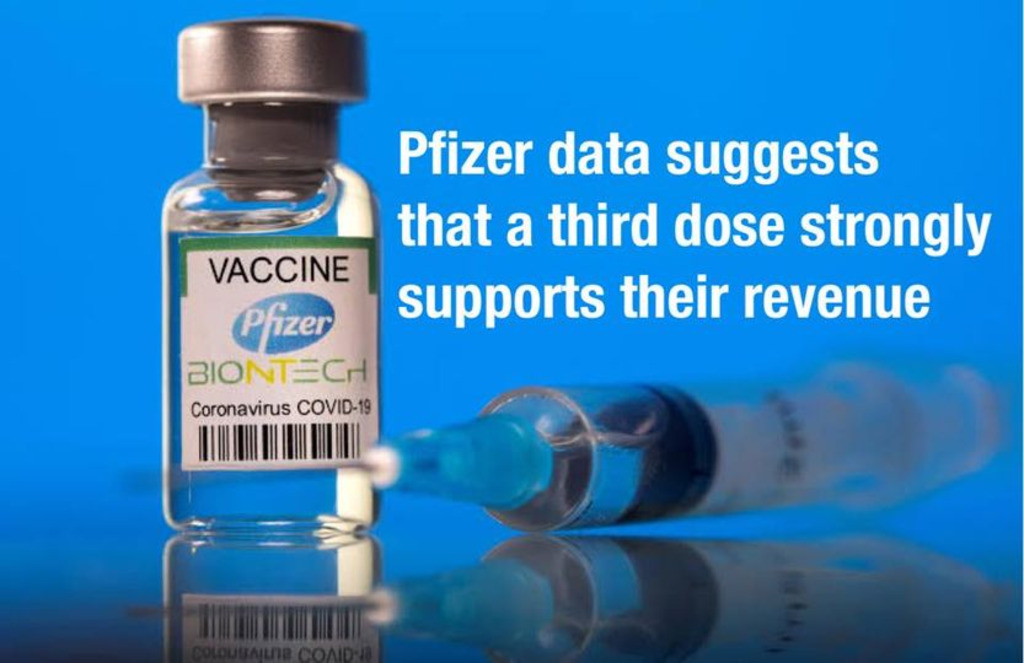
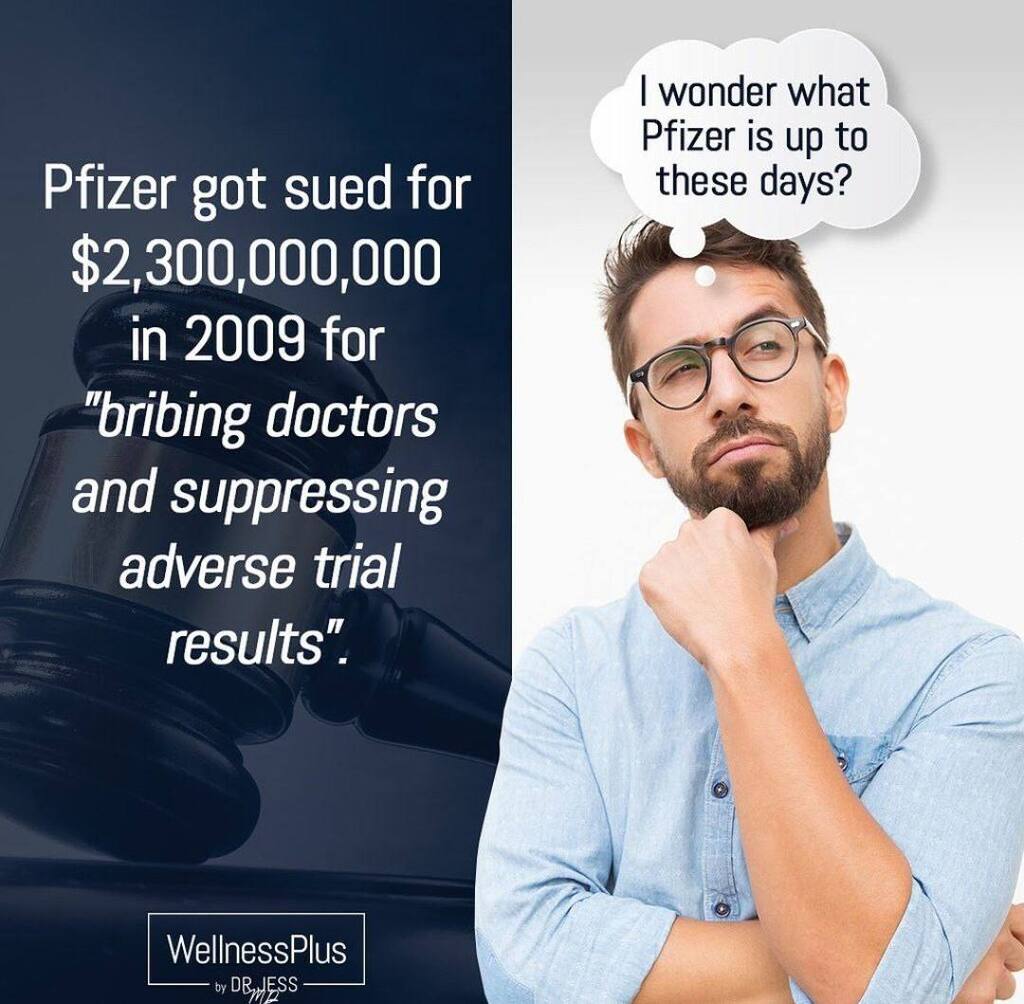
Let’s keep this in mind…


Monday, the U.S. Food and Drug Administration (FDA) approved a biologics license application for the Pfizer Comirnaty vaccine.
The press reported that vaccine mandates are now legal for military, healthcare workers, college students and employees in many industries. New York City Mayor Bill de Blasio has now required the vaccine for all teachers and school staff. The Pentagon is proceeding with its mandate for all military service members.
But there are several bizarre aspects to the FDA approval that will prove confusing to those not familiar with the pervasiveness of the FDA’s regulatory capture, or the depths of the agency’s cynicism.
First, the FDA acknowledges that while Pfizer has “insufficient stocks” of the newly licensed Comirnaty vaccine available, there is “a significant amount” of the Pfizer-BioNTech COVID vaccine — produced under Emergency Use Authorization (EUA) — still available for use.
The FDA decrees that the Pfizer-BioNTech vaccine under the EUA should remain unlicensed but can be used “interchangeably” (page 2, footnote 8) with the newly licensed Comirnaty product.ORDER TODAY: Robert F. Kennedy, Jr.’s New Book — ‘The Real Anthony Fauci’
Second, the FDA pointed out that the licensed Pfizer Comirnaty vaccine and the existing, EUA Pfizer vaccine are “legally distinct,” but proclaims that their differences do not “impact safety or effectiveness.”
There is a huge real-world difference between products approved under EUA compared with those the FDA has fully licensed.
EUA products are experimental under U.S. law. Both the Nuremberg Code and federal regulations provide that no one can force a human being to participate in this experiment. Under 21 U.S. Code Sec.360bbb-3(e)(1)(A)(ii)(III), “authorization for medical products for use in emergencies,” it is unlawful to deny someone a job or an education because they refuse to be an experimental subject. Instead, potential recipients have an absolute right to refuse EUA vaccines.
U.S. laws, however, permit employers and schools to require students and workers to take licensed vaccines.
EUA-approved COVID vaccines have an extraordinary liability shield under the 2005 Public Readiness and Preparedness Act. Vaccine manufacturers, distributors, providers and government planners are immune from liability. The only way an injured party can sue is if he or she can prove willful misconduct, and if the U.S. government has also brought an enforcement action against the party for willful misconduct. No such lawsuit has ever succeeded.

Pfizer CEO Albert Bourla said on Tuesday that, at some point in the future, a strain of COVID-19 that is resistant to vaccines is likely to emerge.
“Every time that the variant appears in the world, our scientists are getting their hands around it,” Bourla told Fox News in an interview. “They are researching to see if this variant can escape the protection of our vaccine. We haven’t identified any yet but we believe that it is likely that one day, one of them will emerge.”
As a condition of supplying Wuhan coronavirus (Covid-19) jabs to Columbia, Big Pharma giants Pfizer-BioNTech and AstraZeneca reportedly struck a secret immunity deal with the nation’s government, which agreed to indemnify the multinational corporations from liability for injuries and deaths caused by the injections.
Columbian officials “accidentally” published contracts from Pfizer-BioNTech and AstraZeneca showing that the 25 million doses of Fauci Flu shots that were recently shipped to the country would not have come were it not for the pharma giants first being awarded total immunity.
While attempting to send the confidential information to a regional court following a tutelage filing, Columbia’s Council of State, which is considered the supreme judicial authority in the country, mistakenly disclosed the contracts signed between the Columbian government and the pharmaceutical behemoths.
The alleged mistake was quickly discovered by the government and the documents were removed, but not before the Columbian nonprofit “Anticorruption Institute” accessed and copied it, later leaking it in order “to defend transparency and in a bid to safeguard the fundamental right of access to public information.”


Pfizer said Wednesday it sold $7.8 billion in Covid-19 shots in the second quarter and raised its 2021 sales forecast for the vaccine to $33.5 billion from $26 billion, as the delta variant spreads and scientists debate whether people will need booster shots.
The company’s second-quarter financial results also beat Wall Street expectations on earnings and revenue. Here’s how Pfizer did compared with what Wall Street expected, according to average estimates compiled by Refinitiv:
Pfizer expects an adjusted pretax profit in the high 20% range of revenue for the vaccine.
The company now expects full-year earnings in the range of $3.95 to $4.05 per share. That’s up from its prior range of $3.55 to $3.65 per share. It expects revenue in the range of $78 billion to $80 billion, up from its previous estimate of $70.5 billion to $72.5 billion.

Preliminary findings from two vaccine safety monitoring systems suggest a higher-than-expected number of cases of heart inflammation after the second dose of mRNA COVID-19 vaccines in young men, the U.S. Centers for Disease Control and Prevention (CDC) said on Thursday.
More than half of the myocarditis or pericarditis cases reported to the U.S. Vaccine Adverse Event Reporting System after patients had received either the Pfizer/BioNTech or Moderna vaccines were in people between the ages of 12 and 24, the CDC said. Those age groups accounted for less that 9% of the doses administered.
“We clearly have an imbalance there,” Dr. Tom Shimabukuro, deputy director of the CDC’s Immunization Safety Office, said in a presentation here to an advisory committee to the U.S. Food and Drug Administration that is meeting on Thursday.
He said that the Vaccine Safety Datalink (VSD) – another safety monitoring system – showed an increased incidence of the heart inflammation in 16 to 39 year olds after their second dose of the shots when compared to the rate observed after their first dose.
You must be logged in to post a comment.