
History Will Not Be Kind to Dick Cheney

Dick Cheney died this week. He leaves behind a wretched legacy.

Cheney reached the pinnacle of his influence as George W. Bush’s vice president, a position from which he orchestrated the Iraq War and helped bring about one of the most intrusive pieces of legislation ever to have been leveled against the American people.

Democrats reflexively abhorred Cheney as veep, but as GOP voters became more averse to foreign intervention, he became a symbol of everything that is wrong with U.S. foreign policy. As Jack Kenny said in 2011, “[Cheney’s] impact on and, to a large extent, direction of foreign policy during the Bush presidency suggests that if he was and is a conservative, his is the kind of conservatism George Will described as believing that ‘government can’t run Amtrak, but it can run the Middle East.’”

Iraq Intervention: Why?

As vice president, Cheney was the loudest voice to advocate the invasion of Iraq. He broadcast the false narrative that Iraq had weapons of mass destruction with great zeal. But that wasn’t his first foray into Iraq, or the first time he led an invasion under a Bush. Cheney oversaw Operation Desert Storm in 1991 as secretary of defense under President George H.W. Bush. And in between Bush presidencies, when he wasn’t busy planning invasions into Iraq, Cheney worked as the CEO of Halliburton, one of the world’s largest oil companies.

It just so happens that Iraq is considered one of the top five oil-rich countries. And if it were up to Cheney, American soldiers would’ve been sent into other oil-rich Middle Eastern nations. According to former British Prime Minister Tony Blair, Cheney had grand plans to deploy American soldiers all over the Middle East. Kenny writes:

In his new book, A Journey: My Political Life, Former British Prime Minister Tony Blair recalls that Cheney wanted the United States to go to war not only with Afghanistan and Iraq, but with a number of other countries in the Middle East, as he believed the world must be “made anew.” “He would have worked through the whole lot, Iraq, Syria, Iran, dealing with all their surrogates in the course of it — Hezbollah, Hamas, etc.,” Blair wrote. “In other words, [Cheney] thought the world had to be made anew, and that after 11 September, it had to be done by force and with urgency. So he was for hard, hard power. No ifs, no buts, no maybes.”

Journalist and author Robert Parry also suspected these wider ambitions, which had been kept out of earshot of the American public. He wrote:

There have been indications of this larger neoconservative strategy to attack America’s — and Israel’s — “enemies” starting with Iraq and then moving on to Syria and Iran, but rarely has this more expansive plan for regional war been shared explicitly with the American public.

“Agency of the President”

Cheney once said, “Am I the evil genius in the corner that nobody ever sees come out of his hole? It’s a nice way to operate, actually.” This is related to the common perception that he was more powerful than the president. “At the minimum, Cheney was a co-equal to Bush and is widely understood to be perhaps the most effective vice president in history,” renowned left-wing journalist Seymour Hersh recently wrote. Kenny pointed out that one of the nicknames Cheney acquired as veep was “’Management,’ as in ‘Better check with management first.’” He wrote:

Former Sen. Phil Gramm (R-Texas) described the free hand Cheney appeared to have in his dealings with Congress. “Dick could make a deal,” Gramm told [Barton Gellman], author of Angler: The Cheney Vice Presidency. “He didn’t have to check with the president, not as far as I could tell. I’m sure at the end of the day, he would fill the president in on what happened. But Dick had the agency of the president.”

CFR Ties

While Cheney is rightly recognized, even by mainstream standards, as a negative influence on American policies, one important element that’s been widely overlooked in his ties to the Council on Foreign Relations (CFR), a subversive foreign-policy think tank that we like to refer to as the “Deep State nervous system.” Cheney was a CFR life member. He served on its board of directors from 1987 to 1989 and again from 1993 to 1995, and was also its director at one point. Interestingly, he mentioned none of this in his 500-plus-page memoir, In My Time. In 2011, the former Wyoming lawmaker admitted during a visit to CFR headquarters that he had intentionally kept his ties to the organization a secret:

It’s good to be back at the Council on Foreign Relations. I’ve been a member for a long time, and was actually a director for some period of time. I never mentioned that when I was campaigning for reelection back home in Wyoming, but it stood me in good stead.

After his death, the CFR posted a warm tribute to him:

A steadfast steward of the Council, Cheney brought to our community the same seriousness of purpose, strategic insight, and commitment to public service that defined his distinguished career in government and the private sector. Cheney’s decades of leadership — as vice president of the United States, secretary of defense, member of Congress, and senior White House official — reflected a lifetime devoted to strengthening the United States’ national security and its role in the world. The Council is grateful to have counted Cheney as a member, director, and friend. We extend our deepest condolences to his family and loved ones.

Many would disagree with the CFR’s characterization. It’s difficult to see how sacrificing thousands of American lives and racking up debt to pay for overseas wars and fueling legislation that allows the government to spy on Americans have made the country stronger. Cheney was a key architect of the post-9/11 response. And as such, he helped finagle congressional approval for the PATRIOT Act, a wholly un-American piece of legislation that has greatly expanded the government’s ability to surveil Americans. He coordinated amendments with administration officials and reconciled the House and Senate versions. His chief of staff,  Scooter Libby, was also involved in high-level meetings about the act.
Keep reading

Dick Cheney (1941–2025): The Dark Legacy of a War Criminal

Former U.S. vice president Richard “Dick” Cheney died on 3 November 2025 at age 84; his family said he had suffered from pneumonia and cardiac and vascular disease. Best known for steering national security policy after the 9/11 attacks, he became the dominant force behind a “war on terror” that unleashed torture, preventive war and mass surveillance. Amnesty International has described him as one of the principal architects of a program that amounted to torture, while the Brown University Costs of War project attributes more than 900,000 deaths and trillions of dollars in spending to the post‑9/11 wars he championed. Cheney’s legacy is one of unprecedented destruction and the erosion of civil liberties.

From prudence to preemption

During the 1991 Persian Gulf War, Defense Secretary Dick Cheney and Joint Chiefs chairman Colin Powell resisted calls to topple Saddam Hussein. Cheney argued that invading Baghdad would force the U.S. to occupy Iraq alone, risk its territorial integrity, and require unacceptable casualties: “It’s a quagmire if you go that far,” he told PBS’s Frontline in 1994, asking how many additional dead Americans Saddam was worth. Those words reflect a prudence that vanished after the attacks of September 11, 2001. Within days, the vice president laid out a radical new doctrine. On NBC’s Meet the Press he said America must operate on the “dark side,” spend time in the shadows, and use “any means at our disposal” to achieve its objectives.

Cheney’s longtime counsel, David Addington, and Justice Department lawyers John Yoo and Jay Bybee drafted memos arguing that the Geneva Conventions did not apply to detainees captured in the war on terror. The State Department’s legal advisor warned that claiming the president could suspend the Geneva Conventions was legally flawed and would reverse over a century of U.S. policy. Cheney pressed ahead, telling the Washington Times that he “signed off” on the CIA’s secret detention and rendition program and, as a principal participant in National Security Council meetings, he authorized the agency’s interrogation program, including waterboarding. In 2006 he called waterboarding a “no‑brainer,” and in 2009 he acknowledged knowing about the practice “as a general policy that we had approved.”

Torture and the repudiation of law

The vice president’s embrace of waterboarding ignored that the technique has long been treated as torture under U.S. and international law. Amnesty International notes that Japanese officials were convicted at the Tokyo War Crimes Trials for subjecting U.S. pilots to waterboarding, and U.S. courts have sentenced sheriffs to prison for using the technique. Amnesty stresses that its status as torture is “not a matter of opinion.” The Senate Armed Services Committee concluded that approving aggressive interrogation techniques sent a message that physical pressure and degradation were acceptable treatment for detainees. Amnesty calls Cheney “one of the principal architects of a policy that amounted to torture.”

Cheney’s legal defense of the program was rife with distortions. He misrepresented Justice Department opinions, falsely suggested Japanese waterboarders were never prosecuted, overstated detainee recidivism, insisted detainees had no rights under the Geneva Conventions, and repeated unproven claims of ties between Saddam Hussein and al‑Qaeda.

The road to Baghdad and the case for war

He cautioned against occupying Iraq in 1994 but became the administration’s leading voice for war nine years later. On March 16, 2003 he declared that Saddam had “reconstituted nuclear weapons” and that Americans would be greeted as liberators. These claims proved false. He insisted there was “no doubt” Iraq possessed weapons of mass destruction and ties to al‑Qaeda, yet evidence was lacking. Retired colonel Lawrence Wilkerson later alleged the administration manipulated intelligence to justify invasion and suggested that Cheney’s push to ignore the Geneva Conventions may constitute a war crime.

Cheney’s radicalism was not limited to Iraq. He championed a “unitary executive” theory contending that the president alone decides matters within the executive branch. Legal scholar Martin Lederman observed that he sidelined dissenting views in the military and intelligence agencies. Chip Gibbons, writing in Jacobin, describes him as an enemy of democracy whose agenda included war, indefinite detention, warrantless surveillance, and torture.

Human cost: war, death, and permanent surveillance

The human toll of Cheney’s policies is staggering. Brown University’s Costs of War project estimates that more than 940,000 people have been killed by direct post‑9/11 violence in Iraq, Afghanistan, Syria, Yemen and Pakistan, including over 432,000 civilians. Indirect deaths raise the toll into the millions. In Iraq alone, about 29,199 bombs were dropped, causing heavy civilian casualties, and a 2006 survey estimated over 600,000 civilian deaths. Current Affairs compares Cheney’s record to that of serial killer Samuel Little, concluding that “Little was strictly an amateur.”

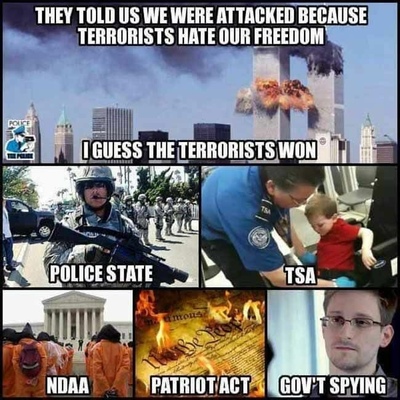
The costs extended beyond foreign battlefields. Ryan McMaken of the Mises Institute writes that in a more reasonable world, people like Cheney would be forgotten, shamed, and disgraced. The post‑9/11 wars did nothing to enhance freedom, yet thousands of American families paid with their blood and millions continue to pay through taxes and inflation. McMaken lists domestic infringements such as the Patriot Act, warrantless surveillance, TSA groping, and FISA abuses, and none of the architects have been held accountable.

Colonel Wilkerson, Powell’s former chief of staff, told ABC News that Cheney “was president for all practical purposes” during Bush’s first term and feared being tried as a war criminal. The Washington Post dubbed him the “vice-president for torture,” and Wilkerson said his push to disregard the Geneva Conventions amounted to an international crime. Chip Gibbons asserts that he “reduced nations to rubble, shredded the Bill of Rights, and enacted programs of surveillance, abduction, detention, and torture.”

The culture of impunity Cheney helped foster has not faded. Politicians continued to accept his endorsements despite his record, while he insisted the CIA’s interrogation techniques did not violate international agreements and his allies still argued for expansive presidential war powers.

An opinion essay by law professor Ziyad Motala in Al Jazeera argues that Cheney is the architect of some of the most disastrous foreign and domestic policies of the early twenty‑first century. Motala contends that Cheney’s policies left “a trail of death and destabilization” and that the havoc unleashed by the Iraq War and the broader “war on terror” continues to reverberate, causing “suffering and instability far surpassing anything Trump has wrought.” He notes that estimates of Iraqi civilian deaths range from hundreds of thousands to well over a million and that the war destabilized an entire region, paving the way for extremist groups like ISIL and ongoing cycles of violence and displacement. The war drained trillions from the U.S. economy and left thousands of U.S. troops dead and many more with life‑altering physical and psychological wounds.

The economic burden of these wars is also staggering. Nearly twenty years after the United States invaded Afghanistan, the global war on terror had cost about $8 trillion. That figure includes not only Department of Defense spending but also State Department expenditures, care for veterans, Department of Homeland Security funds, and interest payments on war borrowing. Brown’s Cost of War Project Co‑director Catherine Lutz said the Pentagon now absorbs the majority of federal discretionary spending, yet most people do not realize the scale of this funding. She warned that these costs will continue for decades as the country pays for veterans’ care and the environmental damage wrought by the wars.

Cheney championed the Patriot Act as a key pillar of the “war on terror” and campaigned aggressively to renew its provisions. In January 2006 he and President Bush launched a “double‑barrelled assault” on critics of domestic surveillance and opponents of the law; Cheney told the Heritage Foundation that Americans could not afford “one day” without the Patriot Act. Civil liberties groups argue that the Patriot Act dramatically expanded government surveillance powers at the expense of constitutional freedoms. Under the law, investigators can monitor online communications on an extremely low legal standard, and secret court orders can compel companies to hand over lists of what people read or which websites they visit. The American Civil Liberties Union notes that the law is enforced in secret, weakens judicial review, and allows agents to seize business and communications records without probable cause. By 2004 the ACLU had filed lawsuits challenging these provisions and denounced the administration’s claim that there were no abuses as a “red herring.” The Patriot Act turned ordinary Americans into subjects of a vast dragnet, chilling free speech and giving the executive branch powers reminiscent of past crises.

Keep reading

Patriot Act supporting senators are mad when they are the targets

When it was reported this week that former President Joe Biden’s FBI may have targeted the cellphones of eight Republican senators in the “Arctic Frost” investigation related to the January 6, 2021 Capitol Hill riot, the Republicans that were supposedly surveilled were not happy about it.

One was Sen. Marsha Blackburn (R-Tenn.), who posted on X Wednesday, “We need to know why (ATT) and (Verizon) did not challenge the subpoena for the phone records of eight United States senators when the Biden FBI spied on us during an anti-Trump probe.”

“There needs to be a reckoning for this,” she declared.

On Thursday, Republican Congressman Thomas Massie (R-Ky.) explained to Blackburn why this might have happened, “It’s called the Patriot Act, FISA, and CISA.”

“Please vote no next time,” he insisted.

During her tenure in the House, Blackburn voted for the Patriot Act each time it came up for renewal since it was passed in 2001 and numerous other federal surveillance measures since that time too.

The Patriot Act was first hastily signed into law in the politically charged days and weeks after 9/11, significantly expanding the federal government’s spying and law enforcement powers. Section 215 allows the F.B.I. to obtain secret court orders and to collect any business records the agency deems vital to national security.

This Act supposedly designed to target potential terrorists has since been used to go after drug dealers, track website usersparents at school board meetings, and more.

Perhaps even spying on Republican senators.

Senator Lindsey Graham (R-S.C.) has long been a vocal champion of the Patriot Act. He was also one of the Republicans reportedly surveilled — and he’s very mad about it.

In a Senate Judiciary Committee hearing on Tuesday, Graham roared to Attorney General Pam Bondi, “Can you tell me why my phone records were sought by the Jack Smith agents?” — Smith being the J6 investigation special counsel.

“Why did they ask to know who I called and what I was doing from January 4th to the 7th?” Graham wondered loudly and aggressively.

In May 2015, after Sen. Rand Paul (R-Ky.) attempted to block an extension of the Patriot Act with a ten-plus hour filibuster, Sen. Graham famously rolled his eyes over Paul’s efforts.

Paul warned that the Patriot Act undermined civil liberties. Then and now, Graham has always appeared to have full faith in the government handling power responsibly.

Keep reading

The Freedoms Lost Under the Patriot Act

The Patriot Act was drafted and pushed through with lightning speed, something that could not have been written overnight. This was the beginning of warrantless surveillance, indefinite detention, and a wholesale reversal of constitutional rights. I have said many times: governments do not waste a good crisis. They wait for the right moment to impose measures that would never pass during normal times. Americans may be unaware of the freedoms that have been stripped away from them after October 26, 2001, when the Patriot Act was signed into law.

The Patriot Act, officially titled “the Uniting and Strengthening America by Providing Appropriate Tools Required to Intercept and Obstruct Terrorism Act of 2001,” provided the government with unlimited surveillance powers. Terrorism became the premise to bypass the checks and balances of the legal system. Need a warrant? One could be obtained in any district or area where terrorism was suspected. Of course, warrantless searches were permitted under the guise of terrorism and deemed “sneak and peek” searches, where the government could enter a business or personal residence immediately and without warning to conduct an investigation.

Neither party has repealed the Patriot Act, and politicians on both sides of the aisle will NEVER relinquish these powers. The Patriot Act destroyed the Fourth Amendment and legally permitted the NSA to spy on all Americans. October 26, 2001, marked the day that the United States of America officially became a surveillance state. We The People were branded as potential terrorists, and “the land of the free” was permanently placed under the watchful eye of government. “The War on Terror” has no clear end or defined enemy. The real target was always domestic — the American people themselves. By creating an atmosphere of fear, Washington justified trillions in spending, the invasion of foreign countries, and the slow strangulation of the very liberties the terrorists supposedly hated.

Keep reading

Holes in the Constitution

Among the lesser-known holes in the Constitution cut by the Patriot Act of 2001 was the destruction of the “wall” between federal law enforcement and federal spies. The wall was erected in the Foreign Intelligence Surveillance Act of 1978, which statutorily limited all federal domestic spying to that which was authorized by the Foreign Intelligence Surveillance Court.

The wall was intended to prevent law enforcement from accessing and using data gathered by America’s domestic spying agencies.

For 24 years, government spying has been rampant in the U.S., and the feds regularly engage in it as part of law enforcement’s well-known antipathy to the Fourth Amendment.

Here is the backstory.

After President Richard Nixon resigned the presidency, Congress investigated his abuse of the FBI and CIA as domestic spying agencies. Some of the spying was on political dissenters and some on political opponents. None of it was lawful.

What is lawful domestic spying?

The modern Supreme Court has made it clear that domestic spying is a “search” and the acquisition of data from a search is a “seizure” within the meaning of the Fourth Amendment. That amendment requires a warrant issued by a judge based on probable cause of crime presented under oath to the judge for a search or seizure to be lawful. The amendment also requires that all search warrants specifically describe the place to be searched and the person or thing to be seized.

The language in the Fourth Amendment is the most precise in the Constitution because of the colonial experiences with British general warrants. A general warrant was issued to British agents by a secret court in London and did not require probable cause, only “governmental needs.” That, of course, was no standard whatsoever, as whatever the government wants it will claim that it needs.

General warrants did not specify what was to be searched or seized. Rather, they authorized the bearers to search wherever they wished and to seize whatever they found — stated differently, to engage in fishing expeditions.

When Congress learned of Nixon’s excesses, it enacted FISA, which required that all domestic spying be authorized by the new and secret FISA Court. Congress then lowered the probable cause of crime standard for the FISA Court to probable cause of being a foreign agent, and it permitted the FISA Court to issue general warrants.

How can Congress, which is itself a creature of the Constitution, change standards established by the Constitution? It cannot legally or constitutionally do so. But it did so nevertheless.

Yet, the FISA compromise that was engineered in order to attract congressional votes was the wall. The wall consisted of language reflecting that whatever data was acquired from surveillance conducted pursuant to a FISA warrant could not be shared with law enforcement.

So, if a janitor in the Russian embassy was really an intelligence agent who was distributing illegal drugs as lures to get Americans to spy for him, and all this was learned via a FISA warrant that authorized listening to phone calls from the embassy, the telephonic evidence of the drug dealing could not be given to the FBI.

The purpose of the wall was not to protect foreign agents from domestic criminal prosecutions; it was to prevent American law enforcement from violating personal privacy by spying on Americans without search warrants.

Fast forward to the weeks after 9/11 when, with no serious debate, Congress enacted the Patriot Act. In addition to permitting one federal agent to authorize another to search private records — contrary to the Fourth Amendment — it also removed the wall between law enforcement and spying.

Keep reading

Luna Introduces Bill to Repeal Patriot Act, Restore Privacy

US Representative Anna Paulina Luna has introduced a bill, the American Privacy Restoration Act, that aims to repeal the Patriot Act, passed in 2001.

The Florida Republican believes that what has in the meantime become the notorious post-9/11 legislation, has been abused by “rogue” intelligence officers to carry out mass surveillance in unlawful ways.

Announcing the bill, Luna mentioned that the Patriot Act has over the last decades been used to interfere in elections, violate innocent Americans’ privacy by spying on them, and even “settle personal scores.”

We obtained a copy of the bill for you here.

According to the representative, the ability to misuse and abuse the Patriot Act in such a way turned it into a tool for what is known as “the deep state” – whereas her legislative proposal seeks to take away the ability of these permanent power centers to violate the Fourth Amendment, that should protect against unreasonable searches and seizures.

Keep reading

“Overthrowing the Constitution”: All Sides Are Waging War on Our Freedoms

“We the people are the rightful masters of both Congress and the courts, not to overthrow the Constitution but to overthrow the men who pervert the Constitution.”Abraham Lincoln

It is both apt and ironic that the anniversary of 9/11, which paved the way for the government to overthrow the Constitution, occurs the week before the anniversary of the day the U.S. Constitution was adopted on September 17, 1787.

All sides are still waging war on our constitutional freedoms, and “we the people” remain the biggest losers.

This year’s presidential election is no exception.

As Bruce Fein, the former associate deputy attorney general under President Ronald Reagan, warns in a recent article in the Baltimore Sun“In November, the American people will have a choice between Harris-Walz and Trump-Vance. But they will not have a choice between an Empire and a Republic.

In other words, the candidates on this year’s ballot do not represent a substantive choice between freedom and tyranny so much as they constitute a cosmetic choice: the packaging may vary widely, but the contents remain the same.

No matter who wins, the bureaucratic minions of the Security/Military Industrial Complex and its Police State/Deep State partners will retain their stranglehold on power.

Neither Donald Trump nor Kamala Harris have the greatest of track records when it comes to actually respecting the rights enshrined in the Constitution, despite the rhetoric being trotted out by both sides lately regarding their so-called devotion to the rule of law.

Indeed, Trump has repeatedly called for parts of the Constitution to be terminated, while both Harris and Trump seem to view the First Amendment’s assurance of the right to free speech, political expression and protest as dangerous when used to challenge the government’s power.

This flies in the face of everything America’s founders fought to safeguard.

Those who gave us the Constitution and the Bill of Rights believed that the government exists at the behest of its citizens. It is there to protect, defend and even enhance our freedoms, not violate them.

Unfortunately, although the Bill of Rights was adopted as a means of protecting the people against government tyranny, in America today, the government does whatever it wants, freedom be damned.

In the 23 years since the USA Patriot Act—a massive 342-page wish list of expanded powers for the FBI and CIA—was rammed through Congress in the wake of the so-called 9/11 terror attacks, it has snowballed into the eradication of every vital safeguard against government overreach, corruption and abuse.

The Patriot Act drove a stake through the heart of the Bill of Rights, violating at least six of the ten original amendments—the First, Fourth, Fifth, Sixth, Seventh and Eighth Amendments—and possibly the Thirteenth and Fourteenth Amendments, as well.

Keep reading

The Department of Homeland Security Turns 20. Its Legacy Is Disastrous.

To those who don’t remember the events of September 11, 2001, it can be difficult to convey the sense of dread and uncertainty that followed. As horrible as the attacks were, many of us wondered: What’s next?

It was in this context that Congress quickly passed, and President George W. Bush signed, such legislation as the USA PATRIOT Act, less than two months after 9/11. While that law was drafted with the best of intentions—strengthening the nation’s defenses against potential future attacks—in practice, authorities overwhelmingly use it to circumvent Americans’ basic freedoms like privacy and due process.

Similarly, less than a month after the attacks, Bush signed an executive order establishing the Office of Homeland Security. The office would “coordinate the executive branch’s efforts to detect, prepare for, prevent, protect against, respond to, and recover from terrorist attacks within the United States.”

But that was apparently not enough: In June 2002, Bush proposed an entirely new Cabinet department dedicated to “transforming and realigning the current confusing patchwork of government activities into a single department whose primary mission is to protect our homeland.” Bush’s proposal promised that by consolidating multiple agencies under a single director, the new department would “improve efficiency without growing government.”

In November of that year, Congress passed the Homeland Security Act of 2002, which established the Department of Homeland Security (DHS) and brought nearly two dozen disparate agencies, including the Transportation Security Agency (TSA), the U.S. Secret Service, and the Coast Guard, under its purview. The newly incorporated department officially opened 20 years ago today, on March 1, 2003.

The department’s stated intent was to prevent terrorist attacks and protect the homeland. Twenty years later, what is there to show for it?

Keep reading