
Who wrecked the economy?


Masks have become a belief system. The cloth mask has become the symbol of a cult movement, whose advocates consider themselves endlessly virtuous, and whose members become enraged at the thought of an individual defying their supposedly righteous demands.
Today in America, membership in the mask cult requires complete and total trust and confidence in the mask, because we are still left with a paper-thin body of evidence that masks do anything positive to slow the spread or prevent transmission of the novel coronavirus. Of course, it doesn’t matter if you wear a surgical mask, a cloth mask, or even a bandana, any face covering suffices to show that you are a member in good standing with the mask cult.
Those who aren’t true believers must be demonized and dehumanized, in the name of “safety” and protecting others, of course. Failure to secure that piece of cloth to your face, regardless of if you are anywhere near another human being, is now being interpreted as an act of total recklessness, or even violent behavior. Governments have instituted 4 figure penalties for failure to comply. In many places in America, you can be arrested or even imprisoned for not wearing a mask.
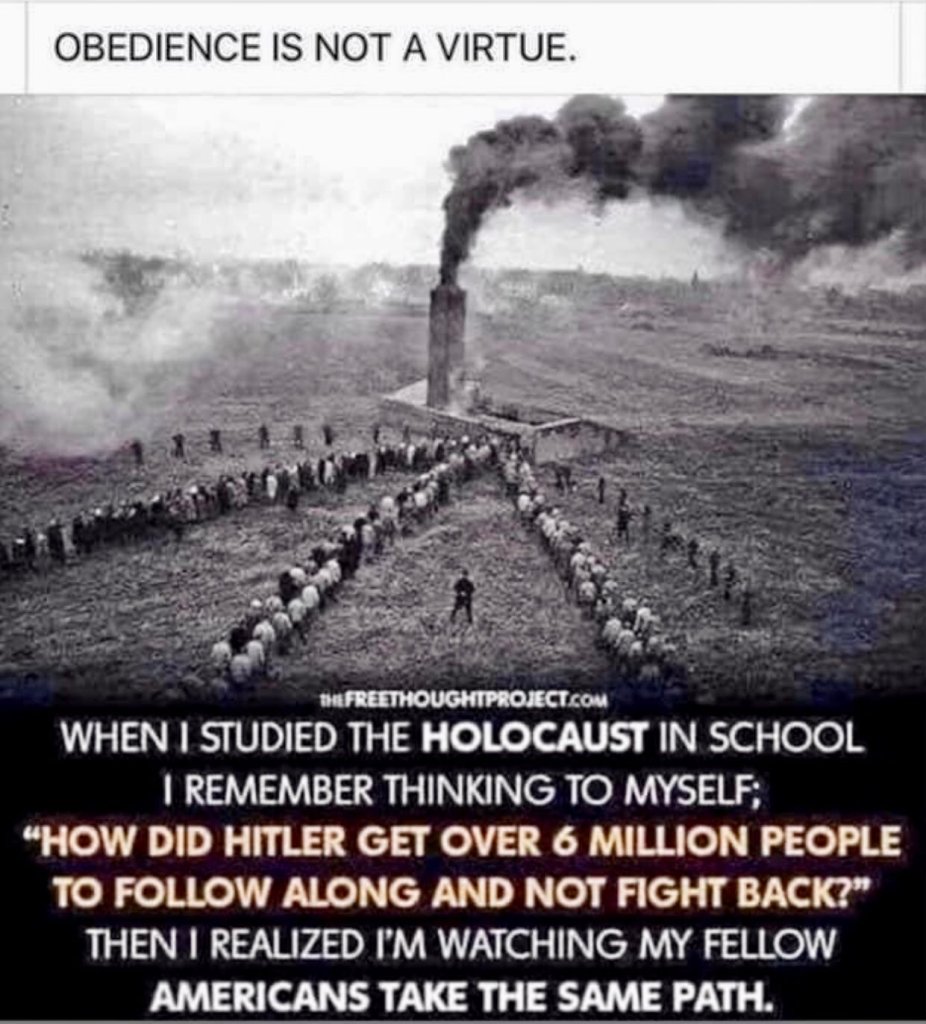
In fact, the only medical benefit — and even that is only a ‘likely advantage’ — of the use of masks by healthy people in the general public listed by the WHO is the ‘reduced potential exposure risk from infected persons before they develop symptoms.’ It’s important to clarify that this is a risk that I take, not that I represent, of potential exposure to infection from someone else who, presumably, has COVID-19 and breathes, sneezes or coughs on me in sufficiently close proximity for airborne particles or tiny droplets potentially carrying the virus to enter my nose, mouth or eyes. However, if I want to take that risk of potential exposure, that’s up to me, just as I also risk being run down by a car when I cross the road. It’s not the role of the police — and it most certainly isn’t within their legal powers — to compel me to avoid that risk. That’s my right, without which any and every possible or putative risk to my or anyone else’s safety can be used to justify controlling every aspect of my life.



 Hellbound and Down
You must be logged in to post a comment.