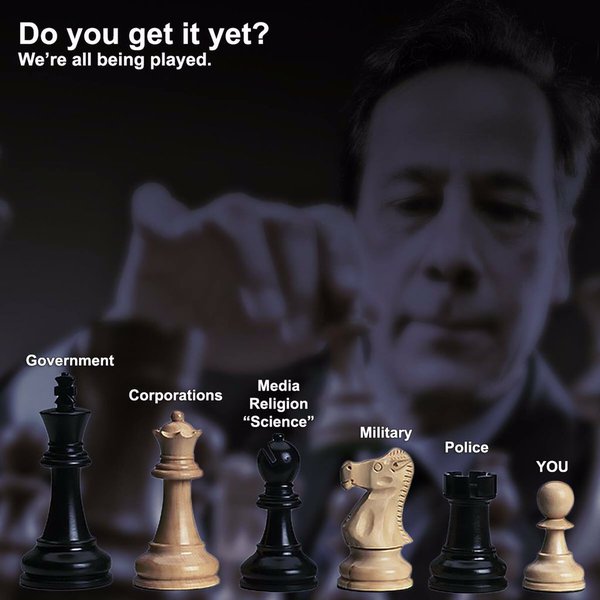
Checkmate.

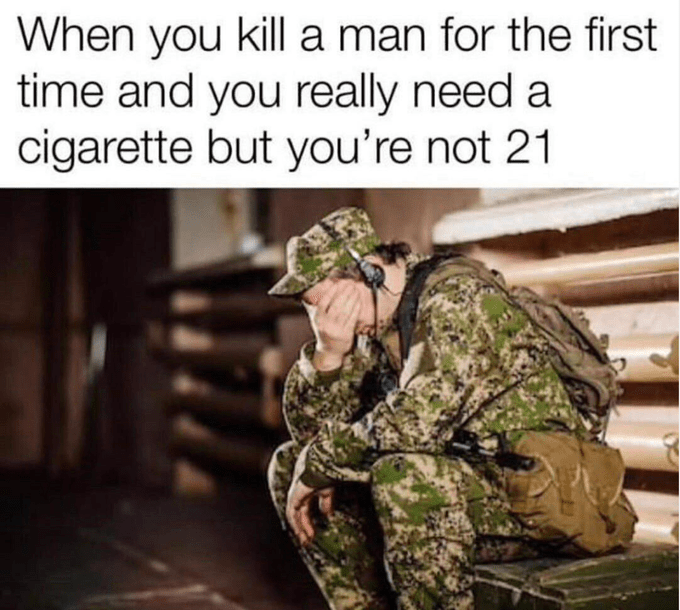

Inever thought I’d see the day when publicly wearing a muzzle would constitute a proof of virtue in the same country whose government, less than twenty years ago, rationalized the bloody invasion of Afghanistan as a way of saving women from veiling their faces.
But then, I never thought I’d hear American liberals proudly denounce supporters of the US Constitution as a “death cult,” nor that I’d actually start to find Donald Trump sounding almost reasonable.
But at least there’s one thing we can all be sure about: “mainstream” news media, busily cheerleading for the death of freedom, will continue to gush with absurdities, self-contradictions and victim-shaming memes in their propaganda war to Keep America Gagged. The Bill of Rights (in case you haven’t noticed) is history; today, we demonstrate our patriotism by creeping around hiding our faces. Dissenters need not apply.
If you think I’m exaggerating, I suspect you haven’t been paying attention. Recently I had the poor judgment to turn on National Public Radio for about an hour, under the impression that I was going to learn something about the day’s news.
I could have saved myself the trouble. During the hour in question, I learned nothing at all about the presidential election campaign (now in its final months), nothing about the tens of millions of my fellow citizens whose jobs have been snatched away by government fiat, nothing about climate change, nuclear arms buildups, international refugees or growing worldwide poverty – nothing even about the intensification of air and water pollution authorized by recent federal regulation, although pollution kills an estimated 100,000 Americans every year.
No – for a solid hour, I heard the following: that COVID19 – in reality, at most, a moderately serious flu virus – is the worst medical threat the United States has ever faced; that this “deadly” virus (the word “deadly” was repeated obsessively, even though the disease is fatal in a tiny percentage of cases) has been empowered by a conspiracy of Republican politicians serving the arch-demon Donald Trump; that recent data showing the rapid decline in deaths attributable to the virus may have been faked, because the numbers aren’t what the “experts” want them to be; and that a massive increase in COVID19 tests – primarily among people between 20 and 40 years of age who are subjected to swabbing because their employers demand it, not because they’re in any danger – cannot possibly have anything to do with a rise in the number of reported infections, and that anyone who dares to suggest otherwise is “putting lives at risk.”
But the real theme of the hour was masks, masks, masks: how to make them, how to wear them, their different types, who doesn’t seem to have enough of them, and why muffling our faces (even though no such thing was ever demanded of us during dozens of past viral outbreaks) is absolutely, positively good for us all.
I waited in vain for some mention of the fact that every single order requiring the wearing of muzzles in the US is probably unconstitutional, a matter that National Public Radio – which once prided itself on its legal affairs reporting – might have been expected to care about.
Nor did anyone mention that just a few months ago, the Center for Disease Control and Prevention was explicitly advising against a general mask-wearing regime, as was Anthony Fauci, the High Priest of COVID19.
No, facts would only have complicated matters. After all, we already knew what good little boys and girls were expected to do with those muzzles. At the close of each weather forecast, just in case anyone had missed the point, the reporter said cheerily, “And when you go out – put on a mask.” “And drink milk with every meal,” I half expected him to add, but I guess self-conscious condescension would have spoiled the effect.
Dr. Anthony Fauci said Friday state and local government leaders should be “as forceful as possible” in urging the wearing of face masks to prevent the spread of the deadly coronavirus, which the top infectious disease expert says is still in the first wave in the United States and has hit Americans “very severely.”
Fauci said the United States needs “to get better control” over COVID-19 and masks must be a priority as the country opens up.
“I would urge the leaders — the local, political and other leaders — in states and cities and towns to be as forceful as possible in getting your citizenry to wear masks,” Fauci, the director of the National Institute of Allergy and Infectious Diseases, said during a video conference with the U.S. Chamber of Commerce.

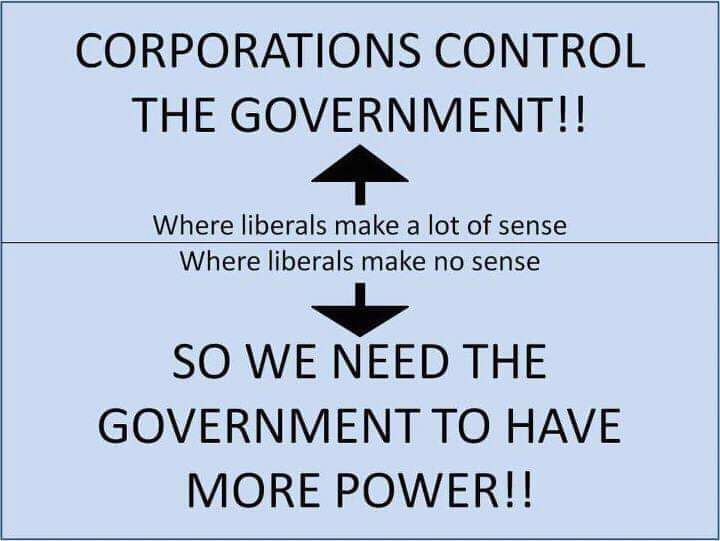
Sen. Dianne Feinstein (D-Calif.) called on the Senate on Thursday to support an amendment to the next coronavirus relief bill that would bar states that do not implement mask mandates from receiving stimulus funding.
In a statement from the senator’s office, Feinstein announced her intention to introduce the amendment and stated that it was time for Congress to step in and force states to implement such mandates to stop the virus from spreading.
“Wearing masks in public should be mandatory. Period. [Senate Majority] Leader [Mitch] McConnell [R-Ky.] said the Senate will take up the next coronavirus economic relief bill later this month. At that time, I intend to offer an amendment to prohibit sending funds to states that haven’t adopted a statewide mask requirement,” said Feinstein, a member of the Senate Subcommittee on Agriculture, Rural Development, Food and Drug Administration.
“My hope has been that other governors would show the leadership to institute their own mask mandates, but so far that hasn’t happened. It’s time for Congress to step in. This is a matter of life or death, and partisan politics shouldn’t play a role,” she continued.

 Hellbound and Down
You must be logged in to post a comment.