
Fight! Fight! Fight!


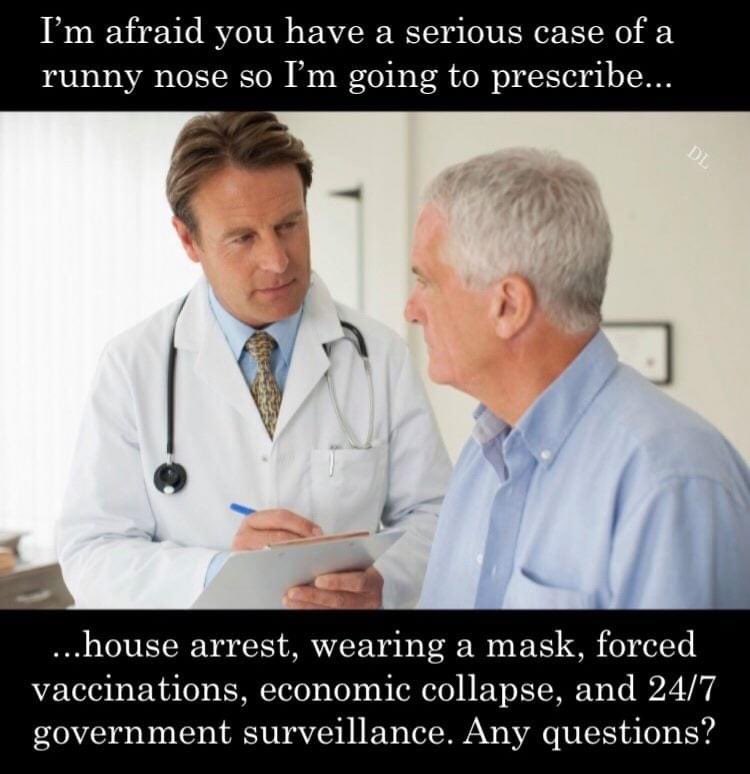
Last Friday the Michigan Supreme Court ruled that a law Gov. Gretchen Whitmer (D) used to shutter businesses and confine people to their homes except for Whitmer-approved purposes improperly delegated legislative functions to the executive branch. And last month a federal judge in Pennsylvania said that state’s lockdown violated the right of assembly guaranteed by the First Amendment, along with the 14th Amendment’s guarantees of due process and equal protection.
Both decisions uphold a principle that politicians across the country seemed to forget while they rushed to curtail the epidemic last spring. As U.S. District Judge William Stickman put it in the Pennsylvania case, “the Constitution sets certain lines that may not be crossed, even in an emergency.”
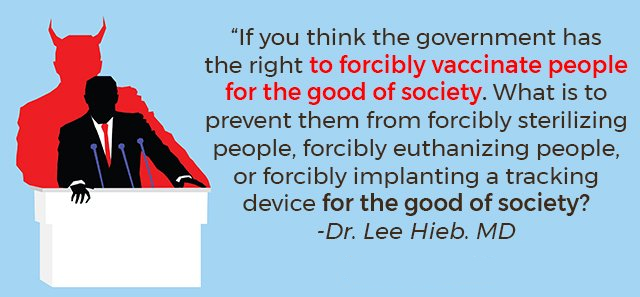
Protesters have swarmed downtown Boston and the state Capitol in the seven weeks since Republican Gov. Charlie Baker issued the first-of-its-kind requirement for students from preschool through college.As the Massachusetts mandate plays out, other states have weighed similar requirements while colleges throughout the country pile on their own orders to prevent flu patients from clogging doctors offices and emergency rooms alongside people infected with coronavirus this winter.
State laws across the country already require various vaccines for students and health care workers, while allowing a host of exemptions. Governments still have broad authority to implement new flu shot orders, potentially paving the way for mandatory inoculation against the coronavirus in a country where vaccine skepticismis spreading and President Donald Trump has resisted many public health protocols during the pandemic.
“This is a brave new experiment by the state of Massachusetts,” said Lawrence Gostin, who heads a university-based center on health law that serves as an official collaborating institute with the World Health Organization. “If it turns out to be a wholesale success, that should influence other states to go a similar route, not just with flu but with other vaccines. But if it causes a backlash and only marginal benefit, states might be hesitant to adopt that model in the future.”
The coronavirus crisis has served as a powerful tool in highlighting many of the faults that previously existed in society. It exposed which politicians have an inherent need to control and which ones are guided by humility. It reminded us of the political power that lies in fear, and how crucial it is to be skeptical of prevailing narratives. It emphasized the different economic realities for those who live paycheck to paycheck and those who benefit from economic financialization.
It should also make perfectly clear the danger of handing over healthcare to the state.
Already we have seen agents of the state, at various levels, seek to leverage a viral medical crisis to expand their power. Governors and local officials have sought to use vague “emergency” powers to lock down businesses and to create criminal penalties, and have then attacked any attempts by judiciaries to rein in their actions. Judges have sought to leverage the power they hold in deciding child custody to force citizens to make medical decisions they disagree with. Anointed government experts, such as Dr. Anthony Fauci, in spite of his own inconsistencies, have been held up as the final word on science, at the expense of the voices of other credible scientists.
Whether by design or by the instinctual reaction, we have seen a concerted effort of government authorities—amplified by a corporate press with a particularly vivid political agenda, and supported by the credentials of an academic landscape that suffers from ideological capture—to weaponize a centralized scientific narrative for the purpose of achieving certain policy ends. It is appropriate that some have dubbed this union “the Cathedral,” as we have seen the divine right of kings renewed in the divine right of approved scientists.
None of this should be a surprise.
Ludwig von Mises, F.A. Hayek, Murray N. Rothbard, and others have long warned of the dangers of “scientism.” As Jonathan Newman has noted on this site, we’ve seen it play out increasingly in American pop culture with the fetishizing of figures like Neil deGrasse Tyson and Bill Nye.
Now, luckily, the current healthcare system has limits on the degree to which we, as individuals, must submit to the power of the “scientific consensus.” How long, however, will that doctor-patient relationship remain sacred?


 Hellbound and Down
You must be logged in to post a comment.