Marijuana And Opioids Are ‘Equally Efficacious’ In Reducing Pain, With Cannabis Offering Additional ‘Holistic’ Benefits, Study Shows

Medical marijuana and opioids are “equally efficacious” at mitigating pain intensity in patients with chronic pain, according to a new study in the Journal of Cannabis Research—but cannabis also provided more “holistic” relief, such as by improving sleep, focus and emotional wellbeing.

Researchers said their findings support the hypothesis that medical cannabis (MC) “alleviates pain through holistically altering the pain experience” rather than “only targeting pain intensity.”

“The results of the present study support the hypothesis that the effects of MC on pain experience are more holistic than those of opioids,” their report says. “MC may alleviate pain through affecting a broad range of pain-related experience experiential factors such as relaxation, improved sleep and mood, being able not to react to the pain, as well as a sense of control.”

The nine-person Finnish team, led by Åbo Akademi University psychology professor Jussi Jylkkä, looked at a sample of 201 chronic pain patients, 40 of whom used medical marijuana and 161 of whom used opioids to treat pain. There was some crossover, with about 45 percent of medical marijuana patients reporting also using opioids for their pain and about 4.3 percent of opioid users having used medical cannabis.

Subjects completed retrospective surveys on the “positive and negative phenomenological effects of the medicine,” and researchers then compared scores from the two groups.

Keep reading

Medical Marijuana Legalization Led To Reduction In Frequent Use Of Nonmedical Prescription Opioids, Study Finds

Legalizing medical marijuana is associated with a “lower frequency” of nonprescribed pharmaceutical opioid use, according to a study published this month in the International Journal of Mental Health and Addiction.

While the decrease was rather small—between about 0.6 percent and 1.5 percent for regular to frequent opioid use—and was concentrated in people who met diagnostic criteria for cannabis use disorder, the researchers said it could signal “substitution effects with partial replacement of opioids by cannabis.”

The research team, from the schools of public health at Rutgers and Columbia universities as well as the University of Arizona’s School of Government and Public Policy, said the results highlight “the importance of identifying tradeoffs of cannabis legalization as an intervention to reduce opioid-related harms.”

The study used national survey data from 2004 to 2014 to examine nonmedical prescription opioid (NMPO) use—specifically, prescription opioids used without a prescription or in a manner other than prescribed.

Despite the decrease in regular and frequent opioid use, the study also found that medical cannabis legalization (MCL) was associated with a 2.1 percent increase in the occasional use of nonmedical prescription opioids, defined as between once and 12 times per year.

Keep reading

Medical Marijuana Prescriptions Rise Sharply In Israel Amid War With Hamas, Government Says As Patients Seek Relief From PTSD And Pain

A month into the war between Israel and Hamas, data from Israel’s Ministry of Health shows a sharp expansion in the reach of the medical marijuana program in that country. Patient enrollments have spiked, especially those tied to PTSD and pain, and doctors have prescribed more cannabis by weight than ever before.

Patient enrollment in Israel’s medical cannabis registry rose by 2,202 people in October, according to the newly released government numbers. That’s roughly twice the recent monthly average, though it’s not quite the rapid growth seen in early 2021, when nearly 3,000 patients were registering each month.

Regardless, Israel now has more registered medical cannabis patients than ever. And with more enrolled patients, there’s been a corresponding uptick in the amount of marijuana that is being prescribed. The country’s medical cannabis rules specify that a patient can purchase only up to a certain amount of specified products. In October, those products totaled 5,173 kilograms—not only a record in itself, but also the largest monthly increase ever recorded in the system, according to a local Israeli cannabis news publication. Data also showed an increase in the number of patients prescribed relatively high doses of marijuana.

Enrollment by qualifying condition, the local report noted, reflects an uptick in violence and wartime stressors. For example, data show an increase for the first time in at least a year in the number of marijuana prescriptions for “post-trauma,” or PTSD. Chronic pain continued to be a leading condition for marijuana patients, making up nearly three quarters of new enrollees, while another 400 patients in October enrolled for unspecified “other” conditions.

Keep reading

Senate Approves Bill Allowing Doctors To Issue Cannabis Recommendations to Veterans

A bipartisan congressional bill – the Fiscal Year 2024 (FY24) Military Construction, Veterans Affairs, and Related Agencies (MilCon-VA) Appropriations Act – has been approved by the Senate that allows military veterans to receive medical cannabis recommendations issued by government doctors.

Doctors at the U.S. Department of Veterans Affairs (VA) will be able to recommend medical cannabis to their patients in states where it’s legal.

The bill provides support for critical housing, infrastructure, and facilities for U.S. military forces and their families, as well as increased funding for veterans health care and benefits.

The measure was advanced by a bipartisan vote of 28-0.

Vice Chairman of the Appropriations Committee, Senator Susan Collins, stated: “The significant investments this legislation makes in America’s military are critical to our national security, helping to ensure our military’s readiness and safety while reducing maintenance costs.

“The bill also supports much-needed funding to improve medical care and housing for our nation’s veterans. As the Vice Chairman of the Appropriations Committee, I will continue to champion this funding as the appropriations process moves forward.”

Previously, VA doctors were not authorised to issue recommendations on medical cannabis, even in states that have legalised the plant for medical or recreational use.

Supporters of the Bill have said that it provides a modest but meaningful reform for the veteran community.

Senators Ron Wyden and Jeff Merkley reintroduced the legislation in April.

Speaking on the passage of the bill, U.S. Senator Patty Murray (D-WA), Chair of the Senate Appropriations Committee, stated: “…despite the tough funding constraints, these bills move our country forward—not back—with important investments to keep our promise to our nation’s veterans, to get Americans where they need to go safely, to increase our housing supply, address the homelessness crisis, support our farmers and ranchers, keep American families healthy and safe, and much more.”

Speaking at the time of the legislation’s reintroduction, Wyden stated: “Veterans in Oregon and nationwide are unfairly and unacceptably stuck in a legal gray zone when discussing medical cannabis with their doctor.

“Veterans deserve the opportunity to explore various treatments with their doctor without fear of prosecution or employment ramifications.

Keep reading

Florida Attorney General Defends Firing Of Corrections Officer For Using Medical Marijuana To Treat PTSD

A case filed with the Florida Supreme Court tests whether the Department of Corrections properly fired a corrections officer because of his use of medical marijuana while off work.

Florida’s First District Court of Appeal upheld the firing, but Samuel Velez Ortiz now argues before the state Supreme Court that the action violates both the Florida Constitution’s sanction of medical marijuana and the U.S. Supreme Court’s recent rulings establishing a broad right to bear firearms.

The state Public Employees Relation Commission upheld the firing, reasoning that his medical marijuana use rendered him unqualified to carry a firearm—a condition of his employment—under federal law prohibiting use of the drug.

petition that Velez Ortiz’s attorneys filed with the state Supreme Court cites 2022’s New York State Rifle Pistol v. Bruen, in which the justices in Washington established a public right to carry firearms outside the home for self protection. Subsequent rulings by a federal trial judge in Oklahoma and the U.S. Court of Appeals for the Fifth Circuit upheld the right of sober persons to carry guns even if they smoked marijuana on other occasions.

“This lower court’s [First DCA] opinion permits a sanction on medical marijuana patients, which results in loss of employment for being a qualified patient and strips a person’s right to bear arms for being a qualified patient,” it says. “The opinion states because he uses medical marijuana ‘he cannot lawfully possess a firearm. Each time he does, he is committing a felony.’”

The brief notes that Velez Ortiz was a qualified medical marijuana user because of his PTSD and never worked while under the influence. A random drug test flagged him for cannabis metabolites.

Keep reading

Feds Threaten To Make It Harder For Medical Marijuana Patients To Get State Gun Permits In Arkansas

Arkansas’s recently enacted law permitting medical cannabis patients to obtain concealed carry gun licenses “creates an unacceptable risk,” and could jeopardize the state’s federally approved alternative firearm licensing policy, the Bureau of Alcohol, Tobacco, Firearms and Explosives (ATF) says.

The Arkansas law took effect in August, clarifying that a person’s status as a qualified patient in the state cannot be used “in determining whether an applicant is eligible to be issued a license to carry a concealed handgun.”

The policy change has apparently attracted the critical attention of federal officials at the Justice Department, The Arkansas Democrat-Gazette first reported. A letter sent by Marianna Mitchem, chief of ATF’s Firearms and Explosives Industry Division, to the operations director for the Division of Arkansas Crime Information this week said there are “public safety concerns” with the law.

Mitchem advised the state official that Arkansas has been previously notified that a condition of its alternative gun licensing scheme, which allows gun buyers to receive approval by the state without going through a federal background check, is that firearms cannot be purchased by a “controlled substance user.” In the eyes of the federal government, that includes medical cannabis patients.

The letter contained a veiled threat, stating that if the state department did not answer two specific questions, it would warrant a reevaluation of Arkansas’s alternative gun permit policy.

Keep reading

Pennsylvania Officials Won’t Give Medical Marijuana Patients Access To Edibles—For Now

Officials tasked with monitoring the state’s medical marijuana program said this week edibles don’t belong in Pennsylvania’s marketplace.

Concerns about safety, efficacy and legal enforcement gave members of the Medical Marijuana Advisory Board pause. Six abstained from voting on the recommendation at all during its Wednesday meeting. Only two members supported the proposal, while two more rejected it.

The vote came after a discussion about the growing popularity of “troches,” an ingestible form of THC that resembles a cough drop. Dispensaries market the product alongside tinctures, which users absorb sublingually.

Supporters say some patients dislike the respiratory and digestive side effects that come from other forms of medical marijuana, including vaping cartridges, flowers, pills, and concentrates. Edibles offer a viable alternative.

Critics argue, however, that traditional edibles offered in other states come with a higher risk of poisoning, particularly in children, because of deceptive packaging and underestimated potency.

Keep reading

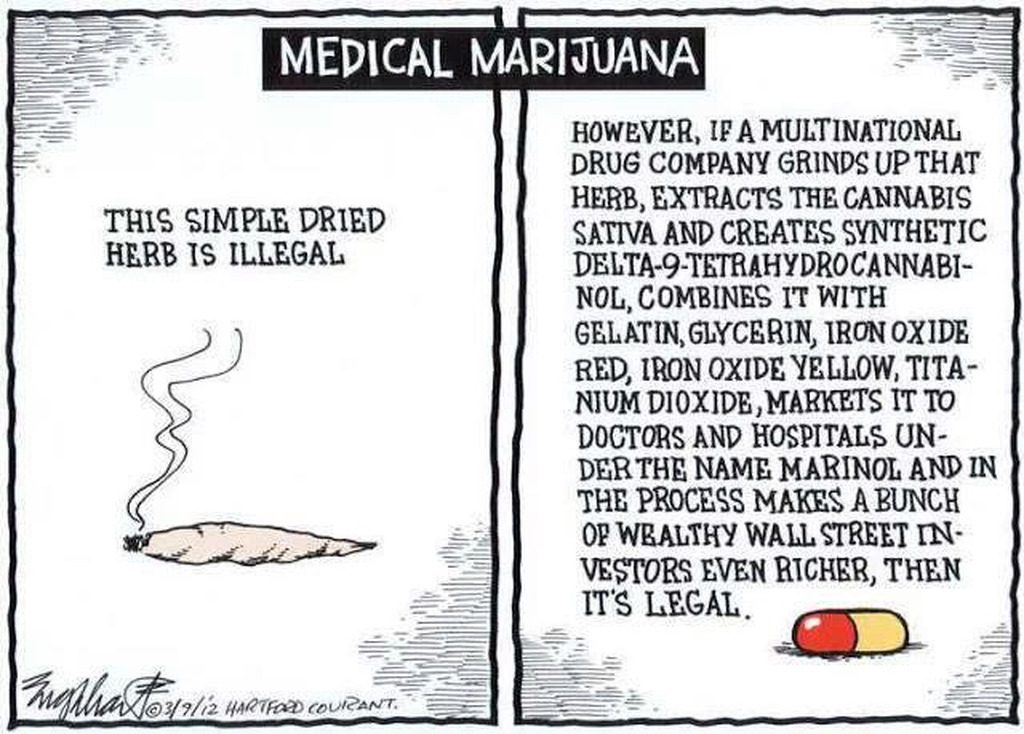
GOP Congressman Worries That Moving Marijuana To Schedule III Could ‘Allow Big Pharma To Control It’

A Republican congressman says he’s concerned that if the federal government doesn’t “go further” than simply moving marijuana to a lower drug schedule—as the top health agency has recommended—large pharmaceutical companies might be able to overtake the cannabis industry.

On Monday, Rep. Matt Gaetz (R-FL) filled in for a Newsmax host and led a segment that featured attorney John Morgan, who spent millions to put a successful medical cannabis initiative on the ballot in Florida. The two discussed recent reporting that the U.S. Health and Human Services (HHS) is advising the Drug Enforcement Administration (DEA) to move marijuana from Schedule I to Schedule III of the Controlled Substances Act (CSA).

Morgan criticized the status quo that currently lists marijuana in the same schedule as drugs like heroin, and he accused the alcohol and pharmaceutical industries of wanting to block research into cannabis because such studies could support the idea of substituting marijuana for the more dangerous drugs that they market.

“Well, I totally concur with the assessment that marijuana reform is often blocked by Big Pharma because they want the opportunity to control it,” Gaetz, who also pressed the DEA administrator on the status of the scheduling review last month, said. “My concern is that if we don’t go any further than moving marijuana from Schedule I to Schedule III, that could potentially allow Big Pharma to control it.”

The congressman also suggested that the Biden administration may have been moved to recommend rescheduling after seeing research showing that legalization is associated with reduced opioid-related hospitalizations and lower rates of child foster case cases due to substance misuse. And he then asked Morgan if he felt the HHS Schedule III recommendation is “sufficient.”

Despite certain concerns about a potential power grab by the pharmaceutical industry if marijuana is rescheduled, Morgan said that it represents “a step in the right direction,” echoing recent remarks made my numerous congressional lawmakers who back marijuana reform. “It has to happen,” he said.

Keep reading

We Need to Chill Out About Categorizing ‘Medical’ Versus ‘Recreational’

I used to wake up in the middle of the night, every night, with a nightmare. In it, my body was frozen, and trigger warning: In the nightmare, I was fading in and out of unconscious, but someone was raping me. They were textbook PTSD nightmares, and I had no idea what to do about them.

I was raised in the Caribbean, in the U.S. Virgin Islands, surrounded by ganja culture. While millennial “statesiders” my age I’d meet later when I moved to the South for school and then New York for my forever home, I realized that my childhood was different. Far from the “Just Say No” and D.A.R.E rhetoric my contemporaries experienced, many of my friend’s parents were Rastafarians. I grew up understanding that cannabis was a sacrament. So I spent high school, during the Bush era, on the debate team arguing for its legalization, and college majoring in journalism, reporting on cannabis. I’ve always been vehemently pro-legalization. But the reason cannabis didn’t become a big part of my personal life until a decade ago, in 2013, was because I was a total boozehound. 

But alcohol made my PTSD stemming from my assault worse. Sometimes, back in the day, to be perfectly honest, it made me downright nasty or even suicidal. So my ambition kicked in, having seen what alcoholism can do to others (it runs in my family), and I quit. I haven’t had a drink in 10 years. I’ve been Cali Sober since before the term existed, baby. 

So, a few years into sobriety, when a stoner close to my heart told me that people used cannabis to treat anxiety, PTSD and that THC could even suppress nightmares, at first, I was skeptical. Sure, it should be legal, just like alcohol, and the government is full of shit, but would it affect me like liquor did? Personally, 12-Step programs did more harm than good. I’m a big believer that a one-size-fits-all model is not suitable for recovery, something society finally seems ready to talk about.

Especially in the first few years after my assault, I needed to be shaken and reminded of my power — which had been robbed from me — instead of admitting I was powerless, which is, in so many words, the first step of AA. I’m glad the program works for many, including people I love, and I won’t even get into the fact that its founder, Bill W., fully embraced psychedelics at the end of his life, adamant that they could treat alcoholism. Because this story is about why recreational use and medical use have more overlap than the establishment makes them out to.

Keep reading