New Jersey Cities Must Explain Marijuana Business Denials, Court Says

New Jersey’s cannabis industry scored a victory Tuesday when a state appellate panel ruled that municipalities must explain why they deny requests for local support to open dispensaries, a decision that could have implications for legal weed retailers statewide.

The 23-page decision rejects an argument by the Burlington City Council that it is allowed to reject those requests without explaining why. The council was sued by the owners of a planned cannabis dispensary after council members denied the owners’ request for a resolution of local support, a document required to open recreational cannabis dispensaries in New Jersey.

“While the City Council was permitted to consider all relevant evidence and has wide discretion under its general police powers to deny the issuance of an ROS, we hold that the City Council has to provide a discernible reason for its determination,” reads the ruling by Judge Lisa Perez Friscia.

Tuesday’s decision rejects a lower court judge’s ruling that required Burlington to issue the resolution of support to the owners of the planned dispensary, called Higher Breed. The newer ruling requires the Burlington council to reconsider Higher Breed’s request for support and then issue a resolution that provides a basis for the council’s decision.

A request for comment from Higher Breed’s attorneys was not returned.

New Jersey voters opted in 2020 to legalize cannabis, but the state’s legalization law allowed towns to opt out of cannabis sales, and about 70 percent of towns did so. The Cannabis Regulatory Commission, which is tasked with approving cannabis retail licenses, requires prospective license holders to obtain a resolution of local support from the town where they plan to operate.

In December 2023, Higher Breed, owned by Jim and Karen Waltz, applied to the Burlington City Council for a resolution of local support for a store on East Route 130. After hearing from a real estate broker who does not live in Burlington and claimed the property’s owner was “dishonest” and owed him a real estate commission, the council ultimately rejected Higher Breed’s request for a resolution of local support. Higher Breed then sued.

Keep reading

Arizona Senators Take Up Bills To Criminalize ‘Excessive’ Marijuana Smoke, Even On Private Property

Arizona lawmakers are considering at a pair of measures that would make the act of creating “excessive” amounts of marijuana smoke a nuisance crime punishable by jail time, even if the person is using cannabis in compliance with state law in their own homes.

Sen. J.D. Mesnard (R) is sponsoring the two proposals—one that would amend state statute legislatively that would put the issue before voters at the ballot. Members of the Senate Judiciary and Elections Committee are set to consider the proposals this week.

The lawmaker said he decided to push the issue due to the smell of marijuana in his own neighborhood.

Both versions of Mesnard’s legislation stipulate that “it is presumed that a person who creates excessive marijuana smoke and odor causes a condition that endangers the safety or health of others.”

The reason behind having both a proposed bill and resolution is related to the potential legal challenges of lawmakers changing the voter-approved marijuana legalization law.

The legislation would establish “a presumption that the creation of excessive marijuana smoke and odor is injurious to health, indecent, offensive to the senses and an obstruction to the free use of property that interferes with the comfortable enjoyment of life or property,” a summary of the proposal says.

If enacted, the loosely defined offense of creating “excessive” marijuana smoke under the bill and resolution would be considered a class 3 misdemeanor, punishable by up to 30 days in jail, a maximum $500 fine and up to one year of probation.

“I’m hearing from some people that, depending on their neighbor situation, they may not be able to have their kids go outside because the marijuana smoke is so potent,” Mesnard, the sponsor, said. “It can even creep into your own house or, in my case, into my garage.”

“But experiencing now what’s happened, even in my own neighborhood, is a pretty frustrating situation,” he told The Arizona Daily Star. “You should be responsible neighbors if you’re going to smoke pot… It can be a real issue for families, especially with kids.”

Asked about the seeming double standard given that no such nuisance offenses exist for smoking cigarettes or cigars on a private property, the senator said, “I’ll concede I hadn’t thought about it.”

Keep reading

CA Pot Tax Heist: $370 Million Stolen from Kids’ Drug Prevention to Fund Dem Voter Registration Scam

Steve Hilton announced the first findings from the newly formed California Department of Government Efficiency, led by Jenny Ray LaRue, alleging large-scale fraud involving state funds.

Speaking outside the California Department of Tax and Fee Administration, Hilton said the new department had begun examining financial activity within state agencies and tracking alleged misuse of taxpayer money.

“Welcome everyone. We are here outside the California Department of tax defeat administration. This is where your money goes. This building is where your money goes into the Democrats bottomless money pit,” Hilton said.

Hilton referenced a prior estimate released weeks earlier, which he said projected at least $250 billion in fraud statewide.

“Our estimate, as you may remember, that we put out a few weeks ago, at least $250 billion of fraud in California,” Hilton said.

“And today, we’re announcing our first findings since we got to work in Cal DOGE just a few weeks ago, just a couple of weeks ago, and here it is. It’s a classic.”

Keep reading

Virginia House Passes Bill To Protect Rights Of Parents Who Use Marijuana

The Virginia House of Delegates has approved a bill to protect the rights of parents who use marijuana in compliance with state law.

The legislation from Del. Nadarius Clark (D) is consistent with a measure he sponsored last session that advanced through the legislature, only to be vetoed by then-Gov. Glenn Youngkin (R). The latest version passed the House in a 62-37 vote on Tuesday.

Under the proposal, possession of use of cannabis by a parent or guardian on its own “shall not serve as a basis to deem a child abused or neglected unless other facts establish that such possession or consumption causes or creates a risk of physical or mental injury to the child.”

“A person’s legal possession or consumption of substances authorized under [the state’s marijuana law] alone shall not serve as a basis to restrict custody or visitation unless other facts establish that such possession or consumption is not in the best interest of the child,” the text of the bill, HB 942, states.

When the bill was on the floor for second reading on Monday, Clark said that the measure “fully preserves judicial discretion requiring a court to act when a child is in danger, but grounding those decisions in individualized evidence-based findings instead of presumptions tied to lawful conduct.”

Youngkin claimed in his veto message last year that the prior measure introduced “unnecessary complications and risks exposing children to harm.”

“The bill disregards clear evidence linking substance use to child endangerment, particularly in the wake of increased incidents of children ingesting cannabis-infused substances following the legalization of marijuana,” he argued. “By broadly prohibiting courts from considering parental marijuana use in custody and visitation determinations, [the bill] risks prioritizing drug use over the health and well being of children.”

The then-governor also vetoed an even earlier version of the bill in 2024.

Keep reading

Oregon Lawmakers Consider Banning Marijuana Edibles With More Than 10 Milligrams Of THC

Oregon lawmakers are considering a bill to prohibit the sale of individual edibles that have more than 10 milligrams of THC.

The proposal, Senate Bill 1548, comes as lawmakers grapple with responding to increasing reports of children seeking medical attention after consuming edibles resembling cookies, brownies and gummies. In 2023, children aged 0 to five made up one-third of all cannabis-related cases reported to the Oregon Poison Center.

And in May, experts recommended lawmakers implement a THC cap to cannabis products, similar to alcohol and tobacco, as data shows most Oregon youth believe there’s little to no risk in smoking marijuana once a month.

“We need to reckon with this a little bit,” said Sen. Lisa Reynolds, a Portland Democrat and pediatrician who chairs the Senate Early Childhood and Behavioral Health Committee. The committee met Tuesday morning for a public hearing on the bill.

Reynolds said the topic is of particular interest to her because she believes her brother’s habitual marijuana use in the ’70s contributed to his admission into psychiatric hospitals nearly 50 times throughout his life. He now lives in a nursing home with severe schizophrenia, she said.

Four doctors testified in favor of the bill, including Dr. Rob Hendrickson, the medical director of the Oregon Poison Center. Hendrickson shared an example of a toddler he cared for recently who consumed two muffins that contained 50 milligrams of THC each. Within an hour, the child turned blue and unconscious. She had a seizure and was put on life support for 36 hours.

There’s strong evidence that the policy would reduce child poisonings, according to Dr. Julia Dilley, a Multnomah County epidemiologist who has been leading research on the public health effects of cannabis legalization in Oregon and Washington.

Oregon’s bill is similar to a 2017 Washington law requiring that single servings of edibles don’t exceed 10 milligrams. That law was associated with 75 percent fewer hospitalizations and half as many poisonings reported to poison centers, Dilley told the committee.

Four people in the cannabis industry testified in opposition to the bill, including business owners and cannabis manufacturers who said many products already have child-resistant packaging, as well as meet marketing and advertising standards to make sure products aren’t attractive to children.

Keep reading

State Cannabis Legalization and Psychosis-Related Health Care Utilization

This study included 63 680 589 beneficiaries followed for 2 015 189 706 person-months. Women accounted for 51.8% of follow-up time with the majority of person-months recorded for those aged 65 years and older (77.3%) and among White beneficiaries (64.6%). Results from fully-adjusted models showed that, compared with no legalization policy, states with legalization policies experienced no statistically significant increase in rates of psychosis-related diagnoses (medical, no retail outlets: rate ratio [RR], 1.13; 95% CI, 0.97-1.36; medical, retail outlets: RR, 1.24; 95% CI, 0.96-1.61; recreational, no retail outlets: RR, 1.38; 95% CI, 0.93-2.04; recreational, retail outlets: RR, 1.39; 95% CI, 0.98-1.97) or prescribed antipsychotics (medical, no retail outlets RR, 1.00; 95% CI, 0.88-1.13; medical, retail outlets: RR, 1.01; 95% CI, 0.87-1.19; recreational, no retail outlets: RR, 1.13; 95% CI, 0.84-1.51; recreational, retail outlets: RR, 1.14; 95% CI, 0.89-1.45). In exploratory secondary analyses, rates of psychosis-related diagnoses increased significantly among men, people aged 55 to 64 years, and Asian beneficiaries in states with recreational policies compared with no policy.

Conclusions and Relevance  In this retrospective cohort study of commercial and Medicare Advantage claims data, state medical and recreational cannabis policies were not associated with a statistically significant increase in rates of psychosis-related health outcomes. As states continue to introduce new cannabis policies, continued evaluation of psychosis as a potential consequence of state cannabis legalization may be informative.

Keep reading

The Heavy Pot Taxes Favored by The New York Times Would Undermine Legalization

The New York Times embraced legalization of recreational marijuana in 2014, two years after Colorado and Washington became the first states to take that step. By that point, most Americans opposed pot prohibition, and that majority has grown since then.

Although the Times does not regret endorsing legalization, its editorial board now says stricter regulation and heavier taxation are necessary to curtail the costs associated with marijuana abuse. Those recommendations elide two inconvenient facts: Cannabis is still federally prohibited, and states are still struggling to replace unauthorized pot peddlers with government-licensed marijuana merchants.

The Times emphasizes that “occasional marijuana use is no more a problem than drinking a glass of wine with dinner or smoking a celebratory cigar.” But while marijuana “is safer than alcohol and tobacco in some ways,” the Times says, “it is not harmless.”

Frequent cannabis consumption has increased substantially in recent years, the Times notes, and roughly one in 10 marijuana users “develops an addiction.” Even nonaddicted cannabis consumers “can still use it too much,” it says, since “people who are frequently stoned can struggle to hold a job or take care of their families.”

The Times also mentions cannabinoid hyperemesis syndrome, “marijuana-linked paranoia,” and the danger posed by stoned drivers. “Any product that brings both pleasures and problems requires a balancing act,” the Times says, which means “personal freedom” must be curtailed to protect “public health.”

That formulation is inherently paternalistic, since the “public health” burden to which the Times refers is borne mainly by cannabis consumers themselves. And the moral logic of the hefty marijuana taxes that the Times favors is questionable.

Those taxes would add to the difficulties that some heavy consumers face while punishing the occasional use that the paper says is no big deal. Although “adults should have the freedom to use” marijuana, the Times says, they must pay the government for that privilege.

A tax-based “balancing act” also raises practical difficulties. “The first step in a strategy to reduce marijuana abuse should be a federal tax on pot,” the Times says, gliding over the point that Congress cannot impose an excise tax on marijuana products unless it is prepared to legalize them.

The editorial does not explicitly acknowledge the need for that step. To the contrary, it implicitly criticizes President Donald Trump’s decision to reclassify marijuana under federal law, which falls far short of legalization.

Keep reading

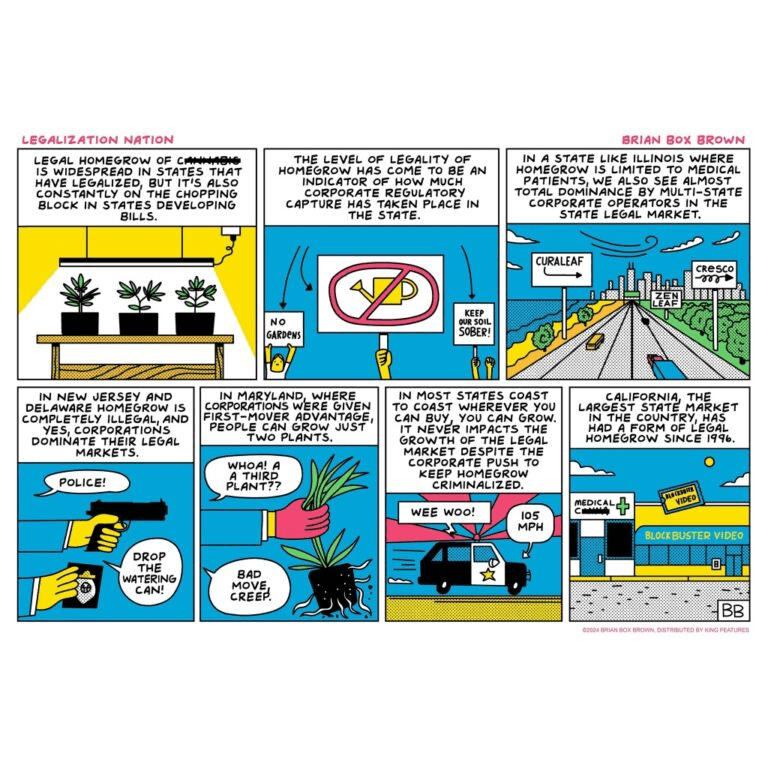
Washington State Senators Approve Bill To Legalize Marijuana Home Grow For Adults

Washington State lawmakers have advanced a bill to expand the state’s voter-approved marijuana legalization law by allowing recreational consumers to grow their own cannabis plants.

Weeks after Sens. Rebecca Saldaña (D), Noel Frame (D) and T’wina Nobles (D) filed the legislation, the Senate Labor & Commerce Committee on Tuesday approved the measure in a voice vote. It next heads to the Senate Rules Committee before potentially reaching the floor.

The vote comes about a week after the Senate panel held an initial hearing on the proposal, with law enforcement representatives voicing opposition to the reform and military veterans testifying in support of allowing personal home cultivation.

Under SB 6204, adults over 21 years of age would be allowed to cultivate up to six marijuana plants at home. No more than 15 cannabis plants could be produced at any one time in a single housing unit, regardless of how many adults live there.

People could lawfully keep the marijuana produced by those plants despite the state’s existing one-ounce limit on possession.

Property owners would be allowed to prohibit tenants from growing cannabis in rental units, and probation and parole officers would be able to bar people from cultivating marijuana as a condition of their supervised release.

Home cultivators would be required to keep plants from public view and grown in such a way that they could not be smelled from public places or private properties of other housing units. Violating those rules would be a class 3 civil infraction.

It would be a class 1 civil infraction for a person to grow more than six but fewer than 16 cannabis plants, while it would be a class C felony to produce more than 16 plants, under the bill.

No cannabis plants could be grown in housing units that are used to provide early childhood education and early learning services by a family day care provider.

The committee on Tuesday approved an amendment from Sen. Mark Schoesler (R) to allow municipalities and counties to ban or enact moratoriums on cannabis cultivation in housing units in areas that are zoned primarily for residential use.

Keep reading

GOP Congressman Backs Effort To Roll Back Marijuana Legalization In Arizona—But Says Trump Holds ‘Power’ With Rescheduling Push

A GOP congressional lawmaker says he’d like to see his state of Arizona roll back its voter-approved marijuana legalization law with an initiative that could be on the November ballot—but he acknowledged that President Donald Trump’s recent federal rescheduling order could complicate that prohibitionist push.

Two Republican members of Arizona’s U.S. House delegation spoke with Marijuana Moment about the proposed ballot measure to eliminate commercial cannabis sales in the state, voicing opposition to legalization while recognizing that pending federal reform represents an obstacle for the anti-marijuana campaign.

Rep. Paul Gosar (R-AZ)—who was among a handful of GOP lawmakers who urged the Trump administration to reject rescheduling last year—said he would like to see voters approve an initiative to repeal the adult-use marijuana market in Arizona. That measure was filed with the secretary of state’s office last month, but it hasn’t been certified for ballot placement at this point.

“We need to really take a comprehensive look at cannabis all the way across the board. Science tries to commit one way or another to us, and we’re not getting the full background on it,” he said, adding that he still regards marijuana as a “gateway drug” to other illicit substances and arguing that the cannabis industry has “resisted every which way with the regulations.”

Asked about Trump’s recent executive order directing the attorney general to expeditiously finalize a rule moving cannabis from Schedule I to Schedule III of the Controlled Substances Act (CSA), the congressman conceded that could hamper the state-level repeal effort.

“He’s got power,” Gosar said. “But a lot of us want to know who was it that actually turned his ear” to support rescheduling.

The lawmaker said the president has historically been receptive to his input, and he’d like to have a discussion about the rescheduling move—but that’s yet to materialize.

Another congressional Republican representing Arizona, Rep. Andy Biggs (R-AZ), also weighed in on the rescheduling push in an interview with Marijuana Moment last week.

While there’s a libertarian perspective on the issue he appreciates when it comes to letting adults make their own choices about personal marijuana use, he said the fiscal conservative in him says prohibition can help prevent the use of taxpayer dollars to deal with what he characterized as the consequences of cannabis use.

“I’ve always taken the position that you need to keep marijuana where it was because the social safety network is in place, causing taxpayers to have to fund rehabilitation for those things,” he said.

Keep reading

‘Dark Money’ Anti-Marijuana Group Is Bankrolling Ballot Measures To Roll Back Legalization In Multiple States, Records Show

When it comes to putting a proposed new law before voters, it helps to have lots of money ready to burn.

More than $11 million has already changed hands to advance or oppose a potentially record-breaking field of ballot questions that Massachusetts voters could decide in November, according to newly filed campaign finance reports, including a significant injection by a national dark-money group that opposes legal drug use.

All $1.55 million raised so far in support of a proposal to recriminalize recreational marijuana in Massachusetts came from SAM Action Inc., an organization that is not required to disclose the source of its own funding.

It’s the same organization that bankrolled opposition to a 2024 Massachusetts ballot question that sought to open up access to some psychedelic substances, which voters rejected.

Massachusetts is not alone as a battleground, either. SAM Action is also the only donor behind a ballot question in Maine this cycle that would similarly prohibit recreational pot use there, as the Portland Press Herald reported.

Both campaigns have generated scrutiny over their efforts to gather signatures from voters.

In Massachusetts, opponents filed an objection alleging the campaign “obtained signatures fraudulently” by telling voters the measure would provide affordable housing or fund public parks, not that it would ban recreational marijuana.

The State Ballot Law Commission heard arguments last week and is expected to rule by Friday. State law empowers the panel to determine whether signatures were placed on a ballot question petition “by fraud,” and its interpretation could set off a lengthier court battle over whether the question can go before voters.

Similarly, Mainers have been alleging in recent weeks that they were misled about what the anti-marijuana petition would do when they signed it. Maine’s secretary of state, Shenna Bellows, said she’s received complaints about the topic, adding that she has no enforcement power because, as she put it to lawmakers, “You have a right to lie under the First Amendment.”

Wendy Wakeman, a veteran Republican operative who is working as spokesperson for the repeal campaign, said the Massachusetts and Maine questions are “not a coordinated effort” despite funding coming from the same national group.

SAM Action is a 501(c)(4) organization, so it’s not required to disclose its donors, leaving unclear exactly who is putting major dollars toward shutting down an industry both Massachusetts and Maine voted nearly a decade ago to legalize.

On its website, SAM Action claims affiliation with the nonprofit Smart Approaches to Marijuana group co-founded by former US Rep. Patrick Kennedy—a Democrat who represented Rhode Island, and the son of longtime US Sen. Ted Kennedy—along with former White House Office of National Drug Control Policy advisor Kevin Sabet and David Frum, a former speechwriter for President George W. Bush who is now a senior editor at The Atlantic.

Wakeman declined to comment on SAM Action’s primary donors.

Keep reading