
The Most Incredible Story Never Told: LBJ’s Order to Destroy the USS Liberty

LYNDON BAINES JOHNSON is a president who has escaped the scrutiny and judgment of history despite considerable documentation that should make him an outstanding candidate for historical review, critique, and analysis. His primary biographer, Robert Caro, consistently gets rave book reviews from mainstream media for his disingenuous puff piece books on LBJ. It’s entirely possible that LBJ is the most evil or one of the most evil presidents in US history. (ILLUSTRATION: The USS Liberty post-Israeli attack)

Some researchers believe that LBJ was the mastermind behind JFK’s assassination and researcher Phillip F. Nelson wrote a book documenting his investigation on this issue: LBJ: The Mastermind of JFK’s Assassination.

However, one of the greatest unknown chapters in LBJ’s presidency is that he personally gave the order to Israel to bomb and utterly destroy the USS Liberty and its entire crew of 294 Americans. Astoundingly, when the mission went awry and Sixth Fleet Commanders were ordering the rescue of the besieged and bloodied USS Liberty crew, LBJ ordered that rescue operations be called back, at least twice. Against all odds, the USS Liberty survived but after the attack, 34 Americans lay dead. Except for four worthless .50 caliber machine guns, the USS Liberty was unarmed and defenseless against the far superior firing power of the Israeli navel and air force armada that descended upon it with relentless and unspeakable terror.

Not a whole lot has been written about the USS Liberty. It’s just another critically important issue that has been buried in history, but two extraordinary books document the truth. James M. Ennes Jr., is a retired US Naval Officer and a survivor of the Liberty attack who wrote a book that documents his investigative disclosure of the truth, here.

Peter Hounam, an investigative journalist, wrote Operation Cyanide, Why the Bombing of the USS Liberty Nearly Caused World War III. Hounam’s extraordinary book, published in 2003, relies heavily on the work of Ennis and also documents numerous interviews that Hounam conducted with the USS Liberty survivors as well as other folks in the US, British, and Israeli governments.

The “official” story of the USS Liberty, according to the government and mainstream media version of the event, is that on June 8, 1967 the Israelis accidentally bombed the Liberty off the coast of Egypt and killed 34 American sailors.

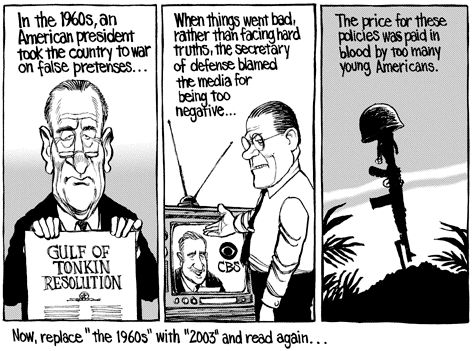
The real story is that President Johnson, who was being battered in the polls over the Vietnam War and facing a general election loss and even losing the Democrat primary, asked the Israelis to bomb the Liberty to create a casus belli and to secure a Gulf-of-Tonkin-style resolution to explode the world into war — because in America everybody loves an outraged and indignant president who will use the full force of the military at the slightest provocation, even a government-planned false flag attack.

The USS Liberty, however, encompasses far more than a murderous psychopathic American president resorting to hideously evil deeds to get re-elected. In addition to ordering the total destruction of the USS Liberty and potentially sending 294 Americans to a watery grave in the Mediterranean Sea, LBJ also ordered the nuclear bombing of Cairo, an event specifically designed to create a nuclear war by blaming the entire USS Liberty affair on Russia or Egypt. More horrifying, it’s documented that US planes were on emergency standby orders as pilots waited on the runways in their planes armed with nuclear weapons. The nuclear bombing of Cairo was called off only three minutes before the nuclear bomb drops.

As fate would have it, LBJ’s plan blew up in his face and the world got a reprieve from a US-induced nuclear holocaust.
Keep reading

JFK Assassination: Hiding in Plain Sight, Startling Revelations

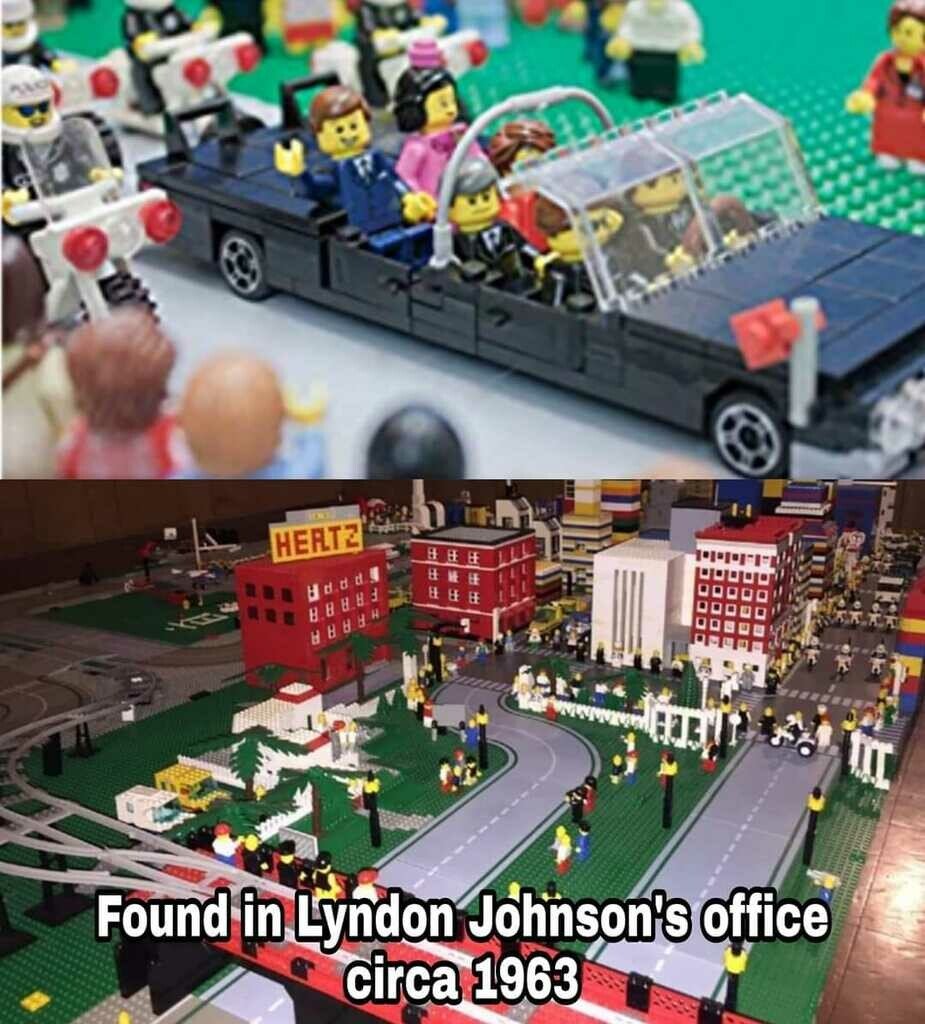
President John F. Kennedy was fatally shot on November 22, 1963, as his open-topped limousine glided through Dallas’s Dealey Plaza. Within hours, Dallas police arrested and charged a young New Orleans native, Lee Oswald, who worked in a building overlooking the plaza, situated just where Kennedy’s car had to slow down to negotiate a sharp turn. 

Eyewitness accounts differed about the origin and number of shots. But a substantial majority of onlookers, including both civilians and law enforcement, initially believed  the shots had come from in front of the vehicle, not the rear — the site of the Texas School Book Depository building where Oswald worked at the time Kennedy was struck. 

By the next day, authorities were actively dispelling speculation about multiple shooters, adamantly insisting that they had the lone-wolf culprit. Oswald emphatically denied having shot anyone — but before he could expound on his innocence, he was murdered on November 24, while in police custody, by nightclub owner Jack Ruby, who maintained long-standing friendships with both police and organized crime. Despite compelling reasons to dig further, the lone-wolf narrative almost immediately became the official story, reinforced by the September 1964 Warren Commission report and subsequently promulgated by the media. This simplistic account is still widely cited today.

This, despite a late 1970s investigation by a House panel that was longer, better resourced, and far more rigorous, and concluded essentially the opposite: that conspiracy was probably involved.

Had they known of the following conversation, they might not have used the word “probably.” 

Keep reading

Was LBJ a “Serial Killer” Who Advanced His Career By Murdering at Least 6 Other Men Who Stood In His Way?

On June 3, 1961, Henry Marshall was found dead on his farm near Bryan in Robertson County, Texas. He had been shot five times with his own rifle.

Marshall, 51, had worked as a clerk with the Robertson County office of the Agricultural Adjustment Agency (AAA), holding a senior post in the agency. In 1960, he was asked to investigate the activities of Billie Sol Estes, a wealthy benefactor of Lyndon B. Johnson, whom he found to have engaged in an illegal scheme to buy cotton allotments.

According to Barr McClellan, who worked for the Austin, Texas, law firm of Clark, Thomas & Winters which represented Lyndon Johnson, Johnson had enlisted Billie Sol Estes to help him raise money to defeat John F. Kennedy in the 1960 Democratic Party primary. The two had a close relationship dating back to the 1950s.

Heralded in local media as the “wonder boy of Texas agriculture,” Estes had pioneered the use of irrigation pumps that were run by natural gas (which was less expensive than electricity) and by discovering the benefits of anhydrous ammonia as fertilizer.[1] A master at using the government for enrichment, Estes, according to a confession he gave after he was released from prison in 1984, became Johnson’s cutout for $10 million in illegal kickbacks ($100 million in 2022).[2]

When LBJ wanted large sums of money, Billie Sol gave it to him; in return he received key government contracts—the price being kickbacks to LBJ whenever he wanted it. McClellan wrote that “this way of doing political business in Texas was nothing short of a banana republic.”[3]

Keep reading

The Gulf Of Tonkin Incident: The Lie That Sparked The Vietnam War

In August 1964, the United States entered the Vietnam War after reports of an unprovoked attack in the Gulf of Tonkin. But the reports were false — and the president knew it.

In August 1964, the USS Maddox destroyer was stationed in the Gulf of Tonkin off the coast of North Vietnam.

On August 2, it was attacked by North Vietnamese torpedo boats. And then, two days later, on August 4, the Johnson administration claimed that it had been attacked again. After the second attack, the U.S. Congress passed a resolution almost unanimously allowing the federal government to “take all necessary measures” to protect U.S. forces in Vietnam.

It was as close to a declaration of war that the Johnson administration would ever get. But it was based on a lie.

After decades of public skepticism and government secrecy, the truth finally came out: In the early 2000s, nearly 200 documents were declassified and released by the National Security Agency (NSA).

They showed that there was no attack on August 4. U.S. officials had distorted the truth about the Gulf of Tonkin incident for their own gains — and perhaps for Johnson’s own political prospects.

Keep reading