
Do your homework…


Messenger RNA (mRNA) is found in all living cells. These strands of genetic code act as chemical intermediaries between the DNA in our chromosomes and the cellular machinery that produces the proteins we need to function: mRNA provides the instructions this machinery needs to assemble these proteins.
Moderna’s mRNA-1273 is programmed to make your cells produce the coronavirus’ infamous spike protein that gives the virus its crown-like appearance (“corona” is crown in Latin) for which it is named.
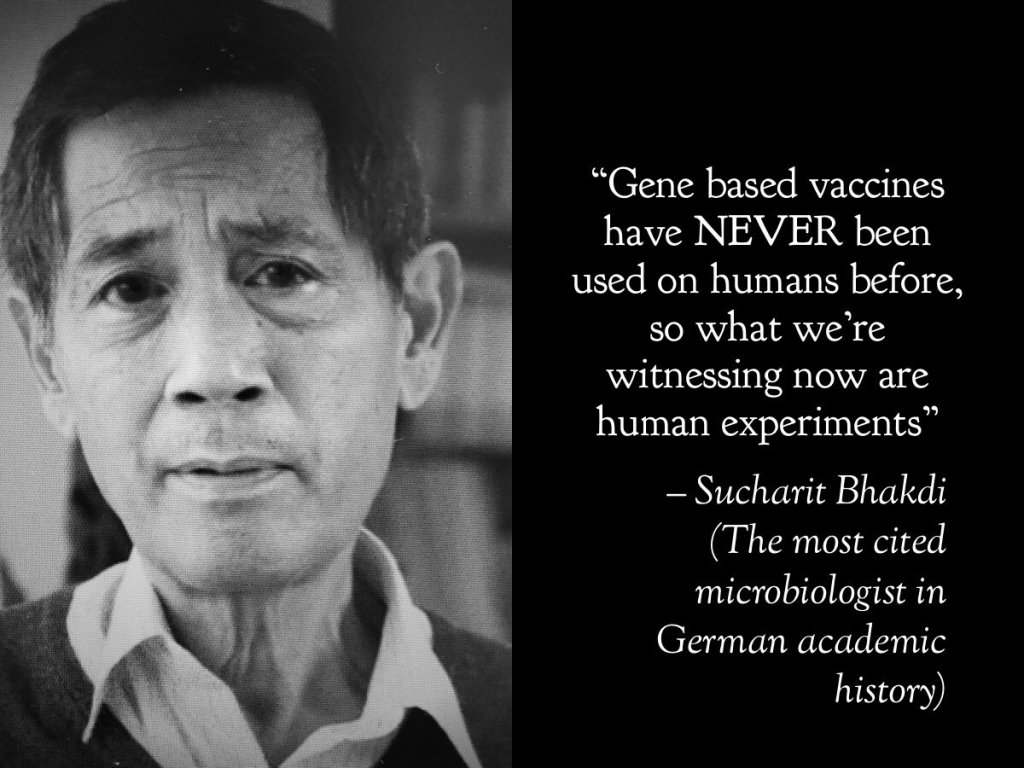
Moderna has made public that mRNA platforms are an “operating system” designed to program human DNA and turn their cells into efficient drug delivery systems.
COVID 19 vaccine trials appear to have caused some confusion. Hopefully, this article might help clear things up a bit. People genuinely appear to believe that the COVID 19 vaccines have undergone clinical trials and have been proven to be both safe and effective. That belief is simply wrong.
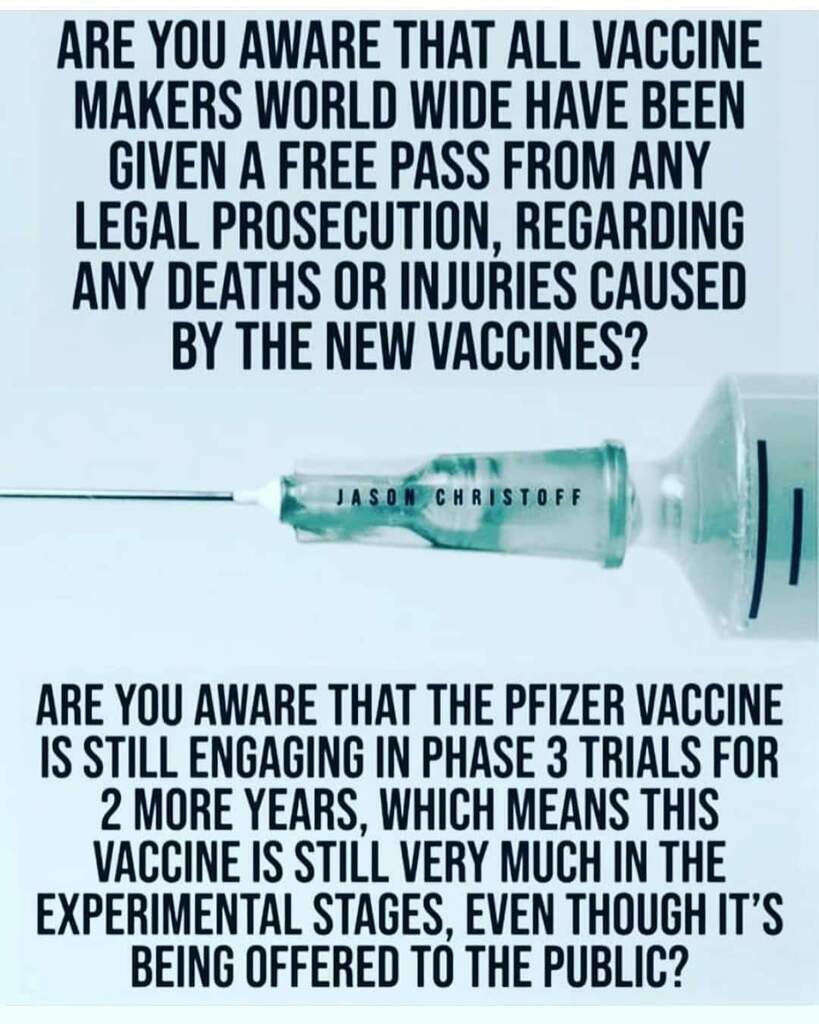
The main point is this. If you decide to have Pfizer and BioNTechs experimental mRNA-based BNT162b2 (BNT) vaccine, or any other claimed COVID 19 vaccine for that matter, you are a test subject in a drug trial.
Despite some of the tireless coverage from those of us in the independent media over the years, there still seems to be a contingent of holdouts clung to the idea that their own government would not intentionally put the well being of its citizens at risk. Particularly with regard to the closing out of 2020, it seemed no better a time to provide some historical context to the contrary.
We will begin with example from the prohibition era of the previous century, in 1928. The United States government in an attempt to act as the sole arbiter of morality took it upon themselves to defy the basic human right of self ownership and prohibited the consumption of alcohol nationally. Naturally, this was not received well by millions of individuals who believed it was their inherent right to decide what they could and could not ingest in their own bodies.
As prohibition often does, this led to a boon in black market industry of speakeasies and bootleg alcohol manufacturing and distribution. Of course the all powerful government, ever influenced by its messiah complex did not respond well to this act of defiance. How dare the peasantry exercise their rights as free thinking individuals? Thusly the government took the only next reasonable step it could think of — to poison its own citizens.
That’s right, rather than come to the logical conclusion that people should be allowed to decide what’s best for them, the federal government decided in an ill-fated attempt to enforce compliance of state-mandated moral guidelines to “save people from themselves”, to contaminate millions of barrels of alcohol with poison to dissuade people from drinking it.
This seems outlandish but it is indeed a well-documented historical fact that, as pointed out in a previous article from TFTP, has been entirely scrubbed from the history books. The reason for this historical purge is quite clear when one reads into the consequences of this repulsive policy. As it has been estimated that due to this state-sponsored poisoning campaign, over 10,000 Americans lost their lives as a direct result from being murdered by their government for the “crime” of consuming alcohol.
Just this one instance alone, arguably the most repugnant atrocity the United States government has ever perpetuated on its own citizenry, should be enough for people to realize they should never blindly believe that the bureaucracy is a benevolent figure acting on behalf of their well-being. Unfortunately though, as we will see this is only one of several examples of the predator class purposefully endangering the health of the public that they had been trusted to protect.
More evidence against the unexpected and unprecedented world and WHO response to the crisis in 2020 is provided in this 91-page 2019 WHO report entitled “Non-pharmaceutical public health measures for mitigating the risk and impact of epidemic and pandemic influenza”. The word “lockdown” (one form of a non-pharmaceutical intervention or NPI) does not appear in this report. Nor does the WHO report even recommend masks (a favourite 2020 NPI) in case of an epidemic, though it does advocate their use for symptomatic individuals.
On the effect of NPIs, the report stated: “The evidence base on the effectiveness of NPIs in community settings is limited, and the overall quality of evidence was very low for most interventions. There have been a number of high-quality randomised controlled trials (RCTs) demonstrating that personal protective measures such as hand hygiene and face masks have, at best, a small effect on influenza transmission, although higher compliance in a severe pandemic might improve effectiveness” (emphasis added). Yet, for COVID-19, NPIs were recommended in bundles by WHO and other experts.
As is universally acknowledged, the WHO is the apex body for advice and guidance for health problems. It houses leading epidemiological experts and before COVID, they were advocating policies reminiscent of earlier confrontations with viruses.
Given this history, it remains a mystery as to why the world entered into a lockdown. In my paper, I report the result of various studies on the effectiveness of lockdowns; except for a few, most of these studies report that the lockdowns were highly successful in saving hundreds of thousands of lives. Since the average death rate from COVID is 2.5 per cent, these results imply that somewhere between 10 to 20 million less infections resulted from this unnatural experiment.


You must be logged in to post a comment.