U.S. Actions Produced Majority Of World’s Refugees

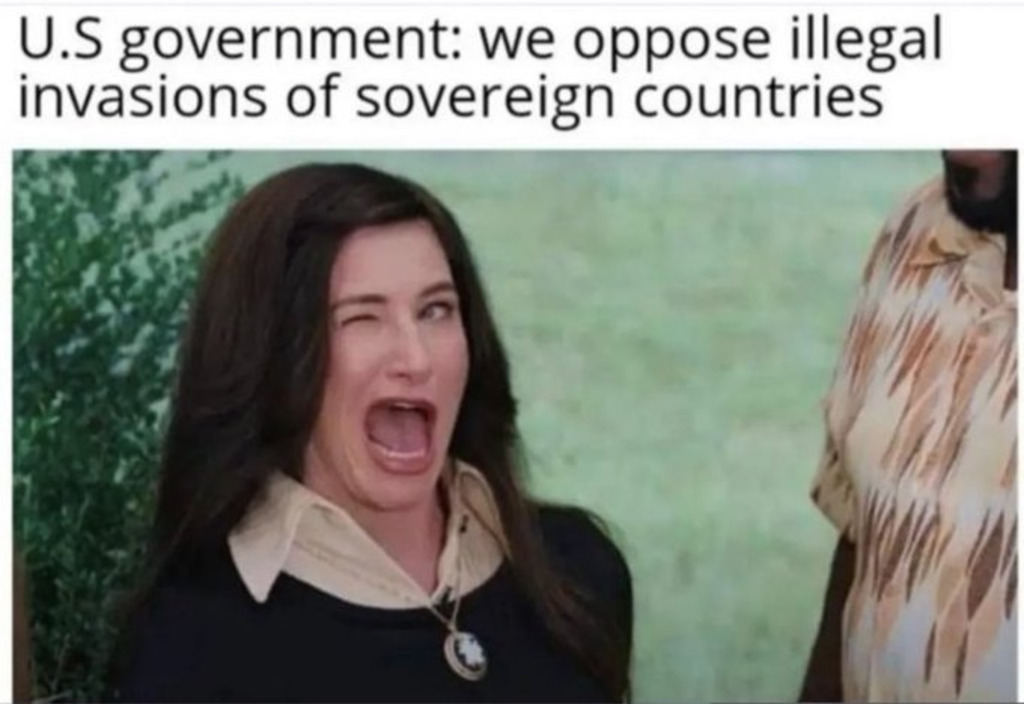
According to figures from the United Nations refugee agency, the majority of refugees in the world today — and ever since the start of this century — have been fleeing from countries that were sanctioned, couped, and/or invaded, by the U.S. Government.

The latest such annual report by the UNHCR is “Global Trends Forced Displacement 2021”, and it indicates that “69% originated from just five countries” which were: Syria (6.9 million), Venezuela (4.6 million), Afghanistan (2.7 million), South Sudan (2.4 million), and Myanmar (1.2 million). The report’s “Figure 7” “People displaced across borders by host country | end-2021” shows that the top recipient-countries that year were: Turkiye (3,759,800), Colombia (1,843,900), Uganda (1,529,900), Pakistan (1,491,100), Germany (1,255,700), Sudan (1,103,900), Bangladesh (918,900), Lebanon (845,900), Ethiopia (821,300), and Iran (798,300). The report notes that there were “72 percent hosted by neighboring countries” but the exceptions were likewise notable. For example: “Figure 13” “Major countries for individual registration of new asylum seekers | 2021” showed that #1 on that list (and these numbers indicate ONLY the refugees that were officially recorded in these nations as being refugees who came there during that year, NOT the total who had somehow become “displaced” and who now were there) as being U.S., 188,900. #2 was Germany, 148,200. #3 was Mexico, 131,400. Some others among the top 10 were: France, Spain, UK, and Italy.

Keep reading

In Venezuela, the US Recognizes a Nonexistent Government

In a piece of bizarre political theater, the US now officially recognizes a government in Venezuela that does not exist. Despite the termination of the government recognized by the US, State Department spokesman Ned Price assured a press briefing that “our approach has not changed.” The US still considers the elected President illegitimate – an increasingly isolated position – and the assembly the unelected president led legitimate, though he no longer leads it, and they are no longer the assembly.

Since February of 2019, the US has recognized the never elected Juan Guaidó as the legitimate leader of Venezuela, creating an already bizarre situation in which there were parallel governments in Venezuela: one recognized within the country and one recognized outside the country.

But the US plan failed in its goal of removing Nicolás Maduro from power. And after four years, the opposition in Venezuela decided to abandon the plan and move on. At the end of December, 2022, Venezuela’s opposition lawmakers by an overwhelming preliminary vote of 72-23, removed Guaidó from power and pulled the plug on his interim government. On December 30, three of Venezuela’s four main opposition parties supported the proposal to remove Guaidó.

Though the US continued to support Guaidó, few in Venezuela did. Only 6% of Venezuelans said they would support Guaidó in presidential primaries, and more than 56% said the interim government should be terminated. Miguel Tinker Salas, Professor of Latin American History at Pomona College, and one of the world’s leading experts on Venezuelan history and politics, told me in November, 2022 that “For all intents and purposes he has been sidelined by developments in the country and even for those in the opposition he is a non-entity.”

Keep reading

New House Foreign Affairs Chair Michael McCaul Is a Standard Old-School Interventionist

For those who hoped the new Republican-led and Trump-approved House of Representatives under Speaker Kevin McCarthy (R–Calif.) might promote some of the better aspects of MAGA-ism, such as a foreign policy that recognized the mistakes of the past three decades, and charter a less bellicose and controlling path for the U.S. abroad, the ascension of Rep. Michael McCaul (R–Texas) to chair of the Foreign Affairs Committee should be unpleasant cold water.

While the Trumpian strain in the GOP is supposed to favor a radical rethink of the U.S. mission to find and combat foreign adversaries with every sort of intervention, involvement, and pressure even if short of direct troop deployment, McCaul retains an older sense of an abiding American mission to shape the world to our desires and “interests.”

McCaul:

• is an enthusiastic supporter of U.S. military aid to Ukraine and helping ensure Russian President Vladimir Putin and Russian leaders face war crimes tribunals;

• is fighting to raise the political costs of ending foreign interventions by an attack investigation on President Joe Biden’s Afghanistan withdrawal (which was following through on Trump’s intentions) and insists the U.S. must even now “hold the Taliban accountable for their appalling actions”;

• wants to make sure the U.S. is optimally aggressive in supporting Taiwan against China, including “strategic, long-term security assistance well in advance of conflict in order to effectively deter, and, when necessary, to respond to, acts of aggression”;

• wants more U.S. pressure on Nicaragua;

• is angry that Biden “has backed away from the goal of North Korea’s complete denuclearization [and] failed to make the security commitments to the Indo-Pacific that its own National Defense Strategy demands”;

• demands “immediate action to combat and deter the proliferation of Iran’s conventional and non-conventional weapons, including through the use of sanctions and enforcement of U.S. export controls”;

• legislates to ensure the U.S. keeps an eye on foreign lands’ “freedom of expression…with respect to electronic information”;

• and had been a loud voice in opposition to former President Donald Trump’s plans to lessen U.S. presence in Syria.

While McCaul thankfully isn’t making open calls to immediately send in the troops to solve all the world’s problems, he is a largely pre-Trump Republican when it comes to foreign policy, eagerly demanding to keep U.S. money, arms, and pressure at play in as many foreign fields as he can survey.

Keep reading

America’s Perpetual Foreign-Policy Crises

Ever since the federal government was converted from a limited-government republic to a national-security state after World War II, America has lived under a system of ongoing, never-ending, perpetual foreign-policy crises. That’s not a coincidence. The national-security establishment — i.e. the Pentagon, the CIA, and the NSA — need such crises to justify their continued existence and their ever-growing taxpayer-funded largess. 

An interesting aspect of this phenomenon is that oftentimes the crises are ginned up by the national-security establishment itself. Once the crisis materializes, the Pentagon and the CIA play the innocent. “We had nothing to do with ginning up this crisis,” they cry. “We are totally innocent.” 

After the end of the Cold War, the Pentagon and the CIA were desperately in need of a crisis that could replace the Cold War crisis, which they were convinced would last forever. That’s when they began going into the Middle East and killing people. When that massive killing spree, which included killing hundreds of thousands of Iraqi children, ended up producing terrorist blowback, the national-security establishment had its new crisis — terrorism, which replaced communism as America’s big official enemy. 

The “war on terrorism” replaced the Cold War’s “war on communism.” Americans began fearing the terrorists (and the Muslims) almost as much as they feared the Reds. With the new crisis, the national-security establishment, including its army of “defense” contractors, was assured of continued existence and ever-expanding taxpayer-funded largess.

Keep reading

Report: post-9/11 era one of the most militarily aggressive in US history

The United States has conducted nearly 400 military interventions since 1776, according to innovative research by scholars Sidita Kushi and Monica Duffy Toft. 

Half of those conflicts and other uses of force – including displays and threats of force as well as covert and other operations – occurred between 1950 and 2019, the last year covered in a new dataset, introduced by Kushi and Toft in a Journal of Conflict Resolution article published earlier this week. More than a quarter of them have taken place since the end of the Cold War.    

The United States has carried out 34 percent of its 392 interventions against countries in Latin America and the Caribbean; 23 percent in East Asia and the Pacific region; 14 percent in the Middle East and North Africa; and just 13 percent in Europe and Central Asia, according to a newly refined version of the Military Intervention Project (MIP) dataset — a venture of the Center for Strategic Studies at Tufts University’s Fletcher School of Law and Diplomacy. 

In addition to providing the most accurate count ever of U.S. military interventions — doubling the number of cases found in existing data, while also employing rigorous sourcing methods — the MIP offers 200 variables that allow for complex analyses of drivers and outcomes of wars and other uses of force.

Crucially, Kushi and Toft, the director of the Fletcher School’s Center for Strategic Studies, found that U.S. interventions have “increased and intensified” in recent years. While the Cold War era (1946–1989) and the period between 1868–1917 were the most “militaristically active” for the United States, the post-9/11 era has already assumed third position in all of U.S. history.  

Unlike earlier eras in which displays and threats of force were employed, such posturing short of military violence has been absent in recent years. The United States, they found, has actually “engaged in 30 interventions at level 4 (usage of force) or 5 (war).”

Until the end of the Cold War, note Kushi and Toft, U.S. military hostility was generally proportional to that of its rivals.  Since then, “the U.S. began to escalate its hostilities as its rivals deescalate it, marking the beginning of America’s more kinetic foreign policy.”  This recent pattern of international relations conducted largely through armed force, what Toft has termed “kinetic diplomacy,” has increasingly targeted the Middle East and Africa.  These regions have seen both large-scale U.S. wars, as in Afghanistan and Iraq, and low-profile combat in nations such as Burkina FasoCameroonthe Central African Republic, Chad, and Tunisia

Keep reading

John Bolton Admits He Helped Plan Foreign Coup Attempts

John Bolton, the former White House national security adviser for the Trump administration, has claimed that he previously helped plan attempted coups of foreign leaders.

Bolton made the comment in an interview with CNN’s “The Lead” on Tuesday, shortly after the Jan. 6 House Select Committee had wrapped up its seventh congressional hearing, regarding the breach of the U.S. Capitol.

Panel lawmakers focused much of Tuesday’s hearing on evidence around testimony provided by former White House Counsel Pat Cipollone and alleged ties between former President Trump and “extremist” right-wing groups.

The committee claims that Trump intentionally tried to mount an insurrection against the United States government in a last-ditch effort to remain in power after losing the 2020 election to Joe Biden.

Speaking to CNN, Bolton insisted that Trump could not have pulled off a “carefully planned coup d’etat aimed at the Constitution” because “that’s not the way Donald Trump does things.”

It’s not an attack on our democracy,” Bolton said. “It’s Donald Trump looking out for Donald Trump. It’s a once-in-a-lifetime occurrence.”

CNN host Jake Tapper responded, “I don’t know that I agree with you, to be fair, with all due respect” adding that “one doesn’t have to be brilliant to attempt a coup.”

However, Bolton said he disagreed with this statement before referencing his own alleged experience helping to plan a coup.

Keep reading

The well-traveled road from member of Congress to foreign agent

Earlier this month, a bipartisan bill was introduced in Congress that, among other important provisions to combat undue foreign influence in politics, would ban former members of Congress from lobbying on behalf of foreign governments. 

New Quincy Institute research finds that this congressional action is long overdue as the revolving door from Congress to lobbying on behalf of foreign interests has been spinning feverishly.

It’s no secret that when members of Congress leave office, they turn to one profession above all others: lobbying. Year in and year out, it’s the same story of former elected officials selling their connections and knowledge of how to make things happen (or not happen) in Washington to high-paying special interests. While this lobbying is often done on behalf of American interests — like big pharmaceuticalbanking, or weapons firms — former lawmakers have been lobbying on behalf of foreign interests more and more often in recent years.

We analyzed Foreign Agents Registration Act (FARA) filings since 2000 and found that at least 90 former members of Congress have registered as foreign agents, representing nearly half (87) of all countries in the world, and the trend has only become more pronounced in recent years. This raises critically important questions for U.S. national interests and highlights the importance of legislation to combat the potential risks of former members of Congress working for foreign interests.

Keep reading