Dysfunctional and Disorderly at Home, the U.S. Must Stop Meddling Abroad

Secretary of State Mike Pompeo was supposed to go to Europe last week. His trip is now canceled.

The State Department says that’s because there’s work to be done on the presidential transition—a Taiwan visit by U.S. Ambassador to the United Nations Kelly Craft was canceled on the same basis. But Reuters, citing multiple diplomatic sources from the U.S. and Europe alike, reports Pompeo’s plans changed “after Luxembourg’s foreign minister and top European Union officials declined to meet with him.”

Their reasoning, Reuters notes, was not that Pompeo is part of a lame duck administration. It was that these longstanding U.S. allies were “embarrassed” to host Pompeo after this administration’s role in the violence in Washington this month—violence Pompeo condemned but for which he assigned President Donald Trump and his enablers no responsibility. Trump is a “political pyromaniac,” said Jean Asselborn, Luxembourg’s minister for foreign affairs. It is hardly surprising he would not be interested in meeting with Trump’s emissary.

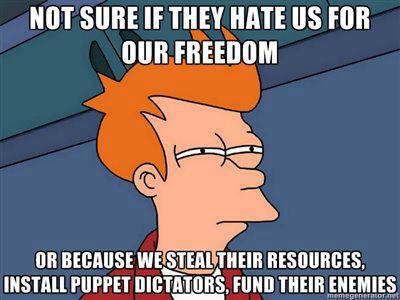
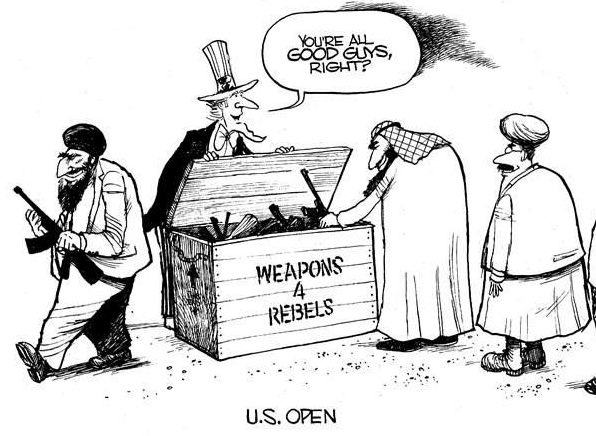
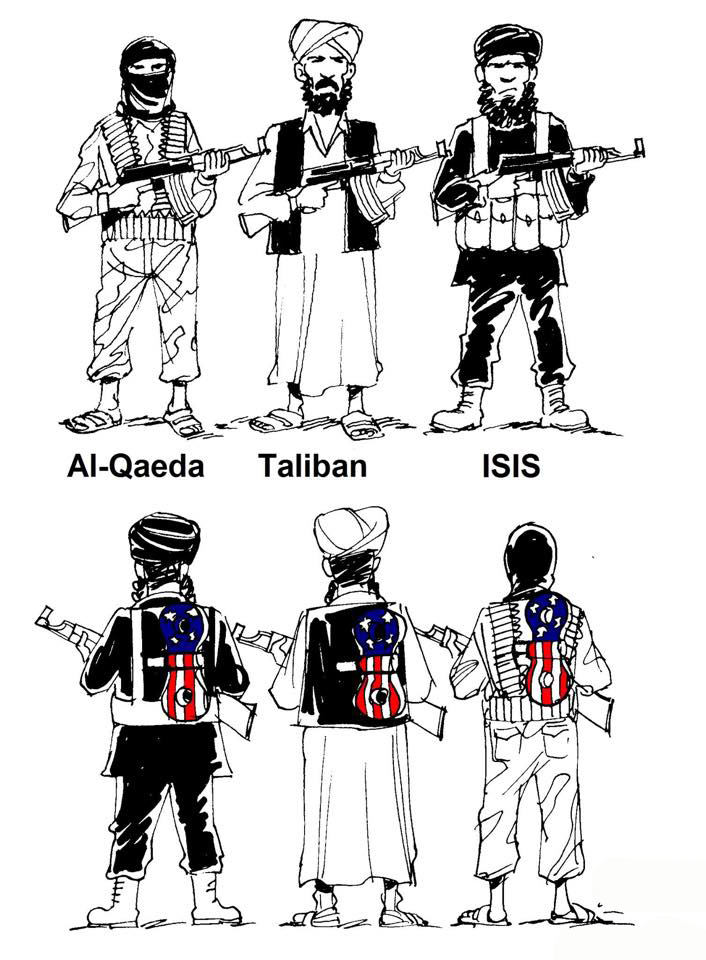
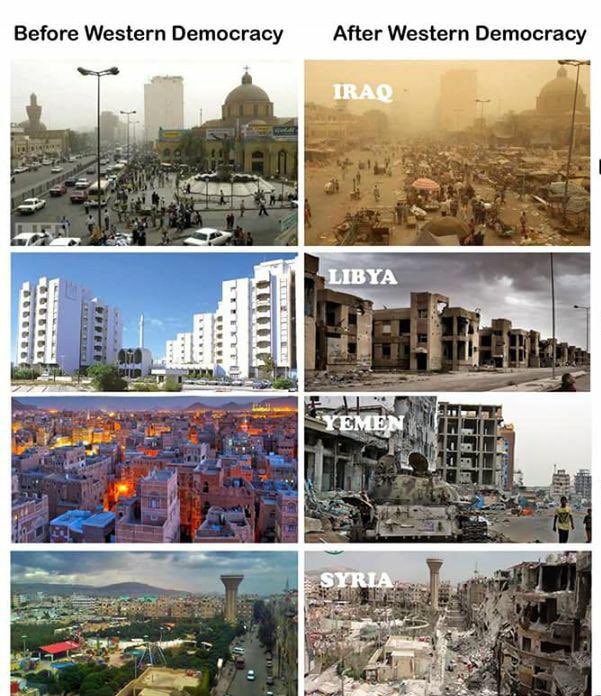
This snub should be a lesson for Pompeo personally but, more importantly, for U.S. foreign policy writ large: Our own house is not in order, and Washington has no business policing the world or forcibly remaking other countries in its own image. That image is a mess.

Keep reading

Covid-19 catch-22: Regime-change policies come packed with US pandemic relief

The longest piece of legislation in United States history, containing both a coronavirus relief package and the annual omnibus spending package, quickly passed through Congress on December 22, with little opposition. While technically separate bills, the omnibus and stimulus were debated and passed together, at the same time.

The massive piece of legislation — a staggering 5,593 pages in length — lays bare the priorities of the US government, prioritizing regime change in foreign nations and the imperatives of empire over the basic needs of Americans.

In just a few hours, it passed through the House of Representatives by 359-53, and through the Senate by 92-6.

While the US public was forced to grovel for months for a $600 direct payment, the same piece of legislation pumps billions of dollars into “democracy programs” — US government code for regime-change operations via civil society NGOs — and foreign military assistance. The measly $600 survival checks pale in comparison to the massive foreign spending on regime change and titanic allocations to prop up US-friendly authoritarian militaries.

On so-called “Democracy Programs” alone, the legislation appropriates $2.417 billion, and $6.175 billion on the “Foreign Military Financing Program.” Another $112.9 million is appropriated for “International Military Education and Training.”

$6 billion more is allocated toward the domestic procurement of US Air Force missiles and US Navy weapons of war. This is in addition to the $740 billion defense bill passed earlier in December.

By contrast, the stimulus package comes at a value of $900 billion, with the largest portion devoted to business bailouts.

Keep reading

How ‘Western’ Media Select Their Foreign Correspondents

Did you ever wonder why ‘western’ mainstream media get stories about Russia and other foreign countries so wrong?

It is simple. They hire the most brainwashed, biased and cynic writers they can get for the job. Those who are corrupt enough to tell any lie required to support the world view of their editors and media owners.

They are quite upfront about it.

Here is evidence in form of a New York Times job description for a foreign correspondent position in Moscow:

Russia Correspondent

Job Description

Vladimir Putin’s Russia remains one of the biggest stories in the world.

It sends out hit squads armed with nerve agents against its enemies, most recently the opposition leader Aleksei Navalny. It has its cyber agents sow chaos and disharmony in the West to tarnish its democratic systems, while promoting its faux version of democracy. It has deployed private military contractors around the globe to secretly spread its influence. At home, its hospitals are filling up fast with Covid patients as its president hides out in his villa.

If that sounds like a place you want to cover, then we have good news: We will have an opening for a new correspondent as Andy Higgins takes over as our next Eastern Europe Bureau Chief early next year.

To be allowed to write for the Times one must see the Russian Federation as a country that is ruled by just one man.

One must be a fervent believer in MI6 produced Novichok hogwash. One must also believe in Russiagate and in the multiple idiocies it produced even after all of them have been debunked.

One must know that vote counts in Russia are always wrong while U.S. vote counting is the most reliable ever. Russian private military contractors (which one must know to be evil men) are ‘secretly deployed’ to wherever the editors claim them to be. Russia’s hospitals are of cause always much worse than ours.

Keep reading

FBI launches open attack on ‘foreign’ alternative media outlets challenging US foreign policy

The FBI has publicly justified its suppression of dissenting online views about US foreign policy if a media outlet can be somehow linked to one of its adversaries. The Bureau’s justification followed a series of instances in which Silicon Valley social media platforms banned accounts following consultations with the FBI.

In a particularly notable case in 2018, the FBI encouraged Facebook, Instagram and Google to remove or restrict ads on the American Herald Tribune (AHT), an online journal that published critical opinion articles on US policy toward Iran and the Middle East. The bureau has never offered a clear rationale, however, despite its private discussions with Facebook on the ban.

Keep reading

FBI launches open attack on ‘foreign’ alternative media outlets challenging US foreign policy

The FBI has publicly justified its suppression of dissenting online views about US foreign policy if a media outlet can be somehow linked to one of its adversaries. The Bureau’s justification followed a series of instances in which Silicon Valley social media platforms banned accounts following consultations with the FBI.

In a particularly notable case in 2018, the FBI encouraged Facebook, Instagram and Google to remove or restrict ads on the American Herald Tribune (AHT), an online journal that published critical opinion articles on US policy toward Iran and the Middle East. The bureau has never offered a clear rationale, however, despite its private discussions with Facebook on the ban.

Keep reading