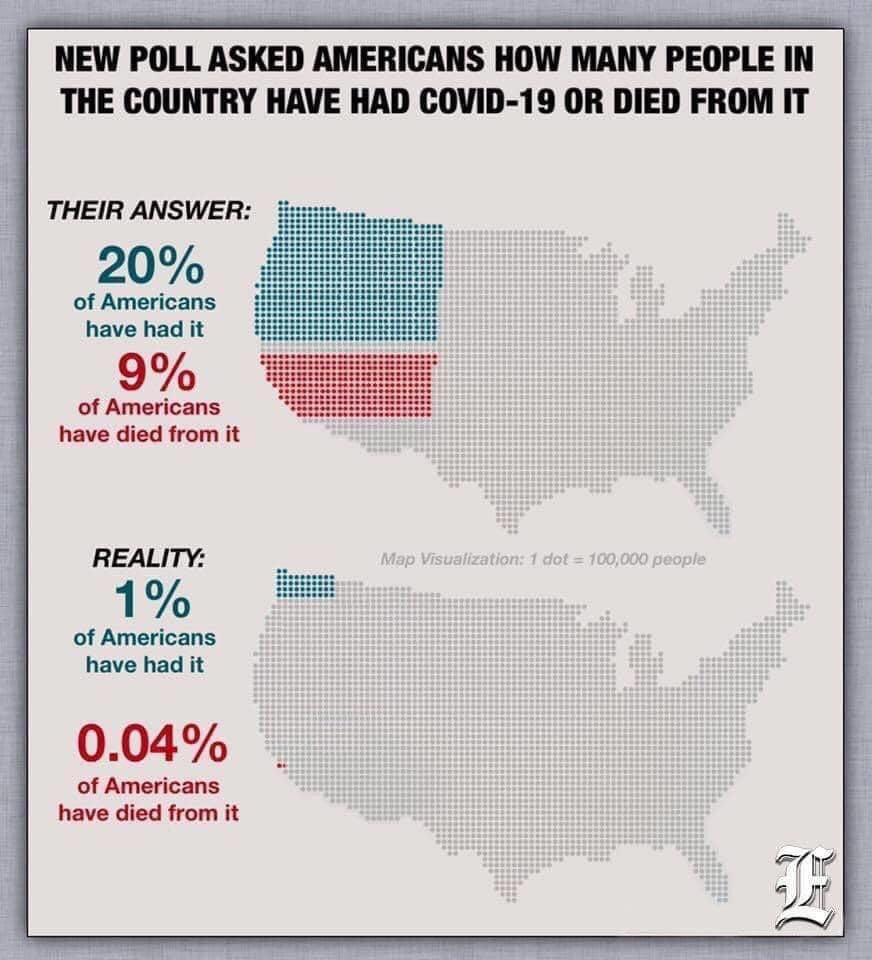
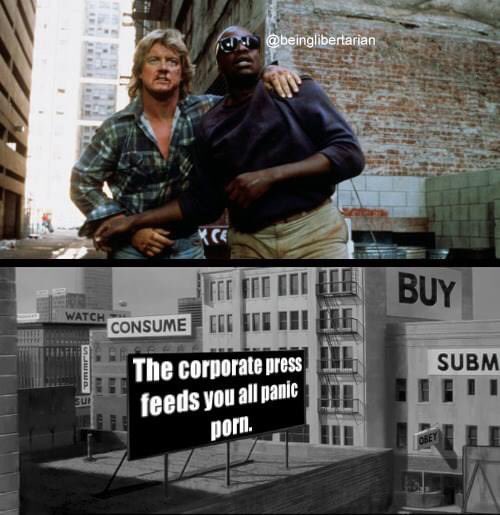
Fear is the mind killer…

Imagine a virus that is such a serious threat … that you don’t even know you have it in most cases unless you get a test? The tail wagging the dog? The cart driving the horse? If we are now going to hold our nation hostage because of this obsession over PCR (polymerase chain reaction) swab tests, we should at the very least make certain they’re accurate.
What happens when we have expedited and chaotic test results driving an epidemic curve rather than actual symptoms? You get what happened to Ohio Governor Mike DeWine last Thursday. He tested positive for the virus after experiencing absolutely no symptoms. But because he is such a VIP, he got a second, more accurate test that showed he was in fact negative for SARS-CoV-2. The same thing happened to Detroit Lions quarterback Matthew Stafford, who tested negative after receiving a false positive and was therefore allowed out of coronavirus prison.
How many more people are really negative, and why don’t people who don’t have such connections get the same due process that DeWine was accorded before upending their lives because of symptoms milder than a cold or perhaps completely nonexistent? And why won’t this experience change DeWine’s entire attitude toward treating every single COVID-19 case like it’s contagious pancreatic cancer, regardless of the symptoms or of whether we can even trust the test results?
This is a serious question that threatens the liberty of all Americans. As the FDA’s most recent fact sheet on PCR tests notes, the dangers of false positives include the following: “A recommendation for isolation of the patient, monitoring of household or other close contacts for symptoms, patient isolation that might limit contact with family or friends and may increase contact with other potentially COVID-19 patients, limits in the ability to work, the delayed diagnosis and treatment for the true infection causing the symptoms, unnecessary prescription of a treatment or therapy, or other unintended adverse effects.”
That’s nothing to sneeze at.

A culture of fear is undermining ordinary people’s freedom of expression, as a new report into self-censorship in the US attests.
The headline statistic of the report, produced by the Cato Institute, is that 62 per cent of Americans agree with the statement, ‘The political climate these days prevents me from saying things I believe because others might find them offensive’. This figure has risen from 58 per cent in 2017.
The report demonstrates a number of key points. One is that concern for the health of free speech is not the preserve of the right. Though conservatives are more likely to say they self-censor (77 per cent), just over half of liberals (52 per cent) and nearly two thirds of moderates (64 per cent) say they do, too. Indeed, ‘strong liberals’ are the only group who disagree with the above statement by a majority – and even among them, there has been a 12 percentage-point increase since 2017 in those who feel they have to self-censor. This is a greater increase than that among moderates and conservatives.
As for the percentage of those who fear for their job prospects due to their views, this is very similar across political lines: 34 per cent of conservatives, 31 per cent of liberals and 30 per cent of moderates ‘worry they could miss out on job opportunities or get fired if their political views became known’.
Free-speech worries cross ethnic divides, too. Sixty-five per cent of Latino Americans – one percentage point more than white Americans – ‘have political views they are afraid to share’. Meanwhile, 49 per cent of African Americans are in the same position.
Part of the mystery around the unsolicited packets of seeds US residents are receiving from China has been solved.
A US Department of Agriculture official said in a recorded statement released on July 29 that 14 species of the seeds have been identified as herbs and other plants including hibiscus and mint.
“We have identified 14 different species of seeds, including mustard, cabbage, morning glory, and some of the herbs like mint, sage, rosemary, lavender, then other seeds like hibiscus and roses,” said Osama El-Lissy, a deputy administrator for the USDA’s Animal and Plant Health Inspection Service.
“This is just a subset of the samples we have collected so far,” he said.
Since late July, people across the US and in countries including Canada and the United Kingdom have reported receiving packets of seeds they did not order, and are marked as coming from China.
Some of the packages’ labels indicate that the packages contain jewelry, though US state officials say they are mislabeled since they actually contain small packets of seeds.
All 50 US states have now issued warnings against planting the seeds, according to a July 29 report from CNN, and have been instructed in many instances to instead contact state or local authorities.
“People who receive seeds should not plant or handle the seeds,” Richard Ball, the New York State Commissioner of Agriculture, said in a July 27 statement.
They should “store them safely in a place children and pets cannot access,” and email the USDA “immediately.”

 Hellbound and Down
You must be logged in to post a comment.